Category: Marketing & Business Value

  • The History of the Takeaway Coffee Cup, 1907 to Today

    The History of the Takeaway Coffee Cup, 1907 to Today

    Short answer: the paper cup was invented in 1907 as a public health measure, not a convenience product. It was created to stop people sharing communal tin drinking cups, and everything else about it, including the branding surface you are probably buying it for, came later.

    The shared dipper problem

    In the early 1900s, public drinking water in the United States was commonly served from a barrel with a shared tin cup or dipper attached. Everyone used the same cup. As germ theory took hold, this became recognised as an obvious route for transmitting disease, and public health campaigners began pushing to ban the practice.

    That created a gap. If you remove the communal cup, people still need something to drink from.

    1907: Lawrence Luellen’s invention

    Lawrence W. Luellen, a lawyer and inventor based in Boston, developed a disposable paper cup in 1907. His design used a circular blank of paper treated with paraffin wax, pleated into a one-piece cup that held its shape.

    The wax is worth noting. Every cup since has needed some way to stop paper dissolving when it meets liquid, and modern polyethylene and plant-based linings are direct descendants of that first paraffin treatment. See what paper coffee cups are made from.

    In 1910, Luellen partnered with Hugh Moore to form the Individual Drinking Cup Company of New York. The early product was sold through vending machines that dispensed cold water with a clean cup, positioned squarely as a hygiene product.

    1919: how it got the name Dixie

    The cup was initially marketed as the Health Kup, which tells you exactly how it was being sold. In 1919 it was renamed the Dixie Cup.

    The name came from a neighbour. Hugh Moore sought and received permission from doll-maker Alfred Schindler to borrow the name from Schindler’s Dixie Doll Company, with whom the business shared manufacturing space. One of the most recognisable names in disposable packaging came from the sign on a shared building.

    From water to hot coffee

    A wax-lined cup handles cold water well and hot coffee badly, since wax softens with heat. The move to hot beverages required better linings and stronger board construction, and it followed the growth of coffee culture through the mid-century.

    The double wall cup, which adds a second outer layer with an insulating air gap, is a comparatively recent refinement addressing the problem that a hot drink in a single layer of board is uncomfortable to hold. See single wall vs double wall coffee cups.

    1963: the Anthora, and the cup as an icon

    In 1963, Leslie Buck, born Laszlo Büch, a Czech immigrant, designed a cup for the Sherri Cup Company of Connecticut. Aimed at New York’s Greek-owned diners, it used a blue and white palette with a Greek meander pattern, amphora motifs and the words “We Are Happy To Serve You”.

    The Anthora became one of the most recognisable objects in New York City, appearing constantly in film and television as visual shorthand for the city itself.

    It is the moment the takeaway cup stopped being purely functional. A printed cup could carry identity, and people formed an attachment to it. Everything the industry now does with branded cups traces back to that idea.

    The Australian chapter

    Australia’s takeaway coffee culture developed along its own path, shaped by postwar Italian and Greek migration bringing espresso culture to Melbourne and Sydney, and by a strong cafe tradition that produced drinks the rest of the world later adopted, the flat white being the obvious example.

    One consequence is that Australian cup sizing skews smaller than the American norm, because the drinks are shorter and stronger. It is also why cup profile matters here, with squat cups suiting milk-based coffee where the surface of the drink is part of the presentation. See squat vs tall cups.

    The reckoning

    The cup was invented to solve a public health problem, and by solving it at scale it created a waste problem. Australia now uses an estimated 1.8 billion single-use hot drink cups a year, most of which go to landfill because the lining that makes a cup work also makes it hard to recycle.

    The current era of the cup is about that tension: compostable linings, separate collection schemes, state regulations on single-use items, and honest accounting for impact. See how many cups Australia uses and single-use cup regulations in Australia.

    The through line

    Look at the arc and one thing stands out. Every stage of this history has been driven by the lining. Paraffin made a disposable cup possible in 1907. Better linings made hot drinks possible. The lining is what stops cups being recycled today, and changing it is the centre of every serious attempt to fix that.

    A takeaway cup is, and always has been, a piece of paper wrapped around a barrier. The interesting part was never the paper.

    Where to go from here

    To design your own, start with our buyer’s guide to custom printed coffee cups.

    Sources

    • Hugh Moore Dixie Cup Company Collection, Lafayette College
    • Dixie Cup company history
  • Coffee Cups With Your Logo: How It Works and What It Costs

    Short answer: The whole process, from artwork upload to delivery, runs 10 business days plus delivery after you approve your proof.

    What “logo printing” on a coffee cup actually means

    Modern cup printing is full colour and full wrap: your logo is not a small stamp on one side, it can sit anywhere on the cup’s entire outer surface, at any size, with backgrounds, patterns and supporting text around it. That changes how you should think about the design. A logo centred on both faces is the classic layout, but many brands use the wrap for a repeating pattern, a brand message on the reverse, or their Instagram handle under the logo.

    What file do you need?

    A vector version of your logo (AI, EPS, PDF or SVG) gives the sharpest result at any size. A high-resolution PNG with a transparent background also works well. If all you have is a screenshot or a low-resolution file, ask your designer for the original export, and if you are stuck, our team can assess what you have during proofing. Every order includes 2 free artwork proofs, so you see exactly how the logo sits on the cup before anything is printed.

    Colour accuracy for brand logos

    Cups are printed in CMYK. If your brand guidelines specify exact colours, include the CMYK or hex values with your artwork and check them on the proof. Solid brand colours reproduce well; the proof stage exists to confirm it before a full run. More detail in our guide to getting brand colours right on paper cups.

    What does it cost?

    The per-cup price falls at every quantity tier up to 10,000. There are no plate fees or separate “logo setup” charges, the price you configure is the price you pay. See current pricing on the branded coffee cups page, where the full quantity tables are published.

    Which cup should you put your logo on?

    • Cafes and daily service: single wall 8oz and 12oz cover most menus.
    • Premium feel: double wall cups add insulation and a sturdier hand-feel.
    • Sustainability-led brands: compostable cups with a plant-based PLA lining.

    How long does it take?

    Standard production is 10 business days from proof approval, with a rush option of 5-7 business days. Delivery is calculated at checkout and available Australia-wide. If you want to see the print quality before committing, order a sample pack first.

  • First Impressions Count: Why Your Takeaway Cup Quality Matters

    First Impressions Count: Why Your Takeaway Cup Quality Matters

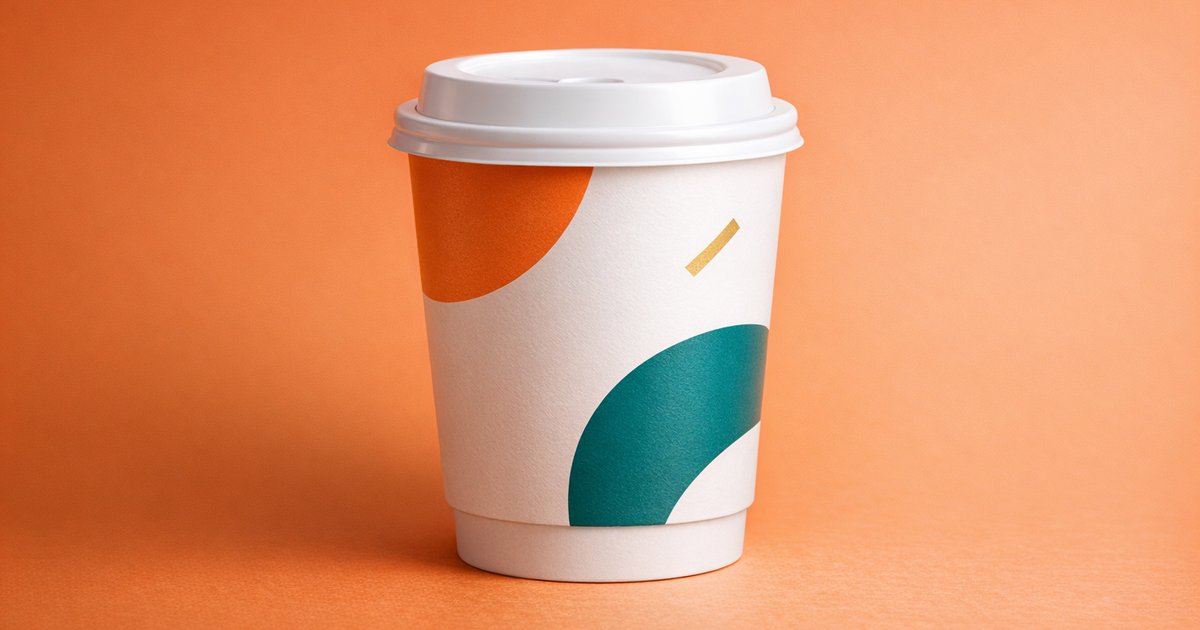
    Takeaway cup quality matters: customers judge your coffee and your brand by the cup they take away. A sturdier, well‑printed takeaway cup quality instantly raises perceived value, encourages social sharing and improves brand recall. Below you’ll find tactile and visual tips, lead times, plus how to order a sample pack before you commit.

    Why takeaway cup quality matters

    Packaging is a silent salesperson. Good takeaway cup quality turns a simple transaction into a memorable brand touchpoint that can increase repeat visits, justify modest price rises on premium drinks and give you free advertising every time a customer walks out the door.

    • Perception: weight, texture and print quality set expectations before the first sip.
    • Visibility: every takeaway becomes mobile advertising for your café.
    • Retention: polished presentation builds loyalty and repeat custom.

    How perception works

    Customers read tactile and visual cues subconsciously. A double‑wall cup, crisp full‑colour print or compostable stock signals care and quality. A thin, generic cup can unintentionally communicate cost‑cutting and lower perceived product value.

    Tactile choices: single‑wall, double‑wall and compostable cups

    Choosing construction is an efficient way to control how your product feels and performs in takeaway service.

    • Double‑wall cups feel warmer and more substantial without a sleeve — great for premium menu items and an elevated takeaway experience.
    • Single‑wall cups are lighter and lower cost; pair with a sleeve for very hot drinks or for high‑turnover lines to protect margins.
    • Compostable (PLA/CPLA) cups offer a premium look and an eco message that resonates with sustainability‑minded customers.

    Tip: offer double‑wall for signature or high‑margin drinks and single‑wall for everyday options to balance customer experience and cost.

    Visual impact: full‑colour printing and consistent design

    Full‑colour CMYK printing helps your cups match your fit‑out, menu design and social visuals. Consistent logo placement, palette and typography turn every takeaway into a recognisable piece of branded collateral.

    Design best practice

    • Keep logo placement and colours consistent with in‑store branding.
    • Use bold, simple artwork for busy outlets; reserve detailed or limited‑edition prints for flagship stores or campaigns.
    • Seasonal or limited runs encourage social shares and create urgency.

    The handover moment

    The instant you hand a customer their drink is a micro‑brand moment. Crisp print, well‑fitting lids and tidy presentation improve perceived value, encourage repeat business and increase the chance of customers photographing and sharing your cup on social media.

    Practical branding strategies

    • Mix cup types across your menu: double‑wall for premium drinks, single‑wall for basics.
    • Use compostable cups where sustainability messaging matters or for special events.
    • Run a small branded test in one store, measure engagement, then roll out what works.
    • Order a sample pack to compare materials and print fidelity before committing.

    Options and lead times (Australia)

    • Minimum order: 500 cups
    • Printing: Full‑colour CMYK
    • Design support: Free templates (AI/PSD) — upload your logo and we’ll prepare print‑ready artwork
    • Turnaround: Standard production 10 business days + 2–3 days metro freight
    • Rush option: 5–7 business days
    • Freight: charged at cost depending on destination

    How to measure impact

    Track a few simple KPIs to judge your takeaway cup quality investment:

    • Change in premium drink sales and average transaction value
    • Repeat visit rate
    • Social mentions and customer photos featuring your cups
    • Direct customer feedback on presentation

    How to order (simple steps)

    1. Order a sample pack to feel single‑wall, double‑wall and compostable options.
    2. Choose cup type, size and artwork. Use our free templates or request a design layout.
    3. Approve the print proof and place your order (minimum 500 cups).
    4. Production: standard 10 business days + metro freight; choose rush for faster turnaround.

    Final considerations

    Match takeaway cup quality to your margins and customer mix. If sustainability is core to your brand, compostable cups reinforce the message. If margins are tight, high‑quality print on single‑wall stock offers a professional look at a lower price point. Wherever you land, testing with a sample pack lets you compare real materials before ordering a full run.

    Ready to improve first impressions? Order a sample pack to compare materials and print, or get a quote for custom printed coffee cups. For planning help, see our complete buyer’s guide to custom printed coffee cups in Australia.

    Related guides

  • Seasonal Cup Campaigns: How to Keep Your Branding Fresh

    Seasonal Cup Campaigns: How to Keep Your Branding Fresh

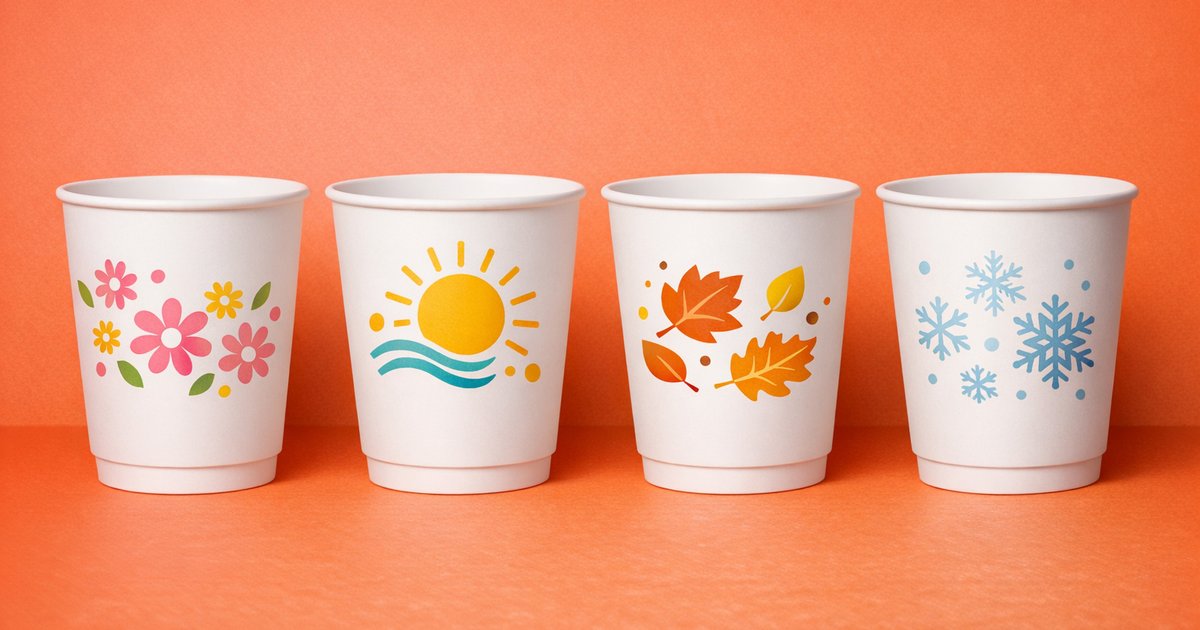
    Seasonal coffee cup designs are a low-cost, high-impact way to refresh your brand and drive customer engagement. With a 500 cup minimum, free templates, and standard production of 10 business days (+ 2–3 days metro freight), most Australian cafés can run 2–3 seasonal cup campaigns a year to boost sales, social buzz and repeat visits. Ready to try one? Order a sample pack or view our custom printed coffee cups to get started.

    Why seasonal coffee cup designs work

    Themed cups tap into timely emotions and occasions. Limited-edition packaging gets noticed, encourages customers to share photos online and links your café to the moment — all without changing your core menu.

    Key benefits

    • Visibility: Seasonal artwork stands out on social feeds and in-store.
    • Shareability: Festive or collectible cups generate free user content.
    • Repeat visits: Rotating designs and series encourage customers to come back.
    • Promotion alignment: Cups reinforce seasonal offers (hot drinks in winter, iced promotions in summer).

    Australian seasons and events to plan for

    Not every date needs a full redesign. Prioritise high-impact moments and use subtle accents or stickers for smaller activations.

    High-priority events

    • Christmas / Summer holidays: Peak foot traffic and shareability — plan early.
    • Valentine’s Day: Red/pink accents and simple messages perform well.
    • Australia Day: Local icons and warm Australiana tones work well in-store and online.
    • EOFY / Corporate gifting: Minimal, premium designs for trade clients and gift packs.

    Seasonal themes and short activations

    • Autumn / Winter: Warm tones, cosy textures and rich palettes.
    • Spring: Botanical motifs and lighter colours.
    • Short activations: Easter, Halloween or event tie-ins using subtle changes, sleeves or stickers.

    How to plan 2–3 seasonal cup campaigns a year

    Focus on a few well-executed campaigns rather than monthly changes — this balances cost, inventory and marketing impact.

    1. Create an annual calendar: Choose 2–3 major moments and schedule smaller activations around them.
    2. Set deadlines: Allow time for design, approvals, proofs and production (see timeline below).
    3. Use the 500-cup minimum: Small runs let you test concepts and move stock quickly.

    Design principles — keep your brand recognisable

    Seasonal flair should complement, not replace, your core identity. Keep primary brand elements consistent and layer seasonal accents so customers still recognise your cup at a glance.

    • Logo placement: Keep position and scale consistent for instant recognition.
    • Core palette & typography: Use brand colours and fonts for identity elements; add seasonal accents only.
    • One master template: Swap artwork on a single layout to speed approvals and reduce errors.

    Designers and operators prefer clearly branded seasonal coffee cup designs because they’re shareable while protecting long-term brand equity.

    Create collectibility and anticipation

    • Limited runs: Label designs “limited edition” to create urgency.
    • Series releases: Offer a small set of related designs to encourage collecting.
    • Teasers & countdowns: Share sneak peeks 1–2 weeks before launch on social and in-store.
    • Promos: Loyalty stamps or bonuses for collecting designs increase repeat visits.

    Promotion and social strategy

    • High-quality imagery: Use natural light, close-ups and short video — behind-the-scenes shots work well.
    • Hashtags & geotags: Create a unique campaign hashtag and encourage tags to boost reach.
    • Email & SMS: Notify loyalty members and trade clients about launches and limited offers.
    • In-store visibility: Feature seasonal cups on menus, counter displays and window vinyls.

    Production timeline and logistics

    Plan launches around our production windows to avoid rush fees and delays. Book early for peak seasons (Christmas, EOFY).

    Typical timelines

    • Standard production: 10 business days production + 2–3 days metro freight.
    • Rush production: 5–7 business days production.

    Minimum order: 500 cups. We provide free templates (AI & PSD) and offer a sample pack so you can check stock and print quality before committing.

    Printing options and cup types

    • Full-colour CMYK: Vibrant prints across our process.
    • Cup types: Single-wall (PE), Double-wall (PE) and Compostable (CPLA/PLA).
    • Sizes: 8oz, 12oz and 16oz.
    • Artwork support: Free templates.

    For current prices, see the printed coffee cups page.

    Freight is charged at cost — typical metro freight varies by quantity and destination.

    Practical tips for small Australian operators

    • Start small: Use 500-cup runs to test designs and customer response.
    • Mix cup types: Offer compostable options for eco-conscious customers alongside economy single-wall runs.
    • Book early: Reserve production slots ahead of peak seasons like Christmas and EOFY.
    • Request a sample: Order a sample pack to check print quality and materials.

    Examples of effective executions

    • Christmas: Keep brand colours, add gold accents or subtle motifs for shareability.
    • Spring: Botanical illustrations and softer greens with consistent logo placement.
    • EOFY: Minimal, premium designs for corporate gifting and trade orders.

    Key trade-offs to consider

    • Inventory complexity: More SKUs — focus on a few predictable seasonal runs.
    • Upfront cost: Even with a 500 MOQ there’s investment — use promos to move stock quickly.
    • Design approvals: Allow time for proofs to avoid rush fees.

    Next steps — make seasonal campaigns practical

    Seasonal coffee cup designs are an easy, measurable way to refresh your branding and create momentum. Plan 2–3 focused runs per year, use the 500-cup minimum to test ideas, and take advantage of our free templates to validate your concept.

    Ready to start? Order a sample pack or explore our full range of custom printed coffee cups. For a step-by-step overview and buying tips, see our complete buyer’s guide.

    Need help with artwork or a mock-up? Upload your logo and our design team will prepare a print-ready layout. Standard production is 10 business days (+ freight); choose rush for 5–7 business days. Minimum order: 500 cups.

  • QR Codes on Coffee Cups: Do They Actually Work?

    QR Codes on Coffee Cups: Do They Actually Work?

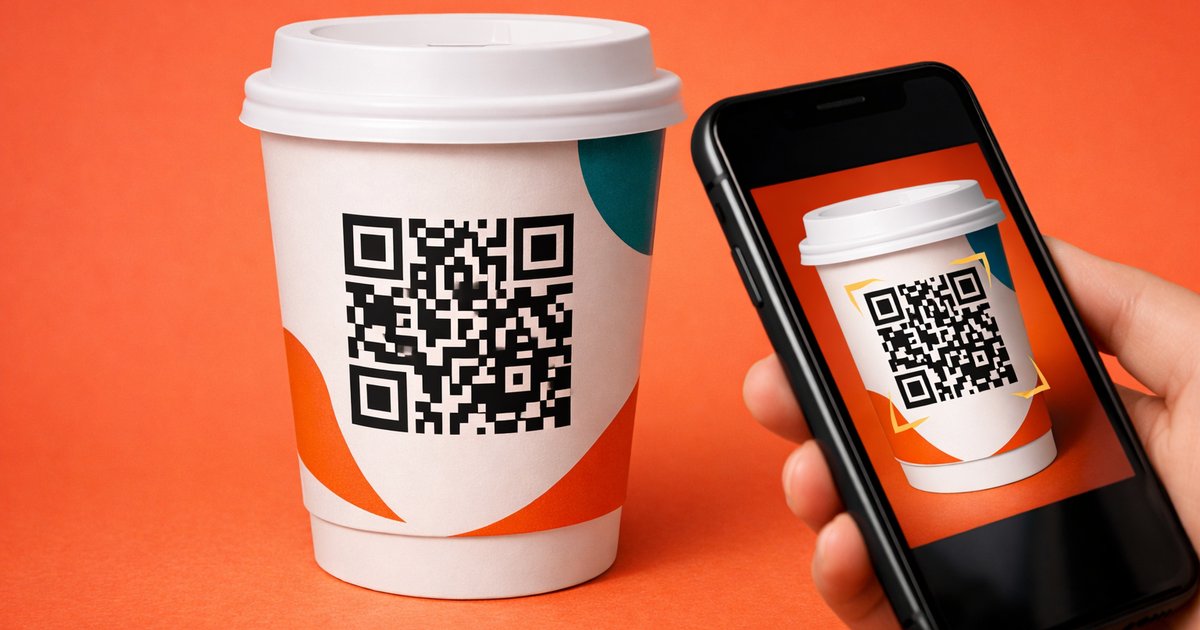
    Yes — QR codes on coffee cups can work, but only when they’re visible, scannable and offer immediate value. This guide explains practical design, printing and tracking steps so your QR codes deliver measurable results.

    Quick summary

    • Print recommendations: minimum 20 mm × 20 mm, preferred 30–40 mm, 2–3 mm quiet zone, high contrast and flat placement.
    • Track with UTM parameters or unique promo codes and test using a sample pack before a full run.

    Do QR codes on coffee cups get scanned?

    Short answer: sometimes. In most café settings you’ll see low single-digit scan rates unless the code is obvious, the reward is immediate and staff encourage customers to scan. Use a fast, mobile-optimised landing page and a clear value-led CTA to increase engagement.

    Why QR codes succeed or fail

    Common reasons they fail

    • Poor size, placement or printing over seams/curved panels — the code becomes unreadable.
    • Low contrast or decorative backgrounds that break the QR pattern.
    • Sending customers to a generic homepage with no instant reward.
    • Slow or non-mobile-friendly landing pages that cause abandonment.
    • No obvious CTA telling customers what they’ll get.

    How to make them work

    • Design for scannability: prefer 30–40 mm when space allows; minimum 20 mm × 20 mm. Leave a 2–3 mm quiet zone around the code.
    • High contrast: dark code on a light, plain background (black on white ideal).
    • Smart placement: print on a flat panel away from seams and the rim so customers can easily point their phones.
    • Clear CTA: short value-led text — e.g. “Scan for 10% off” or “Join our coffee club — free muffin”.
    • Fast landing page: mobile-first, loads quickly and is trackable with UTM parameters or a unique promo code.
    • Staff prompts: baristas saying “scan this for today’s deal” will materially lift scans.

    Practical printing tips

    Size, quiet zone and placement

    Minimum recommended size: 20 mm × 20 mm. Preferred: 30–40 mm when space allows — larger codes are easier to scan when a cup is moving or held at arm’s length. Always leave a clear quiet zone (2–3 mm) around the code. Test a printed sample in real café lighting and while the cup is held — curvature and motion affect scannability.

    Contrast and artwork

    Keep the QR on a plain, high-contrast area and avoid placing it over images or busy patterns. Our full-colour CMYK print reproduces high-resolution QR codes, but the artwork must respect contrast and quiet-zone rules to remain scannable. We supply artwork templates (AI & PSD) and a design layout service to help position the code correctly.

    Instruction and value

    Tell customers exactly what they’ll get: “Scan to claim 10% off”, “Join and get a free muffin”, or “Scan for today’s secret deal”. Immediate, tangible rewards increase scan rates more than vague incentives.

    What to link QR codes to (and what to avoid)

    Avoid sending people to a generic homepage. Better destinations are focused, immediate and mobile-friendly:

    • Discount or coupon landing page (auto-apply voucher or unique promo code)
    • Loyalty sign-up with instant points or a welcome reward
    • Short survey with a small incentive (keeps interaction quick)
    • Menu, allergen or ingredient information for transparency
    • Social follow offer with a quick reward (e.g. show follow to redeem)

    For reliable attribution tie scans to unique promo codes or landing pages and capture opt-in for email/SMS where appropriate.

    Tracking scans and measuring ROI

    Add UTM parameters so QR visits appear separately in Google Analytics (example: ?utm_source=cup&utm_medium=qr&utm_campaign=easterpromo). For short campaigns use a unique URL or promo code printed on the cup so redemptions can be directly matched to that cup run. Consider a short redirect (e.g. yourbrand.co/cup) that forwards to the full campaign URL so you can change the destination later without reprinting.

    Measure conversions (coupon redemptions, sign-ups) and calculate cost-per-acquisition vs the cup spend to decide if the campaign is delivering value.

    Alternatives and useful fallbacks

    Not everyone will scan — include simple fallbacks to capture additional responses:

    • Short URL under the QR code (easy to type and track via redirects)
    • Social handle or @tag for direct follows
    • SMS keyword where appropriate (example: “Text COFFEE to 0450 000 000”)

    Testing and rollout — a practical approach

    Start small. Order a sample pack with your QR design and test under real conditions: different lighting, while customers hold the cup and at typical serving distances. Track scans and conversions for at least a week, tweak the CTA or landing page, then roll out the larger order.

    Order a sample pack to test scan rates and placement before committing to a full run.

    Printing with CustomCoffeeCups.com.au — what you need to know

    We print QR codes as part of our full-colour CMYK process, supply artwork templates and offer a design layout service. Sample packs are available so you can test scans before production. If you want help setting up UTMs or unique landing URLs we can advise on best practice and proof the artwork to maximise scannability.

    Item Details
    Minimum order 500 cups
    Standard turnaround 10 business days production + 2–3 days metro freight
    Rush option 5–7 business days
    Free services Free templates

    Quick pre-print checklist

    1. Printed size at least 20 mm × 20 mm (30–40 mm preferred).
    2. High contrast and 2–3 mm quiet zone around the code.
    3. Place on a flat face away from seams and the rim.
    4. Link to a mobile-optimised, trackable landing page with UTM parameters or a unique code.
    5. Add a clear, value-led CTA (discount, points, freebie).
    6. Order a sample pack and test scannability under real conditions.

    QR codes on coffee cups are best used to drive incremental engagement — they aren’t a mass-traffic channel by themselves. Expect low single-digit scan rates unless you combine a visible, correctly sized code with a strong offer, clear CTA and staff encouragement.

    Ready to try QR codes on your cups? We’ll help with artwork, templates and proofs to maximise scannability. View our custom printed coffee cups or order a sample pack to test scans and placement. For more planning tips, see our complete buyer’s guide to custom printed coffee cups in Australia.

    Want help designing your QR code? Contact us for a layout and proof — we’ll position and test your QR before production.

  • Branded Cups vs Generic Cups: What Customers Actually Think

    Branded Cups vs Generic Cups: What Customers Actually Think

    Branded Cups vs Generic Cups: What Customers Actually Think

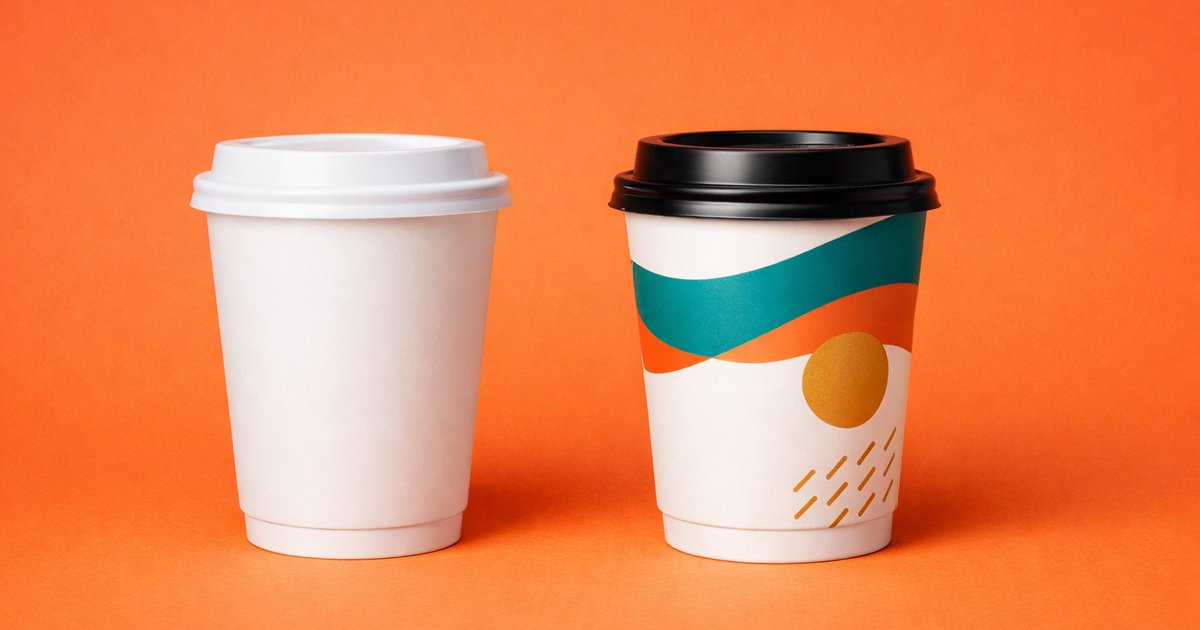
    Short answer: Branded vs generic coffee cups usually matters — customers generally prefer branded cups because they signal professionalism, care and higher perceived quality. For many Australian cafes and event hosts the marketing value outweighs the extra cost. Minimum order: 500 cups.

    Why the branded vs generic coffee cups debate matters

    Your cup is a visible marketing touchpoint. The right cup can lift perceived value, encourage social shares and help you justify premium pricing. The wrong cup can undermine your positioning in seconds — especially for new venues, speciality roasters and hospitality businesses that compete on experience.

    First impressions: your cup is part of front‑of‑house

    People form impressions almost instantly. A considered, branded cup communicates consistency and attention to detail; a plain white generic cup can suggest low investment. That affects whether customers come back, post a photo or accept a higher price.

    Key first‑impression drivers

    • Design consistency — cups that match in‑store colours, menus and uniforms reinforce identity.
    • Professionalism — branded presentation suggests better service and product care.
    • Trust & price perception — strong presentation makes it easier to charge and receive premium prices.

    Perceived coffee quality: packaging psychology in action

    Presentation shapes expectation. The same latte can taste better simply because a customer expects higher quality when it’s served in a premium, branded cup.

    Why this happens

    • Expectation effect — attractive packaging raises perceived quality.
    • Attention to detail — customers infer that a business investing in packaging also invests in coffee and service.
    • Price anchoring — premium presentation supports higher price points and reduces complaints about price.

    Social proof and the Instagram test

    Visibility on social media is free advertising. Ask: would a customer photograph and tag this cup? Branded cups that photograph well increase organic reach and put your brand in customers’ feeds.

    Pass the Instagram test

    1. Use a simple, recognisable logo and a limited colour palette that reads at a glance.
    2. Leave negative space so latte art is visible and the cup reads in photos.
    3. Choose materials and finishes that photograph well — matte, textured or compostable finishes can appear premium on camera.

    Real‑world trade‑offs: minimums and sustainability

    For current prices, see the printed coffee cups page.

    Other costs & key logistics (Australia):

    • Minimum order: 500 cups.
    • Standard production: 10 business days + 2–3 business days metro freight.
    • Rush option: 5–7 business days.
    • Freight charged at cost; we’ll quote based on destination and quantity.
    • We print full‑colour CMYK, provide artwork templates (AI & PSD) and offer a design layout service.
    • Sample pack available — try materials, print quality and finishes before you commit.

    When a generic cup makes sense

    Generic cups aren’t always the wrong choice. They can be practical where branding isn’t worth the run‑cost.

    • Short‑term pop‑ups or events where leftover stock won’t be used.
    • Startups testing a location or concept before committing to branded packaging.
    • Extremely tight budgets — or when you only need small quantities and can’t meet the 500 minimum.

    Cost‑saving alternatives include single‑colour printing, branded sleeves or stickers — these add personality without the full print run cost.

    How to make branded cups work for your business

    Follow these practical steps to get the best ROI from branded cups:

    • Align cup design with in‑store branding, menus and staff uniforms.
    • Choose material by priority: single‑wall for economy, double‑wall for a premium feel, compostable for eco positioning.
    • Order a sample pack to check print quality, texture and how it photographs in your venue.
    • Plan stock vs sales — remember the 500 minimum and lead times so you avoid excess storage or mid‑campaign design changes.
    • Encourage social sharing: invite customers to tag you and feature user photos to amplify reach.

    Quick case study snapshots

    • Global brands — consistent identity builds trust and recognition.
    • Minimalist craft brands — simple cups support premium positioning and storytelling.
    • Australian independents — many local roasters use distinctive cups to communicate specialty and provenance.

    Deciding: branded vs generic coffee cups — a simple checklist

    • If you want stronger first impressions, more social shares and to support higher pricing — choose branded cups.
    • If you’re short‑term, testing or on a very tight budget — generic cups, sleeves or stickers may be better.
    • Not sure? Order a sample pack and run the Instagram test in‑venue before committing to a 500 cup minimum.

    For full product details and up‑to‑date pricing, see our custom printed coffee cups page. For a broader guide read our Custom Printed Coffee Cups Australia Guide.

    Ready to upgrade your presentation? View our range of custom printed coffee cups or request a sample pack to check finishes. We provide free templates, a design layout service and transparent lead times so you can plan with confidence.