
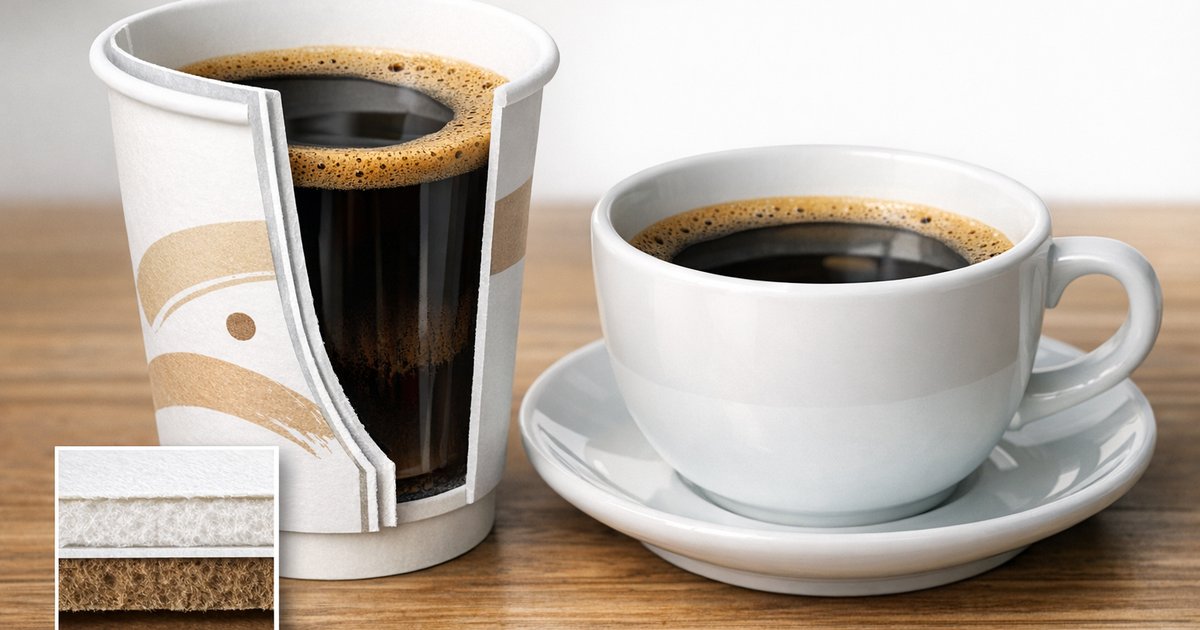
Short answer: the coffee itself does not change, but how people perceive it measurably does. Sensory research has repeatedly found that the vessel affects judgements of sweetness, acidity, aroma and quality. The effect is real, it has been demonstrated in trained tasters as well as ordinary drinkers, and it is worth understanding if you sell coffee.
The effect is genuine, and it has a name
Researchers call it sensation transference: qualities of the packaging transfer to how the contents are judged. It is not imagination or snobbery. It shows up under controlled conditions with the same coffee in different vessels.
The practical implication for a cafe is direct. The cup is not a neutral container. It is part of the product experience, in the same way plating is part of a restaurant dish.
What the studies found
Texture changes perceived flavour
Work published in Food Quality and Preference examined how the surface texture of a cup influenced evaluation of specialty coffee. It found significant effects on aftertaste and mouthfeel judgements. Notably, professional Q graders perceived higher acidity when drinking from a rough-textured cup, while general consumers described coffee from a smooth cup as sweeter.
Both groups were affected. Expertise did not remove the effect, it changed how it expressed itself.
Firmness and quality perception
Related research has found that a firm, solid-feeling vessel improves perceived quality of the drink compared with a flimsy one. A cup that flexes when picked up communicates cheapness before the first sip.
Colour and weight
Studies covered by the Specialty Coffee Association have examined cup colour and weight in multisensory coffee evaluation, finding both influence how coffee is rated. Heavier vessels tend to read as higher quality, and cup colour affects perceived intensity and sweetness.
The aroma question
Much of coffee flavour is aroma, and aroma delivery is where a lidded takeaway cup differs most from an open cup. A lid restricts the path from the drink to your nose and directs it through a small opening. Drinking through a lid is a different aromatic experience from drinking from an open vessel, regardless of what the cup is made from.
This is largely a lid design question rather than a cup material question. See our paper cup lids guide.
Does the lining affect taste?
Here we should be careful to separate what is established from what is repeated online.
Cup linings are food-grade materials selected to be neutral in contact with beverages, and a cup within its rated temperature range should not impart flavour. Where people do report an off taste, the usual suspects are a cup stored badly and having absorbed odours from its environment, or a drink left standing far longer than intended.
Storage is genuinely worth taking seriously, because board is absorbent and will pick up smells from nearby cleaning products or strong-smelling stock. See how to store paper coffee cups. On the broader materials question, see are paper coffee cups safe.
Temperature does most of the work
The single largest driver of how coffee tastes over the life of a takeaway drink is temperature. Perceived sweetness, acidity and bitterness all shift as a coffee cools, which is why the same cup can taste noticeably different at the start and end.
That gives cup construction a real role. A double wall cup holds temperature longer, which keeps the drink in its intended flavour window for longer. It is the most defensible taste-related argument for double wall, and it is a thermal argument rather than a material one.
What this means if you sell coffee
- The cup is part of the product. A thin, flexing cup undermines a carefully made coffee before it is tasted.
- Heft signals quality. This is one of the more consistent findings across studies, and it favours double wall.
- Hold temperature. Insulation keeps the drink where you intended it, flavour-wise, for longer.
- Store cups properly. Cheap insurance against the one genuine material-related taste complaint.
- Design matters more than you think. Perception starts before the first sip. See why takeaway cup quality matters.
The honest summary
Does coffee chemically change because it is in a paper cup? No. Do people reliably rate the same coffee differently depending on the cup it arrives in? Yes, and that has been shown repeatedly under controlled conditions.
For a business selling coffee, the second question is the one that affects your revenue.
Where to go from here
If you are choosing between cup types, read single wall vs double wall. To see options and pricing, view our printed coffee cups or ask us which construction suits your service style.