Category: Buying Guide

  • Full Colour vs Single Colour Printing on Coffee Cups

    Full Colour vs Single Colour Printing on Coffee Cups

    Full Colour vs Single Colour Printing on Coffee Cups

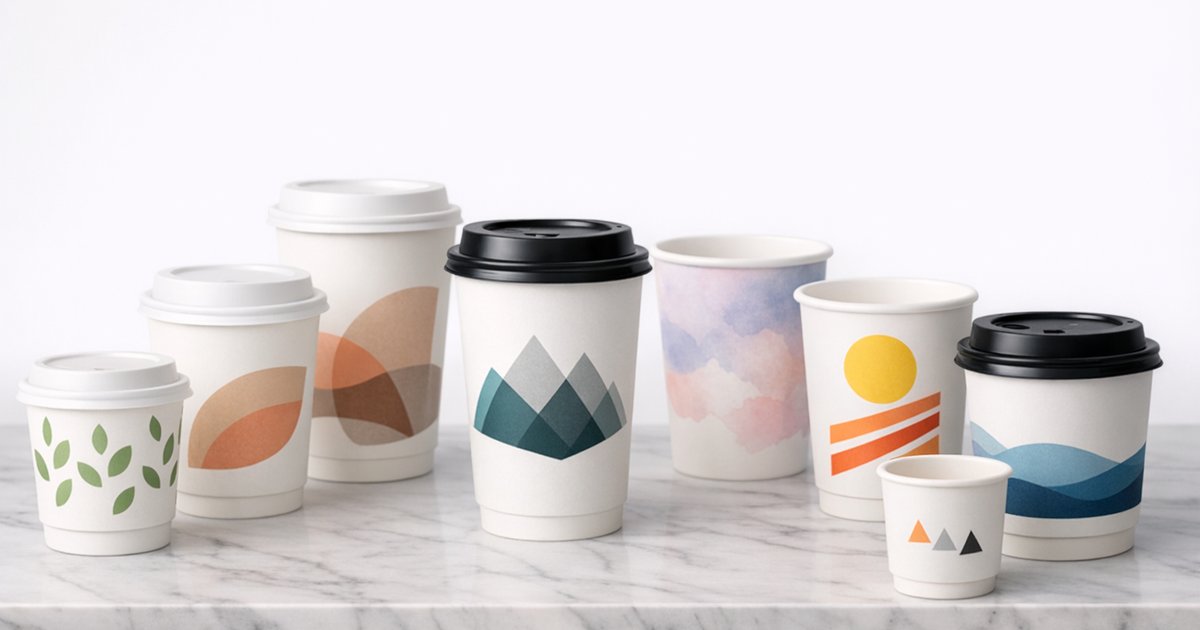
    Full-colour printed coffee cups use CMYK digital or offset printing to reproduce photographs, gradients and unlimited colours — ideal for cafés, events and marketing campaigns across Australia. Minimum order is 500 cups; standard production is 10 business days plus 2–3 days metro freight (rush option available). Order a sample pack or get a tailored quote on our custom printed coffee cups page.

    What is full-colour printing (CMYK)?

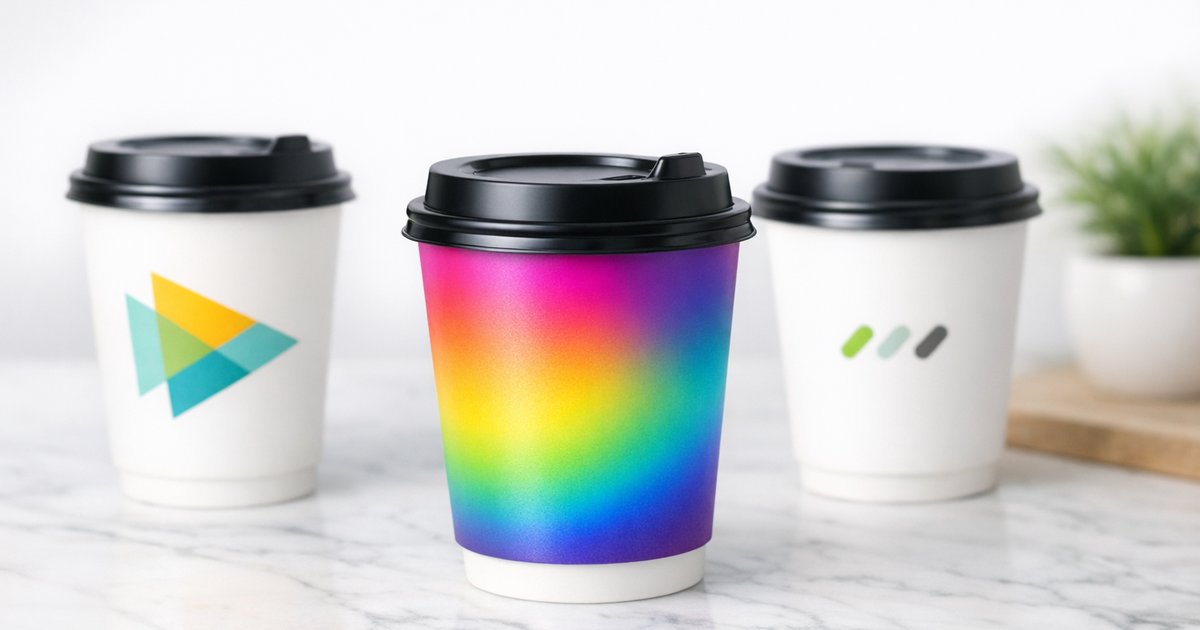
    Full-colour printing builds every colour from four inks: Cyan, Magenta, Yellow and Key/Black (CMYK). At CustomCoffeeCups.com.au we use CMYK digital/offset processes that support photographic images, smooth gradients, full-wrap designs and detailed artwork without charging per colour.

    Benefits of full-colour printed coffee cups

    • Unlimited colours & gradients — include photos, textures and photographic wraps at no per-colour fee.
    • Photo-quality results — good reproduction for images and subtle colour transitions.
    • Fine detail and small type — better edge sharpness for complex logos and small copy.
    • Flexible edits — update artwork without extra setup for spot inks or plates.
    • Strong brand impact — ideal for cafés, pop-ups, festivals and promotional campaigns in Australia.

    Full-colour vs single-colour (spot-colour)

    Spot-colour (single-colour) printing uses one or more solid inks. It can be more economical for deliberately simple designs at large quantities and can achieve exact Pantone matches (including some metallic effects). However, it’s limited creatively compared with CMYK full-colour printing.

    When spot-colour makes sense

    • Minimalist or single‑colour branding where the look is intentional.
    • Strict brand rules that require an exact Pantone/spot-colour match.
    • Very large runs where per-colour setup costs are spread across volume.

    Why many Australian cafés choose full-colour

    For cafés and marketers who need memorable packaging, full-colour printed coffee cups remove creative constraints — you can include photos, gradients and full-wrap designs without a separate charge per colour. For marketing-driven applications, full-colour often delivers greater impact for a similar price point to spot-colour options.

    Artwork, colour accuracy and proofs

    All full-colour jobs are produced in CMYK. If you supply RGB files (common for web) colours may shift during conversion — screens use light (RGB) while printers use ink (CMYK). To reduce surprises we offer:

    • Free artwork templates (AI & PSD) with correct dielines, bleed and safe areas.
    • Digital proofs before production so you can approve colour conversions.
    • A sample pack to inspect stock and print quality in person.

    Quick tips to avoid colour surprises

    • Design in CMYK where possible or ask our studio to convert and advise.
    • Avoid relying on neon or very bright RGB colours — they don’t have direct CMYK equivalents.
    • Keep important type and logos inside the template safe area.

    Production details and sizes

    Minimum order: 500 cups. Contact us for freight to regional and remote Australia.

    • Standard turnaround: 10 business days production + 2–3 days metro freight.
    • Rush option: 5–7 business days production available.
    • Freight: calculated at cost (typically $30–$150 depending on quantity and destination).
    • Free services: artwork templates.

    Quick comparison — full-colour vs single-colour

    • Full-colour printed coffee cups: Best for photos, gradients, full-wraps and complex logos; no per-colour charges; excellent for marketing impact.
    • Single‑colour / spot-colour: Suits intentionally minimalist designs and exact Pantone matches; useful when strict brand colour control is required.

    Proofing, samples and design support

    We provide digital proofs and free templates. Upload your artwork and our studio will prepare a print-ready proof and advise on colour conversions or Pantone matching. To check materials and print quality in person, order a sample pack — it includes example stocks and print types (single-wall, double-wall and compostable).

    Which printing should you choose?

    Choose full-colour printed coffee cups if you want photographic imagery, gradients or full-wrap branding — they’re flexible and cost-effective for most café and event applications. Choose spot-colour if your brand requires an exact Pantone match or a deliberate single-colour aesthetic. If you’re unsure, our studio can recommend the best method and prepare a proof.

    For a full overview of cup types, printing methods and design tips, see our complete buyer’s guide.

    Ready to see the difference? Order a sample pack or visit our custom printed coffee cups page for a tailored quote. Our team will convert files to CMYK, provide a digital proof and advise on compostable or double-wall options. Minimum order 500 cups; standard turnaround 10 business days (+ freight).

    Need help right now? Get a quote or upload your logo and we’ll prepare a proof and timeline.
    Related guides

  • Paper Cup Lids Guide: PS, Fibre, CPLA & Which to Choose

    Paper Cup Lids Guide: PS, Fibre, CPLA & Which to Choose

    Paper Cup Lids Guide: PS, Fibre, CPLA & Which to Choose

    Short answer: For most cafés and events choose PS (polystyrene) lids for the lowest cost and most reliable fit; pick CPLA if you need an industrially compostable lid with PS‑like performance, or moulded fibre for a natural, premium look. Minimum order for printed cups is 500 cups, and we offer a sample pack so you can test fit and feel before you buy coffee cup lids Australia.

    Which lid types we stock

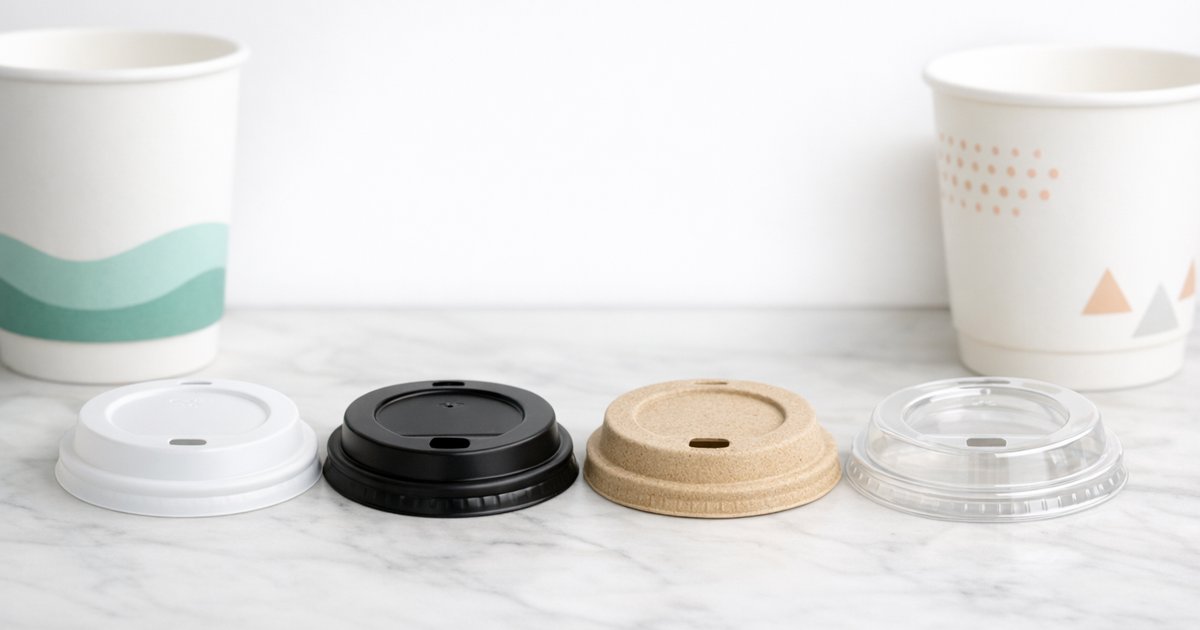
    We supply three common lid types in the typical Australian café sizes (80mm and 89mm): PS (polystyrene), moulded fibre and CPLA. Each option has different cost, appearance and compostability traits — choose based on budget, branding and waste‑stream availability.

    PS (polystyrene) lids — standard & economical

    • What: Injection‑moulded plastic lids (usually white or black).
    • Pros: Lowest cost, tight/snag‑free fit and consistent splash/sip protection.
    • Cons: Not biodegradable; recycling availability depends on local council services in Australia.
    • Best for: High‑volume outlets prioritising cost and consistent performance.

    Fibre lids — moulded paper pulp, natural look

    • What: Moulded paper‑pulp lids with a textured, natural finish.
    • Pros: Premium, eco‑friendly appearance; recognised by customers as a sustainable choice.
    • Cons: Higher cost than PS; industrial composting usually required; performance with very long holds can vary.
    • Best for: Brands that want a rustic look and match lids with compostable cups.

    CPLA lids — compostable with PS‑like performance

    • What: Crystallised PLA is a plant‑based resin that snaps and fits like conventional plastic but is industrially compostable.
    • Pros: Very similar fit and heat resistance to PS; better consumer sustainability story.
    • Cons: More expensive than PS; requires industrial composting (not home compostable); local processing availability varies across Australia.
    • Best for: Businesses using compostable cups or wanting a greener lid without compromising fit.

    Sizes, fit and compatibility

    Our lids come in two size groups that match common cup diameters: 6/8oz and 12/16oz. Typical pairings:

    • 8oz cups — 6/8oz lids (PS, CPLA, Fibre)
    • 12oz cups — 12/16oz lids (PS, CPLA, Fibre)
    • 16oz cups (single‑wall only) — 12/16oz lids (PS, CPLA, Fibre)

    Practical note: Always trial lids with a sample pack to confirm fit, sip comfort and appearance.

    Key pricing & ordering essentials

    Quick facts to know before you order coffee cup lids Australia:

    • Minimum cup order: 500 cups (lids are usually ordered in cartons of 1,000).
    • Common lid diameters: 80mm and 89mm to match standard cup rims.
    • Printing: Full‑colour CMYK printing available on cups; lids are typically unprinted.
    • Production & lead times: Standard: 10 business days production + 2–3 days metro freight. Rush: 5–7 business days.
    • Freight & packaging: Freight charged at cost (typically $30–$150 depending on weight/destination). Lids generally arrive in cartons of 1,000.
    • Extras: Free artwork templates (AI & PSD).

    Which lid should you choose?

    Use these quick cues based on budget, sustainability goals and customer experience:

    Choose PS lids if

    • You need the lowest cost and the most consistent fit for busy service.
    • You prioritise durability and consistent sip performance over compostability.

    Choose CPLA lids if

    • You want an industrially compostable lid that performs like PS.
    • You have access to industrial composting or will provide clear disposal guidance to customers.

    Choose fibre lids if

    • Your brand emphasises a natural, premium aesthetic and sustainability messaging.
    • You accept slightly higher cost and possible variation in long‑hold performance.

    Compatibility — quick pairing guide

    Cup Recommended lid(s) Notes
    Single‑wall (PE) PS, CPLA PS is best for cost; note a PE‑lined cup is not fully compostable even with a CPLA lid.
    Double‑wall (PE) PS, CPLA PS is common; CPLA offers an eco alternative with similar fit.
    Double‑wall compostable (PLA/CPLA) CPLA, Fibre Match compostable cups with compostable lids to support clear sustainability claims.

    Practical tips and trade‑offs

    • Check local processing: Most compostable lids (CPLA, fibre) require industrial composting — check your council or commercial organics provider before advertising compostability in Australia.
    • Customer perception: Fibre lids often read as most eco‑friendly to customers, even when both fibre and CPLA need industrial composting.
    • Stocking strategy: Keep a small run of PS lids for busy periods if you offer compostable lids to balance cost and availability.
    • Try before you buy: Order a sample pack to test lid fit, sip comfort and aesthetics before committing to a full order.

    Next steps — test and order

    We print full‑colour CMYK on cups and provide free artwork templates plus a design layout service. Upload your logo and we’ll prepare print‑ready artwork for approval. To test combinations, request your sample pack, or visit our product page to see pricing and request a quote.

    For a full overview of cups and lids together, see our Custom Printed Coffee Cups — Australia guide.

    Ready to decide? Request a sample pack to try lids and cups, or visit our product page for pricing and to request a quote. Remember: minimum order is 500 cups — a practical choice for cafés and events across Australia looking for reliable coffee cup lids Australia businesses trust.

    Related guides

  • Minimum Order Quantities for Custom Cups: What to Expect

    Minimum Order Quantities for Custom Cups: What to Expect

    Short answer: Our custom coffee cups minimum order is 500 cups (ex GST). Standard turnaround is 10 business days production + 2–3 days metro freight; rush is 5–7 business days. We include free artwork templates (AI & PSD).

    At a glance

    • Minimum order: 500 cups (ex GST)
    • Turnaround: Standard 10 business days production + 2–3 days metro freight. Rush (5–7 business days).
    • Extras: free artwork templates.

    Why suppliers set custom coffee cups minimum order quantities (MOQs)

    MOQs exist because each custom print run carries fixed setup costs that don’t reduce with each extra cup. Typical fixed costs include artwork setup, digital plates or screens, colour separation, machine setup and test runs, plus quality control and handling. Those one‑off costs are spread across the run; the larger the run, the lower the fixed cost per cup.

    Our 500‑cup minimum keeps unit prices affordable for Australian cafés, market stalls, events and one‑off promotions while keeping upfront spend and storage manageable.

    How per‑cup pricing improves as you scale

    Per‑cup price is made up of a fixed setup portion plus a variable material/print portion. As quantity increases, the fixed portion is spread over more cups and the per‑cup cost falls. Larger runs reduce unit cost but require higher upfront spend and more storage — so 500 is often the best compromise for small businesses, pop‑ups and launches.

    For current prices, see the printed coffee cups page.

    Why a 500‑cup minimum is a good sweet spot

    Our custom coffee cups minimum order of 500 is deliberately set to support Australian small businesses, pop‑ups and events. Benefits include:

    • Low‑risk testing: Trial a new design or promotion without committing to thousands of cups.
    • Event‑friendly quantities: 500 suits market stalls, product launches, weddings and small festivals — minimising excess stock.
    • Manageable inventory & cashflow: Easier to store and less impact on cashflow than very large orders.
    • Predictable lead times: Standard production and optional rush service make planning straightforward.

    How to choose between 500, 1,000 or more

    Ask the following:

    1. Is this a one‑off event or ongoing daily service?
    2. Do you have storage space and cashflow for a larger run?
    3. Can you consolidate orders across sites, seasons or partners to reduce unit costs?

    If you’re unsure, start with 500 and order a sample pack to confirm material, print and lid choices before scaling.

    Practical tips to lower overall cost

    • Keep artwork simple — heavy ink coverage, gradients and special effects increase costs and can affect lead times.
    • Order lids in bulk — ordering together can reduce the per‑drink cost.
    • Consolidate sizes where possible — mixing sizes gives flexibility but can affect per‑size pricing.
    • Consider sustainability: compostable cups cost more but can strengthen your environmental messaging and appeal to eco‑conscious customers.

    Ordering details at a glance

    • custom coffee cups minimum order: 500 cups (ex GST)
    • Cup types: Single‑wall (PE), Double‑wall (PE), Compostable (PLA/CPLA)
    • Sizes: 8oz, 12oz, 16oz
    • Printing: Full‑colour CMYK. We provide free artwork templates (AI & PSD) and a design layout service.
    • Turnaround: Standard 10 business days production + 2–3 days metro freight. Rush 5–7 business days.
    • Freight: Charged at cost — typically $30–$150 depending on quantity and destination

    Next steps — samples, quotes and ordering

    Want to inspect materials and print quality before committing? Order our sample pack to feel cup weight, test lids and check print fidelity.

    Ready for a tailored quote based on your artwork, quantities (500, 1,000, 5,000 or custom), lids and freight? Request a tailored quote — we’ll include any rush fees and exact lead times.

    View our custom printed coffee cups product page or get a sample pack here. For a full overview of choices, quantities and sustainability options, see our complete buyer’s guide.

    Need help deciding? Contact us for personalised advice on the right quantity and cup type for your business — we’ll explain how the custom coffee cups minimum order of 500 compares to larger runs for budget, timing and sustainability.

    Related guides

  • Compostable vs Standard Paper Cups: An Honest Comparison

    Compostable vs Standard Paper Cups: An Honest Comparison

    Compostable vs Standard Paper Cups: An Honest Comparison

    Quick answer: Compostable vs standard paper cups each have trade-offs: compostable cups lower plastic contamination and support a stronger sustainability message where industrial composting exists, but they cost more and aren’t accepted everywhere. For most Australian cafés and events your best choice depends on local council waste infrastructure, branding priorities and budget.

    Why this comparison matters for Australian businesses

    Choosing between compostable and standard paper cups affects your waste stream, customer messaging and costs. This guide cuts through marketing claims to compare materials, disposal, performance, pricing and lead times relevant to Australian cafés, caterers and event organisers.

    Head-to-head: compostable vs standard paper cups

    Material and lining

    • Standard paper cups: paperboard with a polyethylene (PE) lining. Durable and inexpensive, but the PE film usually prevents kerbside recycling and means cups typically end up in landfill.
    • Compostable cups: paperboard with a certified compostable lining such as PLA or similar industrial-compostable films. They’re designed to break down in industrial composting conditions rather than persist as conventional plastics.

    Disposal — what actually happens in Australia?

    • Compostable cups require industrial composting to break down properly. Not all councils accept them in green/organics bins — always check your local council before switching.
    • Standard paper cups with PE lining are rarely recyclable through kerbside recycling and usually go to landfill unless your local material recovery facility has a specific program.

    Performance and customer experience

    • Both types reliably hold hot drinks. Double-wall cups (or using sleeves for single-wall cups) give noticeably better insulation and customer comfort.
    • Compostable linings can have a slightly different mouthfeel, but most customers won’t notice in everyday service.

    For current prices, see the printed coffee cups page.

    Lead times & rush options

    • Standard production: 10 business days + 2–3 business days freight to most metro areas.
    • Rush production: 5–7 business day turnaround.

    Pros & cons at a glance

    Compostable cups — pros

    • Lower risk of plastic contamination when composted correctly.
    • Stronger sustainability message for customers and marketing.
    • Available as custom-printed options for branded cups.

    Compostable cups — cons

    • Higher upfront cost compared with standard paper cups.
    • Require industrial composting and aren’t accepted universally by councils.

    Standard paper cups — pros

    • Lower cost and widely available.
    • Reliable supply for high-volume outlets where price is critical.

    Standard paper cups — cons

    • PE lining makes recycling difficult; many end up in landfill.
    • Less aligned with sustainability-focused branding than compostable alternatives.

    Practical recommendations for Australian cafés & events

    1. Check your local council’s organics policy and waste contracts — if industrial composting is available or the council accepts compostable cups, compostable cups are a strong option for sustainability and marketing.
    2. If predictable disposal and the lowest cost are your priority, standard paper cups are the pragmatic choice — choose double-wall for better heat retention and customer comfort.
    3. Mix your approach: use compostable cups front-of-house for customers and branded takeaway, and standard cups for back-of-house or very high-volume events to control costs.

    Ordering custom printed cups from us

    We supply custom-printed single-wall, double-wall and compostable coffee cups (minimum order 500). Free templates are included, and we offer a sample pack so you can feel the materials and check print quality before you commit.

    Ready to order? Browse our printed cup range: Order printed coffee cups. Want to check materials and print in person? Order a sample pack.

    Further reading & resources

    For a full guide on sizes, linings and artwork setup, see our pillar guide: Custom printed coffee cups — Australia guide. You can also read our posts on compostable certifications and council policies for more local detail.

    Final word

    Compostable vs standard paper cups isn’t purely an environmental decision — it’s a question of local infrastructure and budget. If sustainability is core to your brand and your local waste system can handle compostables, they’re worth the premium. If you need the lowest cost and widest availability, standard paper cups remain a practical option.

    Related reading

    Questions about pricing, artwork or council acceptance? Contact our team — we’ll help you choose the best option and can supply free templates.

    Related guides

  • What Size Coffee Cup Do I Need? 8oz, 12oz & 16oz Explained

    What Size Coffee Cup Do I Need? 8oz, 12oz & 16oz Explained

    What Size Coffee Cup Do I Need? 8oz, 12oz & 16oz Explained

    Short answer: If you’re asking “what size coffee cup do I need?” pick 8oz for espresso‑led serves (short black, piccolo), 12oz as the everyday takeaway size, and 16oz for large or iced/American‑style drinks. Minimum orders are 500 cups (per design), standard turnaround is 10 business days production + 2–3 days freight and rush is 5–7 business days.

    Overview: common takeaway cup sizes in Australia

    The most common takeaway coffee cup sizes used by Australian cafés are 8oz, 12oz and 16oz. Each size suits different drinks, service styles and branding needs:

    • 8oz — small; ideal for short blacks, piccolos and smaller lattes.
    • 12oz — the everyday choice; the most popular size for lattes, cappuccinos and long blacks.
    • 16oz — large; best for iced drinks, American‑style coffees, smoothies and large serves.

    Which drinks suit each size?

    8oz — espresso‑led serves

    8oz is perfect when the coffee is espresso‑forward and you want less milk or a smaller serve.

    • Short black, piccolo, small flat white
    • Kids’ hot chocolate or small cappuccinos

    12oz — the most versatile option

    12oz covers the widest range of drinks and is the best single choice if you can only pick one size.

    • Regular latte, cappuccino and long black
    • Batch‑brew filter coffee, hot chocolate and chai
    • Offers a good balance of print area for branding and unit cost

    16oz — large serves, iced and American‑style

    Choose 16oz for iced‑drink menus, large lattes and when customers expect a bigger serve.

    • Large lattes, mochas and smoothies
    • Iced coffee, iced latte, iced tea and cold‑brew

    How to decide: what size coffee cup do I need for my café?

    Answering “what size coffee cup do I need?” depends on your menu, sales mix and service style. Use this quick checklist:

    • If you must choose one size: 12oz — it suits most drinks and customers in Australia.
    • Add 8oz if you serve many piccolos or small espresso drinks.
    • Add 16oz if iced drinks or large serves make up a significant portion of sales.

    How size affects cost, branding and perceived value

    • Unit cost: Larger cups use more material and cost more per unit.
    • Print area: 12oz and 16oz give more lateral space for logos and wrap designs than 8oz.
    • Perceived value: Bigger cups can feel like better value — ensure pricing and portion control reflect ingredient costs.

    For current prices, see the printed coffee cups page.

    Freight is charged at cost (typically $30–$150 depending on quantity and destination).

    Cup constructions, minimums and lead times

    We offer three constructions: single‑wall (PE), double‑wall (PE) and compostable double‑wall (PLA/CPLA). Sizes available are 8oz, 12oz and 16oz (16oz is single‑wall only).

    • Minimum order: 500 cups per design.
    • Printing: Full‑colour CMYK print.
    • Templates & design: Free AI/PSD templates and a design layout service with proofs before printing.
    • Standard turnaround: 10 business days production + 2–3 days metropolitan freight.
    • Rush option: 5–7 business days (available on most sizes).

    Practical tips for artwork and print layout

    • Keep logos and important text inside the central print area — edges can be obscured by sleeves or hands.
    • Use high‑contrast colours for readability in daylight and on the move.
    • Download our AI/PSD templates to check exact print areas for 8oz, 12oz and 16oz.

    We provide a design layout service and proofs before printing to help get placements and colours right.

    Quick FAQ

    What size coffee cup do I need if I can only choose one?

    12oz — it covers the broadest range of drinks and customer expectations in Australia.

    How many of each size should I order?

    That depends on your sales mix.

    Can I get lids to match?

    Yes. Lids (PS, fibre or CPLA) are available and we’ll advise compatibility with your chosen cup style.

    Next steps — get samples or a quote

    Ready to order or compare options? Visit our custom printed coffee cups product page for full specs and to start a quote. Prefer to feel the product first? Request a sample pack and we’ll send physical samples showing print quality and lid fit.

    For a deeper look at choosing cup materials, sizes and branding advice, read our complete buyer’s guide to custom printed coffee cups in Australia.

    Still unsure what size coffee cup do I need? Contact us with your sales mix and we’ll recommend the right sizes and quantities — remember the minimum order is 500 cups.

    Related guides

  • Single Wall vs Double Wall Coffee Cups: Which Should You Choose?

    Single Wall vs Double Wall Coffee Cups: Which Should You Choose?

    Single Wall vs Double Wall Coffee Cups: Which Should You Choose?

    Short answer: For most Australian cafés and roasters the best balance of perceived quality and functionality is double‑wall; single‑wall is the lowest‑cost option for very high‑volume takeaway operations. Minimum order 500 — order a sample pack or get a quote to compare in person.

    What we’re comparing

    Quick definitions:

    • Single‑wall (PE) — one paper layer with a polyethylene lining; lightweight and cost‑effective.
    • Double‑wall (PE) — two paper layers with an insulating air gap or corrugated inner; better thermal performance and a thicker hand‑feel.
    • Compostable (PLA/CPLA) — cups using compostable lining materials; higher unit cost and require industrial composting to break down effectively.

    Quick takeaway: insulation, comfort and use cases

    • Insulation: Double‑wall keeps drinks hotter longer and the outer surface cooler — often removing the need for a cardboard sleeve on 12oz+ drinks.
    • Comfort & brand feel: Double‑wall feels thicker and more premium; single‑wall is slimmer and lighter.
    • Best for: choose double‑wall for sit‑down cafés, roasters and premium brands; choose single‑wall for festival stalls, market stalls and very high‑volume takeaway outlets where cost per cup is the priority.

    How much warmer is double‑wall?

    Double‑wall cups reduce heat transfer to the outer surface and retain temperature longer. That makes them useful where customers sit, work or travel with their drink. Single‑wall cups are fine when drinks are handed out quickly, or when you use sleeves and prioritise lower weight and cost.

    Branding, print area and artwork support

    Both single‑wall and double‑wall cups support full‑colour CMYK printing and detailed artwork. We provide free AI and PSD templates plus a design layout service so you can preview your branding. For full artwork specs, print tips and disposal guidance see our complete buyer’s guide.

    For current prices, see the printed coffee cups page.

    Lids and lead times

    • Lids: PS, fibre, CPLA options. Match compostable lids to compostable cups where required.
    • Minimum order: 500 cups.
    • Standard production: 10 business days + 2–3 days metro freight (freight charged at cost).
    • Rush production: 5–7 business days.
    • Printing & design: Full‑colour CMYK printing. Free templates included.
    • Sample pack: Order a sample pack to test insulation, hand‑feel and your branding on each cup type.

    When to choose single‑wall

    • Very high‑volume operations where unit cost is the priority (festival stalls, market traders, busy takeaway shops).
    • Short dwell times — drinks are handed out and consumed quickly.
    • When you want a slim aesthetic or need the 16oz single‑wall size.
    • Budget marketing runs and large reorders.

    When to choose double‑wall

    • Premium cafés, roasters and hospitality brands wanting to lift perceived quality and customer comfort.
    • Businesses aiming to reduce or remove cardboard sleeves and simplify service.
    • Locations where customers sit, work or travel with their drink — double‑wall keeps hands comfortable for longer.
    • If you want a compostable double‑wall option for sustainability messaging (note higher unit cost and the need for industrial composting).

    Trade‑offs and environmental considerations

    No cup is perfect. Single‑wall uses less material and costs less but may require sleeves (extra waste). Double‑wall reduces sleeve use and feels premium but uses more material and costs more. Compostable cups require industrial composting to break down effectively — they will not decompose quickly in standard landfill or most home composts. Consider local disposal infrastructure and clear customer communication if you choose compostable options.

    How to decide for your business — single wall vs double wall coffee cups

    1. Prioritise customer comfort and brand experience? Choose double‑wall.
    2. Prioritise lowest unit cost and high turnover? Choose single‑wall.
    3. Want compostable? Only choose this if you can guarantee appropriate disposal and accept the higher unit cost.

    Try before you buy — order samples

    Still unsure? Order a sample pack to feel the difference between single‑wall and double‑wall cups in person. Samples include lids and printed mockups so you can test insulation, hand‑feel and how your branding looks on each cup type.

    Ready to place an order or request a quote? Visit our custom printed coffee cups product page to view sizes, upload artwork and request pricing. For full guidance on artwork and disposal options, see our complete buyer’s guide.

    Key figures at a glance

    • Minimum order: 500 cups.
    • Lead times: Standard 10 business days + 2–3 days freight; Rush 5–7 business days.
    • Design support: Free templates; sample pack available.

    Related guides

  • The Complete Buyer’s Guide to Custom Printed Coffee Cups in Australia

    The Complete Buyer’s Guide to Custom Printed Coffee Cups in Australia

    The Complete Buyer’s Guide to Custom Printed Coffee Cups in Australia

    Custom printed coffee cups are a cost-effective way for Australian cafés, events and brands to get mobile exposure, build consistent presentation and support promotions. Quick facts: minimum order 500 cups per SKU; standard production 10 business days + 2–3 days metro freight; rush production available (5–7 business days). Want to feel the stock or see print quality? Order a sample pack or request a quote on our product page.

    Why choose custom printed coffee cups?

    Every takeaway cup is a branding touchpoint. Branded or custom printed coffee cups increase local visibility, encourage social shares and give customers a consistent, professional experience.

    • Brand exposure: Visible on the street, in photos and online.
    • Customer experience: Professional presentation raises perceived value.
    • Cost-effective marketing: Long-lasting impressions for a low per-cup cost.
    • Event & seasonal use: Short runs for launches, festivals and campaigns.

    Cup types — single-wall, double-wall and compostable

    Choose by budget, insulation and sustainability messaging. We supply three common options across Australia and print full-colour CMYK on each.

    Single-wall (PE)

    • Overview: Most economical, PE-lined paper cup.
    • Pros: Lowest cost, lightweight, suited to high-volume cafés.
    • Cons: Can feel hot to hold — sleeves recommended for very hot drinks.
    • Sizes: 8oz, 12oz and 16oz.

    Double-wall (PE)

    • Overview: Two paper walls with an insulating air gap for a premium hand-feel.
    • Pros: Better heat protection and premium presentation without a sleeve.
    • Cons: Higher price, slightly heavier.
    • Sizes: 8oz and 12oz.

    Compostable (PLA / CPLA)

    • Overview: Plant-based lining for stronger sustainability messaging where commercial composting exists.
    • Pros: Reduced fossil-plastic content and better eco positioning for conscious customers.
    • Cons: Requires industrial composting to break down fully; higher cost.

    For a deeper technical breakdown of materials and environmental claims, see our guide: Which type of custom coffee cup should I choose?

    Choosing the right size

    Common Australian sizes: 8oz (small), 12oz (medium) and 16oz (large). Match size to your menu items and customer expectations.

    • 8oz: Short black, piccolo or small flat white — cost-efficient for high-volume service.
    • 12oz: Versatile for lattes and cappuccinos.
    • 16oz: Large takeaway — available as single-wall only.

    For current prices, see the printed coffee cups page.

    Other costs to budget for:

    • Lids: We can match lid type to your cups and include them in your quote.
    • Artwork & templates: AI/PSD templates are included with your order.
    • Freight: Charged at cost — typically $30–$150 depending on quantity and destination; large orders are palletised.

    Lids — materials and styles

    Pick lids by service style and cup material. Common materials: PS (polystyrene), fibre (paperboard) and CPLA (compostable). Common styles include sip-through for hot drinks, open for quick sips, and flat for iced drinks with a straw or plug. We list lid options and pricing in every quote.

    Design and artwork — practical tips

    Good cup design is bold and simple — you’re printing on a curved surface that moves. We print full-colour CMYK and provide templates plus a design layout service.

    Design checklist

    • Prioritise a clear logo and short message; avoid small, dense text.
    • Use strong contrast and avoid hairline fonts that won’t reproduce well.
    • Decide full-wrap vs panel (logo-only) for impact vs budget.
    • Use our AI/PSD templates for correct seam placement and bleed.
    • Pantone matching is possible but can add cost or lead time — ask when requesting a quote.

    If you don’t have in-house design, use our design layout service: upload a logo and direction and we’ll prepare a print-ready proof. More advice: Designing prints for coffee cups.

    Ordering process — step-by-step

    1. Request a quote: Tell us cup type, size, quantity and preferred lids — we’ll include freight estimates and lead times.
    2. Provide artwork: Upload files or use our templates and request the layout service.
    3. Approve proof: We send a digital mock-up — check spelling, placement and colours carefully.
    4. Production & payment: Production begins once artwork is approved and payment terms are met.
    5. Delivery: Standard metro freight is 2–3 days after production; regional delivery times vary and may attract additional fees.

    Minimum order: 500 cups per SKU. For testing, consider ordering a sample pack or purchasing unprinted stock for very small runs.

    Production timeframes and rush options

    • Standard: 10 business days production + 2–3 days metro freight.
    • Rush: 5–7 business days production available (subject to schedule and artwork readiness).

    To avoid delays: supply final artwork using our templates, approve proofs promptly and factor in regional freight times during peak seasons.

    Delivery and logistics

    We ship Australia-wide and freight is charged at cost (typically $30–$150). Large orders are palletised — ensure your receiving location can accept pallet deliveries. Residential addresses may attract extra fees or require signatures; supply a business address where possible.

    Storage: keep cups in a cool, dry place away from direct sunlight to preserve print quality.

    FAQs — quick answers for cafés, events and marketers

    What is the minimum order?

    500 cups per SKU. To test stock and print, order a sample pack (includes sample cups, lids and templates).

    Can I order lids and sleeves?

    Yes — we can include sleeves in your quote on request.

    Do you print full-colour?

    Yes — full-colour CMYK printing. Pantone matching is available on request (may affect price or lead time).

    Are compostable cups truly compostable?

    Compostable (PLA/CPLA) cups require industrial composting to break down fully and may not compost in household bins or landfill. Check local council and event waste-stream arrangements before choosing compostable options.

    Can you help with design?

    Yes — we offer a design layout service. More comprehensive design work can be arranged for an additional fee.

    What’s included in the quoted price?

    Prices cover printing and packaging and are shown ex GST. Lids and freight are additional; we include freight estimates in all quotes.

    Next steps — request samples or a quote

    Want to inspect materials first? Order a sample pack (includes cups, lid options and templates). Ready to order or get a tailored price and proof? View the product page and request a quote.

    Quick checklist before you order

    • Choose cup type (single-wall, double-wall, compostable).
    • Confirm size(s) and quantities — minimum 500 per SKU.
    • Decide lid material and style and include them in the quote.
    • Prepare artwork using our AI/PSD templates or upload a logo for our layout service.
    • Confirm delivery address and pallet acceptance for large orders.
    • Allow standard production time (10 business days) or request rush early.

    Related guides

    Need help? View our printed coffee cups product page to request a quote or order a sample pack and check stock and print quality in person.