
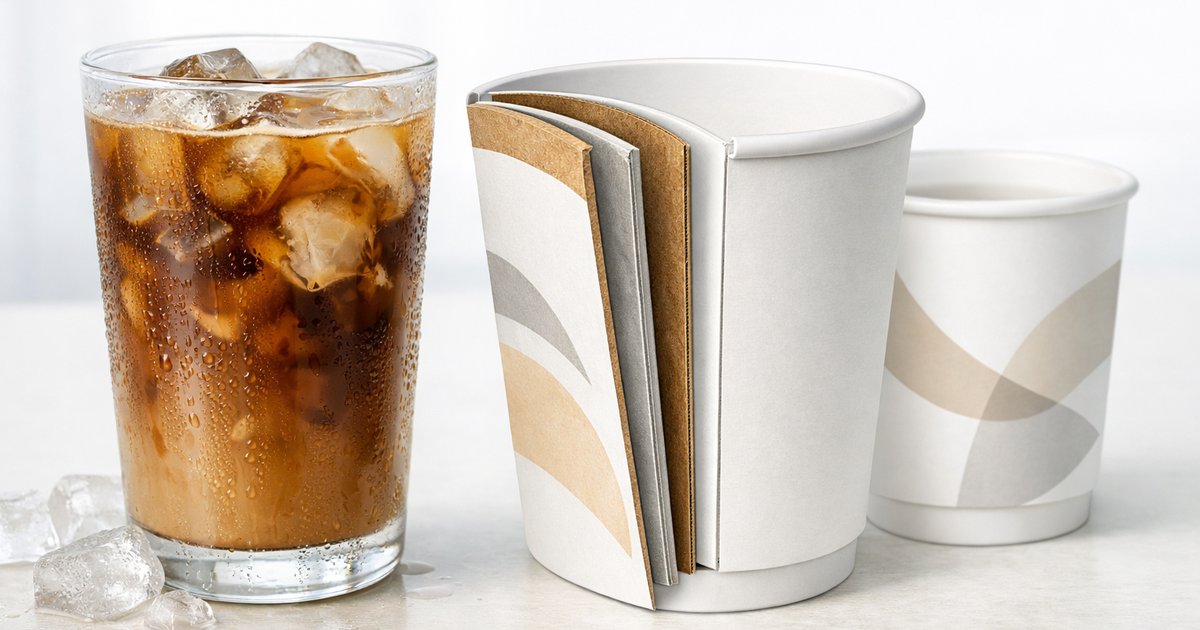
Short answer: a hot cup and a cold cup are solving different engineering problems. Hot cups manage heat and steam. Cold cups manage condensation, ice volume and a dome lid for straws and toppings. You can serve a cold drink in a hot cup, and plenty of venues do, but it comes with real downsides. We supply hot cups, not cold cups, and this guide explains the difference so you can plan properly.
The problem cold drinks create
When a drink is colder than the surrounding air, moisture from the air condenses on the outside of the cup. That is the entire design challenge, and it drives everything else.
Condensation causes three practical problems:
- Slippery cups. A wet exterior is harder to hold and easier to drop.
- Wet surfaces. Rings on tables, damp counters, soggy napkins and paper bags.
- Board softening. Sustained external moisture works against paperboard, which is designed to resist liquid on the inside face, not the outside.
A hot cup’s lining is on the inside. Its outer surface is printed board with no barrier against external moisture, which is precisely what condensation attacks.
Four other differences
Ice takes up space. An iced drink is typically half ice by volume, so cold cups are usually specified larger than the equivalent hot drink. A 16oz iced coffee holds far less coffee than 16oz suggests.
Lids are a different shape. Cold drinks want a dome lid, for a straw, or to clear whipped cream or toppings. Hot cup lids are flat or lightly raised with a sip opening, and are designed to control steam and splashing. Our lid range is built for hot cups: see the paper cup lids guide.
Cold drinks are often meant to be seen. Layered iced lattes, cold brew and colourful drinks sell partly on appearance, which is why clear cups dominate that market. An opaque paper cup hides the product.
Insulation matters less. Keeping cold in is a lower priority than keeping hot in, since ice does much of the work and cold drinks are usually consumed faster.
What cold cups are usually made from
- PET. Clear rigid plastic. The standard for iced drinks because it shows the product, resists condensation damage entirely, and takes a dome lid.
- PLA. A clear plant-based alternative to PET, but with a lower heat tolerance, which matters in a hot car or in summer storage.
- Cold-specific paper cups. Paper cups specified for cold service, usually with a different board and coating suited to external moisture. These do exist and are used where a business wants a paper look for cold drinks.
Australian state regulations on single-use plastics affect what is permitted for some of these materials and vary by state. Check single-use cup regulations in Australia before committing to a plastic cold cup.
Can you just use hot cups for cold drinks?
Yes, within limits, and it is a reasonable choice if iced drinks are a small part of your trade.
What to expect if you do:
- Condensation on the outside, so plan for napkins or coasters
- Cups should not sit filled for long periods
- Your lid options are hot-drink lids, so no dome and no straw provision
- Print quality is unaffected while the cup is dry, but a persistently wet exterior is not doing your branding any favours
A double wall cup handles this better than a single wall one, because the outer wall stays drier and the extra rigidity resists softening. If you are going to serve cold drinks in hot cups, use double wall.
What we supply
Our range is printed hot cups in 6oz, 8oz, 12oz and 16oz, with hot-drink lids. We do not currently supply PET cold cups, dome lids or cold-specific cup stock.
We would rather say that plainly than take an order that will not do what you need. If iced drinks are a significant share of your trade, you will want a dedicated cold cup supplier for that part of your range. If they are occasional, our 16oz cups are the practical option and plenty of venues use them that way.
Where to go from here
For hot drink service, see what size coffee cup do I need and our printed coffee cups. If you are unsure whether our cups suit your menu, tell us what you serve and we will give you a straight answer.