
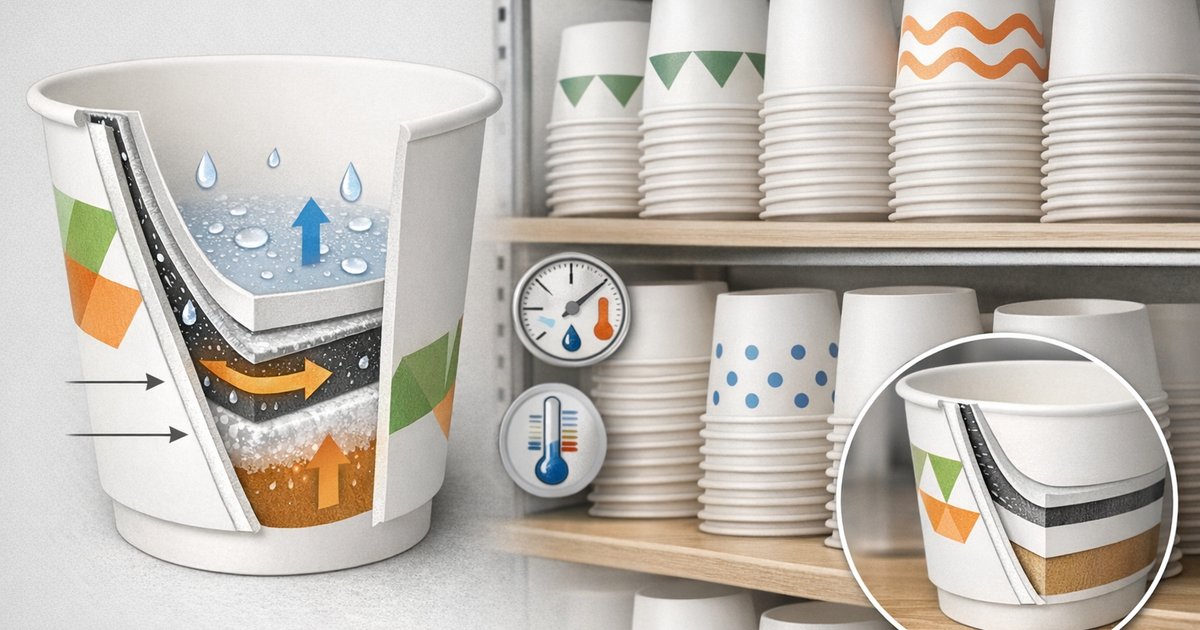
How to Store Paper Coffee Cups (Shelf Life & Conditions)
Short answer: When storing paper coffee cups, keep them dry, cool and out of direct sunlight — ideally 15–25°C, low humidity, and stored off the ground on shelves or pallets. Under these conditions most cups will retain quality for 12+ months. If you want to check print, feel and lid compatibility first, order a sample pack.
Quick facts
- Ideal temperature: 15–25°C
- Humidity: low / dry — avoid damp rooms
- Shelf life: 12+ months when stored correctly
- Minimum order: 500 cups
- Standard production: 10 business days + 2–3 days metro freight; rush: 5–7 business days
Why correct storage matters
Correct storing paper coffee cups protects print quality, structural integrity and hygiene. Cups exposed to humidity, heat or strong odours can soften, warp, stick together or pick up smells — causing waste, customer complaints and damage to your brand presentation.
Ideal storage conditions
Follow these environmental controls to maximise shelf life and avoid problems in Australian climates (hot summers and humid coastal areas):
| Condition | Recommendation | Why it matters |
|---|---|---|
| Temperature | 15–25°C | Prevents adhesives/linings softening and reduces condensation risk. |
| Humidity | Low / dry — avoid damp areas | High humidity softens paper, weakens cup walls and can cause sticking. |
| Light | Away from direct sunlight | Prevents fading of printed designs and heat stress. |
| Placement | Off the ground — on shelves or pallets | Reduces risk of water damage, dirt and pests. |
| Odours | Keep away from chemicals, cleaners and strong-smelling foods | Paper can absorb smells which affect beverage aroma. |
Packaging and stacking
Keep cups in their original cartons until use — the packaging protects against dust, light and mechanical damage and makes FIFO (first in, first out) rotation simple. Stack cartons on shelving or pallets, avoid over-stacking, and keep pallet shrink-wrap intact until required.
Shelf life: how long will they last?
When storing paper coffee cups correctly (dry, 15–25°C, out of sunlight), most cups maintain quality for 12+ months. Print colours remain stable and the paper lining holds integrity. If cups are stored in high humidity, direct sun or near heat sources, visual and structural degradation can appear within weeks.
Printed cups vs compostable cups
Printed designs can fade if left in sunlight or heat. Compostable (PLA/CPLA) cups behave similarly in normal storage, but are slightly more sensitive to prolonged high temperatures and very high humidity — avoid storing them in hot rooms or next to ovens. Store compostable and coated (PE-lined) cups in the same recommended environment where possible.
Practical storage workflow for businesses
- Accept deliveries onto pallets or shelving in a dry storage area — keep cartons off concrete floors to avoid moisture transfer.
- Label boxes with delivery date and implement FIFO rotation so older stock is used first.
- Keep high-turnover sizes accessible; store slow-moving stock higher or further back.
- Maintain simple inventory records to avoid over-ordering. Small cafés may prefer smaller, more frequent orders or staggered deliveries to fit limited storage.
Minimum orders, lead times and planning
Our minimum order is 500 cups. Example lead times and options:
- Standard production: 10 business days + 2–3 days metro freight
- Rush fulfilment: 5–7 business days
If storage space is limited, plan orders around usage rates or ask about staggered deliveries when you place your order.
Avoid these common storage mistakes
- Storing in humid or damp rooms: Cups absorb moisture and can stick together.
- Leaving boxes in sunlight: Causes print fade and heat stress to linings and adhesives.
- Storing near strong odours: Paper can pick up smells from chemicals, food or waste areas.
- Piling boxes on the floor: Risk of water damage and pests — always use pallets or shelving.
- Mixing new and old stock without rotation: Leads to waste and inconsistent product quality.
Fire safety and compliance
Paper cups are combustible. Store sensibly by:
- Keeping quantities organised and avoiding obstruction of exits.
- Following local fire codes for storage of paper goods.
- Avoiding storage near heat sources (ovens, hot-water systems) and electrical panels.
Quick troubleshooting
If you receive cups that look damp, warped, discoloured or smell unusual:
- Isolate the affected stock and do not use it for food service.
- Check storage conditions (humidity, leaks, recent temperature spikes).
- Contact your supplier with photos and batch information — many issues are remedied if caused in transit or at source.
Inventory tips for cafés, events and marketing teams
- Small cafés: order smaller quantities more often or request staggered deliveries to reduce storage pressure.
- Event planners: schedule deliveries close to event dates and store in a cool, dry staging area.
- Marketing teams with printed stock: keep plain cups for daily use and reserve limited-run printed cups for campaigns to avoid premature fading.
Ordering, samples and artwork
We offer full-colour CMYK printing, artwork templates (AI & PSD), a design layout service and sample packs so you can check print, feel and lid compatibility before committing to a bulk order. Order a sample pack or view our custom printed coffee cups product page to explore options. For planning tips and more on materials, read our complete buyer’s guide.
Freight is charged at cost and depends on quantity and destination. Standard production and rush lead times are listed above.
Storing paper coffee cups: quick checklist
- Store at 15–25°C, low humidity
- Keep boxes off the ground on shelves or pallets
- Avoid direct sunlight and strong odours
- Use FIFO rotation and label delivery dates
- Keep original packaging until use
- Follow fire safety rules for paper goods
Samples, help and next steps
Unsure about quantities or how to store cups at a particular site? We can help estimate usage and advise on ordering frequency. Order a sample pack to check print, feel and lids. To place an order or explore cup options, visit our custom printed coffee cups page or read our complete buyer’s guide for more planning tips.
Need personalised advice? Contact us and we’ll help you balance cost-effective ordering with practical storage for your business.