How Hot Can a Paper Coffee Cup Handle? Temperature Limits
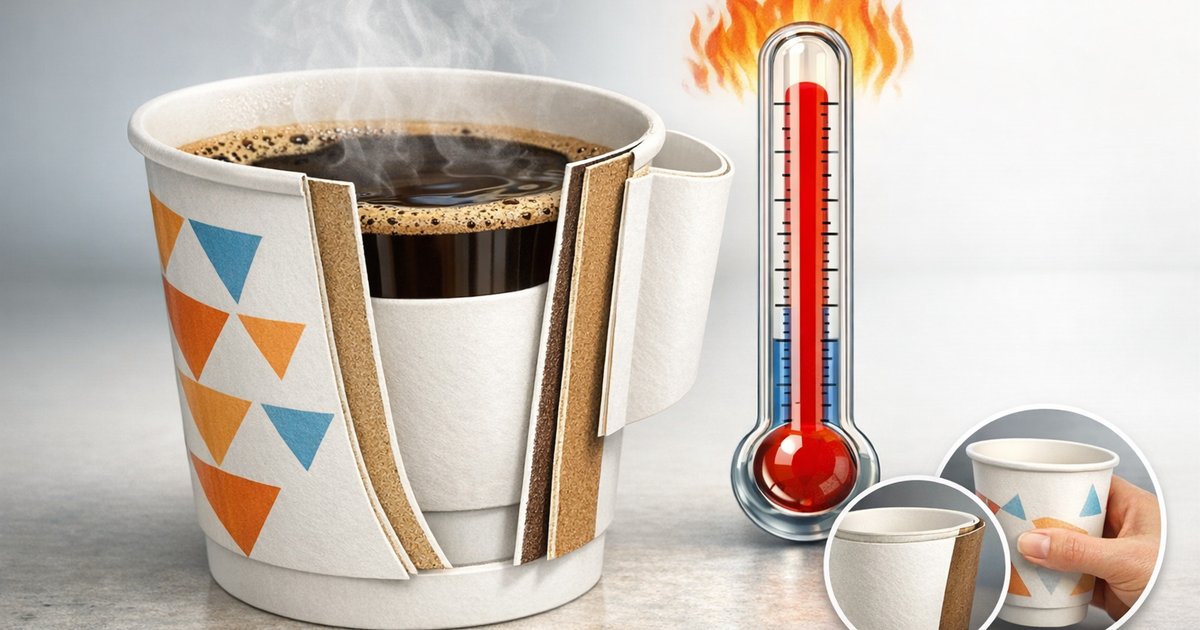
Short answer: The paper coffee cup temperature limit depends on the internal lining: PE‑lined cups are stable at boiling (~100°C), while compostable PLA/CPLA linings typically begin to soften at about 60–70°C. Double‑wall construction improves insulation and hand comfort but does not change the lining’s heat tolerance.
How linings determine the paper coffee cup temperature limit
The lining — not the paperboard — sets how hot a cup can safely handle. Use the lining type to pick the right cup for your service:
- PE (polyethylene) — industry standard. PE‑lined single‑wall and double‑wall cups tolerate boiling water (~100°C) and are recommended when pouring straight from kettles, urns or commercial machines.
- PLA / CPLA (compostable) — better for compostability and sustainability messaging, but these linings soften or lose stiffness at roughly 60–70°C. Avoid pouring straight off the boil to prevent deformation.
Quick comparison: lining temperature & best use
| Lining | Approx. heat tolerance | Best for |
|---|---|---|
| PE | Up to ~100°C (boiling) | High‑temperature service, urns, high‑volume catering |
| PLA / CPLA | Softens around 60–70°C | Lower‑temperature takeaway, sustainability‑focused venues (allow short cool‑down) |
Practical implications for Australian cafés and events
- High‑temperature service: for urns, large events or pouring from kettles choose PE‑lined cups to avoid warping.
- Sustainability focus: compostable PLA/CPLA cups are fine for typical takeaway serving temperatures — just allow a brief cool‑down when pouring very hot liquids.
- Comfort & insulation: double‑wall cups improve hand comfort and heat retention but do not increase the lining’s heat tolerance.
Brew temperature vs serving temperature
Match cup choice to how you serve drinks:
- Brew/extraction: espresso and commercial machines typically extract at about 90–96°C; kettles reach ~100°C.
- Typical serving: cafés often hand over drinks around 70–80°C — safe for PE cups and close to the softening point of PLA linings.
Simple tips to avoid problems with hot liquids
- When using PLA/CPLA cups, ask baristas to wait 30–60 seconds after brewing before filling to reduce softening risk.
- For events with urns, use PE‑lined cups and the correct lids to reduce spills and heat loss.
- Choose double‑wall for takeaway, outdoor service or when customers hold drinks for longer.
- Test with a sample pack before committing — cup feel and insulation are best assessed in person.
Food safety, printing and quality
All our cups use food‑grade linings and are printed in full‑colour CMYK. Normal hot‑drink use will not affect external print, though repeated exposure to steam and very hot liquids can increase exterior wear over time. We provide free artwork templates (AI & PSD) and a design layout service to help get your branding right before production.
Ordering details and lead times
Minimum order: 500 cups.
Sizes available: 8oz, 12oz, 16oz. Lids: PS, fibre and CPLA.
Lead times: Standard production 10 business days plus 2–3 business days metro freight. Rush option 5–7 business days.
Frequently asked questions
Can I pour boiling water into compostable cups?
Technically yes, but PLA/CPLA linings can soften around 60–70°C. For consistent service, avoid filling PLA cups directly from boiling equipment or let the liquid cool slightly before pouring.
Does double‑wall allow hotter drinks?
No. Double‑wall construction improves insulation and hand comfort but does not change the lining’s heat tolerance — the paper coffee cup temperature limit is still set by the lining material.
Which cup should my café choose?
If you often pour near‑boiling liquids or run high‑volume catering, choose PE‑lined cups. If sustainability is a priority and you serve at typical café temperatures, compostable PLA/CPLA cups are a good option if you manage fill temperatures.
Summary
The key takeaway: the paper coffee cup temperature limit is determined by the lining. PE‑lined cups tolerate about 100°C, while PLA/CPLA compostable linings typically soften at about 60–70°C. Double‑wall cups help with comfort and heat retention but do not raise the lining’s heat tolerance. Match cup type to your service temperature and sustainability goals to avoid deformation in service.
Want to compare options in person? Order a sample pack or view our full range of custom printed coffee cups (PE vs compostable, sizes, lids). For a deeper look at materials, printing and ordering, see our complete buyer’s guide.
Ready to order? Minimum order 500 cups; free templates are included to help get your branding café‑ready. Start with a sample pack or begin a full order at custom printed coffee cups.