Category: Sustainability

  • Cup Recycling Programs in Australia: How They Actually Work

    Cup Recycling Programs in Australia: How They Actually Work

    Short answer: your kerbside recycling bin cannot process a plastic-lined cup, but dedicated collection programs can. They work by keeping cups out of general waste entirely, collecting them separately, and sending them to processors with technology that separates the plastic liner from the paper fibre. Simply Cups is the best-established program in Australia. It is a paid service, and it only works if your team actually uses it properly.

    Why a separate program is needed at all

    A takeaway cup is paperboard laminated to a thin plastic film. Standard material recovery facilities are not equipped to separate them, so cups in a kerbside bin are generally screened out and landfilled, and can contaminate the paper stream on the way.

    That is the gap these programs fill. They are not a different bin for the same system. They are a parallel collection route to a different kind of processor. Background in are paper coffee cups recyclable in Australia.

    Simply Cups

    Simply Cups is an initiative of Closed Loop and is Australia’s largest paper cup recycling program. The model works like this:

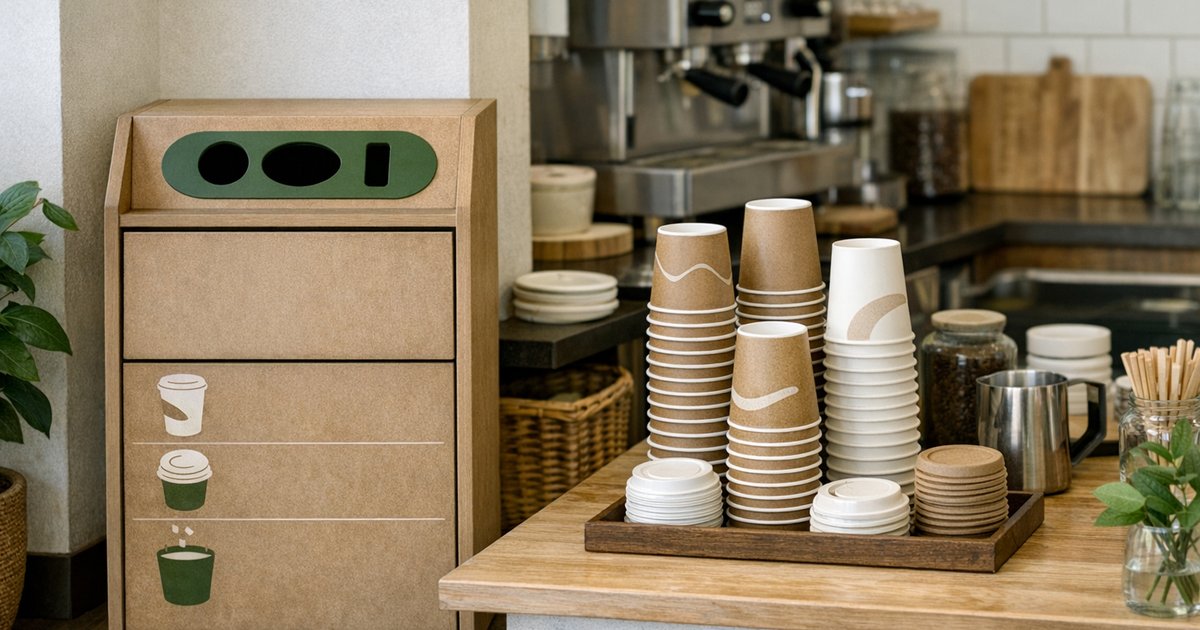
    • You register as a collection point and receive collection equipment, typically a dedicated back-of-house 240 litre bin.
    • Cups are collected separately from your general waste, on a schedule you choose. Weekly, fortnightly and four-weekly options are available depending on your volume.
    • Collected cups go to processors who separate the liner from the fibre.
    • The recovered material is turned into products such as bench seating, kerbing and car stops.
    • You receive reporting on the volume collected, which is genuinely useful if you report on sustainability.

    It is a paid service, charged as a regular fee that depends on your collection frequency and volume. Pricing changes, so get a current quote directly rather than relying on a figure quoted on a blog.

    Other routes worth knowing

    • Council and precinct schemes. Some councils and business districts run cup collection trials or permanent programs. These come and go, so check what is currently operating in your area rather than assuming.
    • Large site programs. Universities, hospitals, stadiums and corporate campuses often run their own collections, which is why you will see dedicated cup bins on campuses. See university and school branded cups.
    • Commercial organics. If you use compostable cups and have a commercial organics service that explicitly accepts certified compostable packaging, that is a legitimate route. Confirm acceptance in writing, because many organics streams exclude packaging. See can compostable cups go in my green bin.
    • Responsible Cafes. Focused on encouraging reusables rather than collecting cups, but a useful network if reducing cup volume is your aim.

    What actually determines whether it works

    Every venue that has tried this will tell you the same thing: the technology is not the hard part. Contamination is.

    • Lids and straws are usually not accepted with the cups, because they are a different material. They have to be separated at the bin.
    • Liquid must be emptied. Cups half full of coffee cause problems downstream.
    • Front of house versus back of house matters. A public-facing bin gets contaminated by customers. Staff-managed back-of-house collection is far more reliable, which is why programs are often set up that way.
    • Signage and staff briefing are not optional. A bin with no explanation becomes a general waste bin within a week.

    A badly run collection produces a contaminated load that gets rejected, which means you paid for a service and still sent cups to landfill.

    Questions to ask before signing up

    1. What is the total cost, including equipment, collection and any minimum term?
    2. What exactly is accepted, and are lids included or excluded?
    3. What is the contamination threshold, and what happens to a rejected load?
    4. Is my location actually serviced, at the frequency I need?
    5. What reporting do I receive, and in what format?
    6. What happens to the material afterwards, specifically?

    Be careful how you advertise it

    Joining a program does not make your cups recyclable in a general sense, and it does not entitle you to print “recyclable” on them. What you can accurately say is that your venue participates in a cup collection program, and that cups returned to your venue are recycled through it.

    That distinction matters under Australian Consumer Law. See eco claims on coffee cups.

    The honest ranking

    If reducing cup impact is the goal, in order of effect:

    1. Serve sit-in customers in ceramic. Free, immediate, and removes the cup entirely.
    2. Encourage reusables for regulars, with a discount if it suits your pricing.
    3. Join a collection program for the cups you genuinely cannot avoid.
    4. Choose the lining deliberately, matched to the disposal route you actually have.
    5. Order accurately so you are not throwing away unused stock. See how many cups your cafe needs.

    Note that changing cup material sits fourth. Where the cup goes matters more than what it is made of, which is the single most useful thing to understand about this topic.

    Where to go from here

    See how to make your coffee cup packaging more sustainable and how many cups Australia uses each year. For compostable options, view our compostable custom coffee cups.
  • Eco Claims on Coffee Cups: What You Can Legally Print

    Eco Claims on Coffee Cups: What You Can Legally Print

    Short answer: the words you print on a cup are marketing, and environmental marketing is regulated. Under Australian Consumer Law you must be able to substantiate green claims, and the ACCC has published eight principles setting out what good practice looks like. “Eco”, “green” and “environmentally friendly” printed on their own are exactly the kind of broad, unqualified claims the regulator warns against.

    This is general information to help you ask better questions, not legal advice. If a claim is central to your marketing, get it reviewed properly.

    Why a cup counts as advertising

    Businesses tend to think of packaging as packaging and advertising as advertising. The law does not draw that line. A statement printed on a cup, presented to a customer as a reason to feel good about a purchase, is a representation to consumers in trade or commerce.

    Misleading or deceptive conduct provisions apply to it, the same as they would to a billboard. The ACCC considers a business to be greenwashing where it uses a claim making a product seem better or less harmful for the environment than it really is.

    The ACCC’s eight principles

    In December 2023 the ACCC published Making environmental claims: A guide for business, setting out eight principles:

    1. Make accurate and truthful claims
    2. Have evidence to back up your claims
    3. Don’t hide or omit important information
    4. Explain any conditions or qualifications on your claims
    5. Avoid broad and unqualified claims
    6. Use clear and easy-to-understand language
    7. Visual elements should not give the wrong impression
    8. Be direct and open about your sustainability transition

    Principles 5 and 7 are the ones takeaway cups trip over most often, for reasons worth spelling out.

    Where cup claims go wrong

    “Eco-friendly” and “green” on their own

    These are the textbook broad, unqualified claims. Friendly compared with what? In which respect? A claim that cannot be tested cannot be substantiated. Say the specific thing instead.

    “Recyclable” without the conditions

    The high-risk claim for cups. A standard lined cup is technically recyclable only where specialised separation processing exists, which is not most kerbside systems. Printing “recyclable” with no qualification tells a customer they can put it in their yellow bin, which is generally wrong. See are paper coffee cups recyclable in Australia.

    If a claim depends on conditions, principle 4 says explain them.

    “Compostable” without saying which kind

    Industrial composting and home composting are different claims with different standards behind them. A cup certified for industrial composting is not a home compostable cup, and a customer putting it in a backyard bin has been misled. Access to industrial organics collection also varies by council. See what compostable actually means.

    Visual greenwashing

    Principle 7 catches what the words do not. Green colourways, leaf motifs, kraft-brown stock and imagery of forests all communicate an environmental claim without stating one. If the cup is a standard plastic-lined cup, that visual language may create a misleading impression on its own.

    This is the practical risk in choosing kraft board and letting it do your marketing for you. See are kraft coffee cups actually more eco-friendly.

    Symbols and logos you are not entitled to use

    Certification marks belong to certification schemes. Use one and you are representing that the product holds that certification. Only use marks you hold current certification for, and only in the form the scheme permits. A generic recycling arrows symbol is also a representation, not decoration.

    Better and worse ways to say it

    Risky Why Safer
    Eco-friendly cup Broad, unqualified, untestable Name the specific attribute you can evidence
    Recyclable Usually conditional on specialist processing State where and how it can actually be recycled
    Compostable Ambiguous between industrial and home Certified commercially compostable, where facilities accept it
    Plastic-free Often untrue of the lining Only if the whole cup genuinely contains no polymer
    Carbon neutral Requires a substantiated methodology Only with a documented, verifiable basis

    A practical process before you print

    1. Write down every environmental claim on the artwork, including implied ones from colour and imagery.
    2. For each, ask what evidence you hold. Not what your supplier said in an email. A document.
    3. Get supplier documentation in writing, naming the specific stock, certification and standard.
    4. Add the conditions. If a claim depends on facilities being available, say so.
    5. Check the visuals separately. Cover the words and ask what the design alone implies.
    6. Keep the file. Substantiation you cannot produce later is not substantiation.

    Proofing is the natural checkpoint for this, because it is the last moment before thousands of cups carry the claim. See how coffee cup printing works.

    How we handle it

    We will tell you what our stock is and provide what documentation the manufacturer supplies. We will not write green marketing copy for you or sign off claims, because the claim is yours and the substantiation obligation sits with the business making it.

    If you want to say something specific about your cups and are unsure whether it holds up, ask us what the material actually is and start from the facts.

    Where to go from here

    Read the ACCC’s Making environmental claims: A guide for business on the ACCC website. Then see compostable vs standard paper cups and cup recycling programs in Australia for what you can genuinely say about end-of-life.

  • How Many Takeaway Coffee Cups Does Australia Use Each Year?

    How Many Takeaway Coffee Cups Does Australia Use Each Year?

    Short answer: Australia is generally estimated to use around 1.8 billion single-use hot drink cups a year, and the large majority go to landfill because standard kerbside recycling cannot process a plastic-lined cup. Below are the commonly cited figures, who publishes them, and the caveats that rarely get mentioned alongside them.

    The headline figures

    Figure Commonly cited value Source
    Single-use hot drink cups per year ~1.8 billion Widely cited, including WWF-Australia and Simply Cups
    Share going to landfill The large majority Clean Up Australia and others
    Cups as a litter item Among the most collected items in national clean-up data Clean Up Australia Litter Report

    Some sources put the total nearer 1.5 billion and others above 1.84 billion. That spread tells you something important about the numbers, which we come back to below.

    What that scale means in practice

    1.8 billion cups a year works out at roughly 5 million a day, or about 70 cups per Australian per year. For an individual, that is a coffee or two a week in a takeaway cup, which sounds unremarkable. Multiplied by a population, it becomes a waste stream.

    Why so few are recycled

    This is the part that surprises people, and it is not about consumer behaviour.

    A takeaway cup is a laminate of paperboard and a thin plastic film. Most Australian paper mills and material recovery facilities cannot separate those two materials, so a cup put in a kerbside recycling bin is generally screened out and sent to landfill anyway.

    Putting cups in the recycling bin does not fix this, and can contaminate the paper stream. The full explanation is in are paper coffee cups recyclable in Australia.

    Specialised processing does exist. Programs such as Simply Cups collect cups separately and use technology that separates the liner from the fibre, with the recovered material going into products like bench seating and kerbing. That requires separate collection, not kerbside. See cup recycling programs in Australia.

    What about compostable cups?

    Compostable cups only deliver their benefit if they reach an industrial composting facility that accepts them. In a general waste bin they go to landfill like any other cup, and in a kerbside recycling bin they are a contaminant.

    Access to appropriate organics collection varies enormously by council. See can compostable cups go in my green bin.

    Read these numbers carefully

    We would rather set out the limitations than repeat a statistic with false confidence.

    • They are estimates, not measurements. No one counts cups nationally. Figures are modelled from consumption data, industry supply estimates and surveys, which is why credible sources disagree.
    • Definitions differ. Some counts cover hot drink cups only. Others include cold cups, lids or all disposable food service items. Comparing two numbers built on different definitions is meaningless.
    • Many figures are years old. A statistic quoted in 2026 may trace back to a study conducted well before the pandemic reshaped takeaway behaviour.
    • Round numbers travel. “1.8 billion” gets repeated because it is memorable, and repetition is not corroboration.

    If you are citing a figure in a tender, a sustainability report or marketing material, trace it to its original source and cite that. And be aware that using such figures in your own environmental marketing brings ACCC obligations, covered in eco claims on coffee cups.

    What actually moves the number

    For a cafe, the interventions that measurably reduce cup volume are unglamorous:

    • Ceramic for sit-in customers. The largest single reduction available, and it lowers your costs.
    • Separate cup collection. Changes where cups go, which is the actual problem.
    • Accurate ordering. Unused and damaged stock is waste before it ever holds a coffee. See how many cups your cafe needs.
    • Lids only when asked. A meaningful share of drinks do not need one.

    Notice that changing cup material is not top of that list. Where the cup ends up matters more than what it is made of.

    Our position

    We sell single-use printed cups, so we have an obvious interest here. Our view is that takeaway cups serve a real purpose, that the volumes involved are genuinely large, and that businesses should reduce where they can and handle the rest properly. Pretending the waste question does not exist helps nobody.

    Where to go from here

    For the environmental detail, read the carbon footprint of a paper coffee cup and how to make your packaging more sustainable. For state rules, see single-use cup regulations in Australia.

    Sources

    • Clean Up Australia, Single Use Coffee Cups, and the annual Litter Report
    • WWF-Australia and Plastic Free July, policy briefing on disposable coffee cups
    • Simply Cups, an initiative of Closed Loop
    • Department of Climate Change, Energy, the Environment and Water, coffee cup recycling
  • Kraft Brown Coffee Cups: Are They Actually More Eco-Friendly?

    Kraft Brown Coffee Cups: Are They Actually More Eco-Friendly?

    Short answer: not automatically, no. Kraft brown is a board colour, not an environmental property. A brown cup with a standard plastic lining is exactly as recyclable, or as unrecyclable, as a white cup with the same lining. What determines the environmental outcome is the lining and where the cup ends up, not the shade of the paper.

    This is one of the most persistent assumptions in takeaway packaging, and it is worth unpicking carefully, because acting on it can lead you to make a claim you cannot support.

    What kraft actually is

    Kraft refers to a pulping process. Kraft board is typically unbleached or only lightly bleached, which is where the brown colour comes from. White cup board has been bleached to a consistent white.

    So the honest environmental difference is the bleaching stage. Skipping or reducing bleaching does avoid some processing, and that is a genuine if modest difference. It is not nothing, and it is also not the thing people imagine when they see a brown cup.

    What kraft does not change

    Here is the part that matters. A kraft cup still needs a waterproof lining, for exactly the same reason a white cup does: paper alone dissolves under hot liquid.

    That lining is what makes cups difficult to recycle, because most paper mills cannot separate a polymer film from board. So a brown cup with a standard PE lining faces precisely the same end-of-life problem as a white one. See are paper coffee cups recyclable in Australia.

    The visual cue and the actual property have come apart. Brown looks unprocessed, so it reads as compostable. The colour is telling you nothing about the lining.

    The thing that actually matters: the lining

    If your goal is a lower-impact cup, the decision that carries real weight is the lining, not the colour:

    • PE lining. Fossil-based plastic film. Standard, cheapest, hardest to process at end of life.
    • PLA lining. Plant-based, compostable in industrial facilities where accepted.

    A white cup with a compostable lining has a better environmental story than a brown cup with a PE lining, even though the brown one looks greener on the counter. The comparison is set out in PLA vs PE cup lining.

    And the lining only pays off if the cup reaches the right waste stream. A compostable cup in a general waste bin goes to landfill like anything else. See can compostable cups go in my green bin.

    The branding trade-off

    There is a practical printing consequence that often gets discovered too late.

    Kraft board is brown, so it is not a neutral canvas. Every colour you print sits on a warm brown base and shifts accordingly. Blues dull, whites are not achievable as a printed colour, and bright vivid tones lose their punch. Photographic imagery in particular does not reproduce well.

    Designs that work on kraft are the ones that embrace it: one or two colours, bold shapes, strong line work, and the brown itself used as part of the palette. Designs that fight it, like a precise corporate blue or a full-colour photograph, will disappoint you.

    We cover this in how to make your brand colours pop on a paper cup. If your brand depends on exact colour matching, white stock gives you a far more predictable result.

    The claims risk

    This is where the assumption gets expensive. If you choose brown cups and then describe them as eco-friendly, sustainable or recyclable without checking what the lining actually is and where the cup can actually go, you are making an environmental claim you may not be able to substantiate.

    The ACCC has published guidance for businesses making environmental claims, and unsubstantiated green claims attract real regulatory attention. We cover what you can and cannot safely say in eco claims on coffee cups.

    The blunt version: do not let the colour of your cup write your marketing copy.

    So is there any case for kraft?

    Yes, an aesthetic one, and that is a perfectly legitimate reason. Kraft communicates warmth, craft and informality, and it suits a lot of brands. Choose it because it looks right for your business, with a clear understanding that the colour itself is a design decision rather than an environmental one.

    What to do instead if impact is the goal

    1. Choose the lining deliberately. This is the decision with actual environmental content.
    2. Sort out where cups end up. Collection determines outcome more than material does. See cup recycling programs in Australia.
    3. Serve sit-in customers in ceramic. The highest-impact and cheapest change available.
    4. Order accurately. Cups you never use are pure waste. See how many cups your cafe needs.
    5. Make claims you can back. Specific and substantiated beats vague and green.

    Where to go from here

    If your priority is genuinely lower impact, look at compostable custom coffee cups and read compostable vs standard paper cups. To talk through stock options for your design, get in touch.

  • The Carbon Footprint of a Paper Coffee Cup (And How to Reduce It)

    The Carbon Footprint of a Paper Coffee Cup (And How to Reduce It)

    Short answer: The carbon footprint of a paper coffee cup typically sits around 30–80 g CO2e per cup for a standard PE‑lined single‑use cup. Most emissions come from fibre production, the plastic lining and transport; the final climate outcome depends on end‑of‑life handling (landfill, recycling or industrial composting). To inspect materials and print quality, order a sample pack or view our custom printed coffee cups. For a full buying overview, read our custom printed coffee cups guide.

    What contributes to the carbon footprint of a paper coffee cup?

    The carbon footprint of a paper coffee cup is the sum of greenhouse gases released across its life cycle. Key contributors are:

    • Fibre production: Harvesting, pulping, bleaching and drying paper fibres. Virgin pulp normally has higher emissions than recycled content or certified fibre (eg FSC).
    • Plastic lining: Most single‑use cups use a polyethylene (PE) lining; producing and applying that lining adds fossil‑fuel emissions.
    • Printing & converting: Full‑colour CMYK printing and cup manufacture consume energy and consumables — accurate artwork avoids reprints (we offer free templates and a design layout service).
    • Transport: Shipping raw materials and finished cups — local manufacture and consolidated orders reduce per‑cup transport emissions.
    • End‑of‑life: Landfill, incineration, recycling or industrial composting change the net impact depending on local infrastructure and recovery rates.

    Estimated emissions by life stage (typical ranges)

    Life stage Approx. share of CO2e
    Pulp production & paper manufacture 40–60%
    Lining (PE) & lamination 15–30%
    Manufacture & printing 5–15%
    Transport & distribution 10–25% (highly variable with distance and shipping mode)
    End‑of‑life Variable — landfill can produce methane; composting helps only with the right facilities

    How the carbon footprint of a paper coffee cup compares with reusables

    Whether a reusable cup has a lower footprint depends on how many times it’s used and how it’s cleaned. Typical break‑even use counts are:

    • Ceramic mugs: Often ~100–300 uses (efficient dishwasher use reduces the break‑even point; hand‑washing increases it).
    • Reusable polypropylene or stainless cups: Often ~50–200 uses depending on washing method and lifespan.
    • Disposable paper cups: Lower manufacture emissions per item, but single‑use means higher per‑use footprint unless reusables are used many times.

    For takeaway customers, single‑use cups remain practical. The best ways to reduce the carbon footprint of a paper coffee cup are to encourage reuse, choose responsibly sourced board, offer compostable options only where industrial composting exists, and optimise procurement.

    Disposal: landfill, recycling and composting in Australia

    • Landfill: PE‑lined cups break down slowly and anaerobic conditions can generate methane if organics degrade.
    • Recycling: PE‑lined cups require specialised cup recycling streams (availability varies across Australian states and councils), so recycling rates are low in many regions.
    • Composting: Compostable cups (PLA/CPLA) can be better at end‑of‑life — but only if they reach industrial composting facilities with the right temperatures and retention times; home composting and most kerbside green bins are often unsuitable.

    Practical ways Australian businesses can reduce the footprint

    Reducing your paper cup carbon footprint is practical and often cost‑effective. Actions for cafés, caterers and event organisers include:

    • Encourage and incentivise reusables: Offer a discount for BYO cups or run an on‑site reusable cup program and track uptake.
    • Choose compostable only where infrastructure exists: Offer PLA/CPLA cups if your council or local processor accepts them — otherwise they may contaminate recycling.
    • Buy responsibly sourced board: Specify FSC or post‑consumer recycled content to lower forest‑related emissions.
    • Consolidate orders: Avoid frequent small orders — our minimum order is 500 cups, and ordering to this or larger multiples reduces per‑cup transport and packaging impacts.
    • Work with a local supplier: We manufacture in Australia. Standard production is 10 business days plus 2–3 days metro freight; rush is 5–7 business days.
    • Right‑size cups: Offer 8oz, 12oz and 16oz options to avoid over‑serving.
    • Use clear disposal signage: Simple labels and bins increase correct disposal rates and lower contamination.

    Operational tips to cut per‑cup emissions

    • Consolidate and time reorders to reduce transport intensity.
    • Use lids only when necessary — lid options include PS, fibre and CPLA.
    • Use our free artwork templates to avoid reprints caused by artwork errors.
    • Monitor uptake of reusable incentives so you can optimise the program and measure impact.

    Product choices and trade‑offs

    Choose based on operational needs, end‑of‑life and budget.

    • Single‑wall (PE) — lightweight and cost‑effective.
    • Double‑wall (PE) — better heat retention and hand comfort.
    • Compostable (PLA/CPLA) — better end‑of‑life where industrial composting exists.

    Full‑colour CMYK printing is available. We provide AI & PSD artwork templates and a design layout service — upload your logo and we’ll prepare print files for approval. Want to inspect materials and print quality before ordering? Request a sample pack. Ready to order for your café or event? View our custom printed coffee cups and contact our team to discuss compostable or double‑wall options.

    Balanced conclusion

    The carbon footprint of a paper coffee cup is modest per item but accumulates quickly at scale. Reusables usually win after many uses, yet single‑use cups remain important for takeaway, events and hygiene. A pragmatic approach for Australian businesses is a mixed strategy: encourage reuse, offer compostable cups only where local industrial composting exists, buy responsibly sourced fibre and order efficiently to reduce transport emissions.

    Quick checklist for businesses

    1. Check local access to industrial composting and specialised cup recycling in your council area.
    2. Choose cup type accordingly: compostable only where appropriate; otherwise use responsibly sourced PE‑lined or recycled board.
    3. Consolidate orders to reduce freight intensity; remember the minimum order is 500 cups.
    4. Promote reuse incentives and install clear disposal signage to cut contamination.
    5. Use supplier support — free artwork templates and request a sample pack before you order.

    Production & ordering notes: Minimum order 500 cups. Standard production 10 business days plus 2–3 days metro freight. Rush option: 5–7 business days. Free templates available.

    More on sustainable cups

    Related guides

  • Can Compostable Cups Go in My Council Green Bin?

    Can Compostable Cups Go in My Council Green Bin?

    Short answer: For most councils in Australia, compostable cups in the green bin are not yet accepted. Only councils or commercial organics processors that explicitly accept certified industrially compostable packaging (for example AS 4736) will take compostable cups — so don’t put compostable cups in your household green bin unless your council or processor says it’s allowed.

    Key takeaways:

    • Check your council or commercial organics processor before putting compostable cups in the green bin.
    • Businesses must get written acceptance from their collector or industrial composter before switching to compostable cups.
    • We offer AS 4736 certified compostable cups — order a sample pack or start a quote on our custom printed coffee cups page.

    For a full overview of cup types and guidance for cafés, see our complete buyer’s guide.

    Why most councils won’t accept compostable cups in the green bin

    Councils and processing facilities commonly exclude compostable packaging from FOGO/green‑bin collections for three practical reasons:

    • Processing mismatch: Many compostable cups (PLA/CPLA linings) require industrial in‑vessel, high‑temperature composting to break down. Open windrow systems or low‑temperature organics facilities often can’t achieve those conditions.
    • Contamination risk: Sorting systems and staff can’t always distinguish certified compostable cups from traditional plastic‑lined cups, so incorrectly placed items risk contaminating the whole organics batch.
    • Residues and mixed materials: Drink residues, laminated layers or mixed components reduce compost quality and increase processing work.

    Is acceptance growing?

    Yes — acceptance of compostable cups in the green bin is growing in targeted trials and where commercial composters upgrade to in‑vessel systems and improved sorting. Rollout is uneven across states and councils, so you must confirm your local situation before assuming acceptance.

    Practical steps to confirm acceptance

    1. Check your local council’s FOGO/green bin guidance online or call them directly.
    2. Look for wording that explicitly accepts AS 4736 / industrially compostable packaging, or names a commercial processor as accepting compostable packaging.
    3. If you’re a business, get written confirmation from your commercial organics collector or industrial composter before you switch to compostable cups.

    What “accepted” usually requires

    Where compostable cups are accepted, councils or processors will typically require:

    • AS 4736 / industrially compostable certification shown on the product and in supplier documentation.
    • Cups to be mostly empty (no liquid) and placed in the specified organics stream or a dedicated compostable packaging collection.
    • Clear separation and signage to avoid contamination with regular recycling or general waste.

    Household and business alternatives

    Households

    • Use a reusable mug — the best environmental option.
    • Check for local drop‑off points, community compost schemes or café takeback programs that accept certified compostable items.
    • If no alternatives exist, place the cup in general waste — landfill conditions are poor for composting and can generate methane, although compostable cups may break down faster than petrochemical‑lined cups under some landfill conditions.

    Businesses, cafés and event organisers

    Business disposal rules differ from household guidance. To manage compostable cups responsibly:

    1. Choose cups clearly labelled AS 4736 / industrially compostable and keep supplier certification on file.
    2. Arrange a commercial organics collection or a contract with an industrial composter that explicitly accepts compostable packaging — get acceptance in writing.
    3. Train staff and use clear signage to avoid contamination between general waste, recycling and organics streams.
    4. Use takeback schemes or event‑specific collections where local FOGO won’t accept packaging.

    Do compostable cups break down in landfill?

    Compostable cups generally degrade faster than petroleum‑lined cups under the right conditions, but landfill is cool and anaerobic so breakdown is slow and can produce methane. Industrial composting or authorised organics processing is the preferred disposal route for certified compostable cups.

    Outlook for compostable cups in green bins across Australia

    The outlook is positive but gradual. Wider acceptance depends on clearer labelling and certification, investment in in‑vessel composting, improved sorting technology and consistent waste‑acceptance policies across councils and processors. Until acceptance is widespread, always check with your local council or commercial processor before placing compostable cups in the green bin.

    How businesses can prepare now

    • Source AS 4736 certified cups and keep supplier documentation on file.
    • Set up a signed contract with a commercial composting service or join local trials.
    • Train staff, provide clear customer disposal signage and run small pilot collections to check contamination levels.
    • Keep receipts and records from compost processors to demonstrate responsible waste management for councils, events and clients.

    Our compostable cup options — minimums and practical details

    We supply custom printed cups to Australian businesses. Key facts before you order:

    • Minimum order: 500 cups
    • Cup types: Single‑wall (PE), Double‑wall (PE), Compostable (PLA/CPLA)
    • Sizes: 8oz, 12oz, 16oz
    • Printing: Full‑colour CMYK printing; free artwork templates (AI & PSD)
    • Lead times: Standard 10 business days production + 2–3 business days metro freight; Rush 5–7 business days.
    • Sample pack: Order a sample pack — includes material details and certification information.

    For current prices, see the printed coffee cups page.

    Freight: Typically $30–$150 at cost depending on quantity and destination.

    Quick checklist before you switch to compostable cups

    • Confirm whether your council green bin accepts compostable cups (check the council FOGO page).
    • If you’re a business, secure a commercial composting contract that accepts certified items and get it in writing.
    • Choose AS 4736 certified cups and keep supplier documentation.
    • Provide staff training and clear customer signage to avoid contamination.
    • Keep records and receipts from your compost processor as proof of responsible disposal.

    Want to try cups and materials before you commit? Order a sample pack — it includes material samples, certification details and lid options. Ready to order custom printed cups for your business? Start a quote on our custom printed coffee cups page and upload your artwork.

    Need help deciding? Contact us for local council advice on whether you can put compostable cups in your green bin, or help organising commercial composting collection for cafés and events.

    More on sustainable cups

    Related guides

  • How to Make Your Coffee Cup Packaging More Sustainable

    How to Make Your Coffee Cup Packaging More Sustainable

    Short answer: For most Australian cafés and events, a reusable cup programme delivers the biggest waste reduction. Where reusables aren’t feasible, switching to certified compostable cups combined with a commercial composting contract is the next-best option. Complement these with cup recycling collections, BYO incentives, fibre lids and reduced cup sizes for the best results.

    Why sustainable coffee cup packaging matters in Australia

    Customers, councils and corporate clients increasingly expect businesses to reduce single-use waste. Sustainable coffee cup packaging can lower landfill, improve brand reputation and reduce Scope 3 impacts when implemented correctly. The right approach depends on your operations, customer behaviour and local organics/recycling infrastructure.

    Quick ranked choices (from highest to lower impact)

    1. Reusable cup programmes (most impactful)

    Why: Reusables eliminate most single‑use waste and cut lifecycle emissions once the cup is reused enough times.

    • How: Sell branded reusables, offer a deposit or discount for BYO, partner with a sharing service, or install on‑site washing for events/large sites.
    • Costs: Reusable cups typically cost $3–$15 each depending on material and branding. There are also washing hardware, labour or third‑party fees to budget for.
    • Trade-offs: Requires staff procedures, hygiene controls and customer uptake. Best for medium/large cafés, campuses, events and chains.

    2. Certified compostable cups + commercial composting contract (high impact, practical)

    Why: Certified compostable cups can be diverted from landfill into industrial composting, closing the loop when collection exists.

    • How: Choose cups certified to recognised standards (e.g. AS 4736 / EN 13432 where relevant), arrange a commercial organics collection or local composter, and add clear signage and staff training to avoid contamination.
    • Costs: Compostable cups cost more than standard PE‑lined cups.
    • Trade-offs: Contaminated loads can be rejected by composters. Separation at source and education are essential to keep performance high.

    We supply compostable cups with full‑colour CMYK printing, free artwork templates (AI & PSD) and a design layout service to make the switch straightforward.

    3. Specialist cup recycling programmes

    Why: Where industrial composting isn’t available, cup recycling schemes can divert cups from landfill and convert them into new products.

    • How: Provide a dedicated collection bin, partner with a recycler, and communicate clearly which items are accepted to avoid contamination.
    • Costs & trade-offs: Service or membership fees, space for collection and some admin time. Effectiveness depends on clean separation and customer education.

    4. Encourage BYO (bring your own) with discounts

    • How: Offer a small discount (for example, 10–50¢), loyalty points or a permanent BYO price. Promote in‑store and online.
    • Trade-offs: Minor revenue impact which is often offset by reduced cup spend and improved sustainability credentials.

    5. Swap plastic lids for fibre or compostable lids

    • How: Order matching fibre or CPLA lids and confirm fit across your cup sizes.

    6. Reduce cup size options (quick wins)

    • How: Make 8oz/12oz defaults, treat 16oz as a premium option or apply a small upcharge to discourage unnecessarily large servings.
    • Trade-offs: Some customers prefer larger sizes; communicate the sustainability reason for the change to maintain goodwill.

    Practical implementation checklist

    1. Audit current cup use: weekly volumes, size mix, lid types and current waste destination (landfill, organics, recycling).
    2. Choose 1–2 priorities to pilot for 4–8 weeks (e.g. reusable discount pilot or compostable cups + composting contract).
    3. Train staff, add clear signage and set contamination rules for collections.
    4. Track simple KPIs: cups used, BYO uptake, compost/recycling tonnes collected, contamination rate and customer feedback.
    5. Scale what works and share results publicly to build customer goodwill.

    For current prices, see the printed coffee cups page.

    Minimum order: 500 cups. Standard production: 10 business days + 2–3 days metro freight. Rush: 5–7 business days.

    Other details: We offer a sample pack, free artwork templates and a design layout service — order a sample pack to compare materials and lid fit in person.

    Which option should you pick?

    If you can manage logistics and washing, a reusable cup programme gives the largest long‑term impact. If reusables aren’t practical, certified compostable cups paired with a commercial composting contract are a straightforward operational win. Use cup recycling schemes, BYO incentives, fibre lids and size reductions as complementary measures. Our compostable range and design layout service make switching straightforward.

    Next steps & CTAs

    Order a sample pack to compare single‑wall, double‑wall and compostable cups in person. When you’re ready to brand your cups, view our custom printed coffee cups page and consult the complete buyer’s guide for planning tips and timelines.

    Need help choosing? Contact us with your weekly cup volumes, preferred sizes and whether you’re considering composting or reuse — we’ll recommend the most cost‑effective mix and mock up designs using our layout service.

    More on sustainable cups

    Related guides

  • Single-Use Cup Regulations in Australia: State-by-State Guide (2026)

    Single-Use Cup Regulations in Australia: State-by-State Guide (2026)

    Short answer (updated July 2026): There is no single national ban on disposable cups — state and territory rules differ. Western Australia and South Australia now require whole-cup AS-certified compostable products where bans apply, and WA also bans all disposable plastic lids. Before you order, check the single-use cup regulations in Australia that apply to each state or territory and request supplier AS certificates and product data sheets.

    This guide is general information for businesses ordering cups, not legal advice. Regulations change — always confirm requirements with your state or territory regulator before placing large orders.

    Quick reference (at a glance)

    State / Territory Plastic-lined cups Cup lids Key date
    WA Banned unless whole-cup AS-certified compostable Banned (all disposable plastic lids, including compostable plastic) 1 Mar 2024
    SA Banned unless whole product AS-certified compostable (hot & cold) Banned unless AS-certified compostable 1 Sep 2024
    VIC Permitted (EPS / foamed plastic banned) Permitted EPS ban 1 Feb 2023
    NSW Permitted (reforms signalled) Permitted Reforms signalled to 2028
    QLD Permitted Permitted —
    TAS Permitted (staged phase-out signalled; local rules may apply) Permitted Consultation ongoing
    ACT Permitted Permitted —
    NT Permitted (Darwin council ban on council land) Permitted Darwin by-law since 2019

    How to read this guide

    This page summarises the single-use cup regulations in Australia state-by-state, explains what compliant cups look like (AS certification and labelling) and gives practical ordering tips for Australian businesses. For product details, pricing and to place an order visit our printed coffee cups product page. To check materials in person, order a sample pack. For a full overview of options and printing, see our pillar guide: Custom-printed coffee cups — Australia guide.

    Western Australia — the strictest rules

    WA Stage 2 of the Plan for Plastics has applied since 1 March 2024. Key points:

    • Disposable plastic cups and plastic-lined paper cups are banned for hot beverages unless the whole cup is certified to AS 4736 (industrial composting) or AS 5810 (home composting).
    • All disposable plastic lids are banned in WA — this includes compostable plastic lids (CPLA). Use fibre/unlined paperboard lids or encourage reusable lids instead.

    Practical tip: If you trade in WA, only order whole-cup AS-certified compostable cups and pair them with fibre lids. Always request the AS certificate and the product data sheet before purchase and keep copies on file.

    South Australia — hot and cold cups covered

    From 1 September 2024 SA banned single-use plastic beverage cups and lids. Important points for suppliers and businesses:

    • PE-lined cups (and similar polymer-lined cups) are banned unless the whole product holds AS 4736 or AS 5810 certification.
    • Temporary recognition of overseas standards ended 28 February 2026 — AS certification is required now.
    • Since 1 March 2026 compostable products must clearly state whether they are home or industrially compostable on packaging and documentation.

    Victoria

    Victoria banned expanded polystyrene (EPS) and other foamed plastics from 1 February 2023. Standard PE-lined paper cups remain permitted in most uses, but EPS alternatives are required and compostable claims must be accurate and labelled correctly.

    New South Wales

    NSW currently permits plastic-lined paper cups. The NSW Plastics Plan 2.0 signals trials and reforms through to 2028, including reusable cup trials and potential recyclability or product requirements — monitor official NSW sources if you trade there.

    Queensland

    Queensland has no statewide ban on disposable coffee cups as of July 2026. Local councils, events and venues may set stricter rules — always check council policies and event terms for markets or festivals.

    Tasmania

    Tasmania is proceeding with a staged approach to single-use plastics; consultations are ongoing. The City of Hobart has a by-law limiting single-use takeaway packaging, so Hobart traders should verify local rules before ordering.

    Australian Capital Territory

    The ACT has staged bans on some single-use plastics but does not currently prohibit plastic-lined paper cups territory-wide. Check ACT government guidance for updates.

    Northern Territory

    The NT’s Circular Economy Strategy indicates potential future action. Note: the City of Darwin has prohibited disposable coffee cups and lids on council land and at council-run events since 1 January 2019 — check local council controls.

    What compliant cups look like

    • AS certification: look for AS 4736:2006 (industrial composting) or AS 5810:2010 (home composting) on labels and supplier docs — WA and SA require AS certification where bans apply.
    • Clear labelling: compostable products should state explicitly whether they are home or industrially compostable where required (from March 2026 in some jurisdictions).
    • Lids: WA bans disposable plastic lids (including some compostable plastics). Fibre/unlined paperboard lids are the safest option for WA; elsewhere, follow local rules and event requirements.
    • Documentation: request the AS certificate, product data sheet and a sample before bulk ordering — suppliers should be able to supply these on request.

    Practical ordering advice for businesses

    Follow this checklist before placing an order:

    • If you sell in WA or SA: only order whole-cup AS-certified compostable cups (AS 4736 or AS 5810). For WA, pair with fibre lids and keep the AS certificate and product data sheet on file.
    • If you sell interstate: PE-lined cups remain legal in most states today, but policy is trending toward compostable and reusable solutions — consider compostable options for large runs (eg. 5,000+ cups) to reduce the risk of future obsolescence.
    • Events and councils: always check event rules and council policies before trading — local bans can be stricter than state rules.
    • Supply checks: request samples, ask for AS certificates, confirm labelling, and check lid compatibility (fibre lid availability for WA).

    Ordering from CustomCoffeeCups — lead times (500-cup minimum)

    We keep lead times transparent so you can order with confidence:

    • Minimum order: 500 cups.
    • Rush production: 5–7 business day turnaround.
    • Standard production: 10 business days production + 2–3 business days freight.
    • Design support & samples: free print templates are available — request a sample before bulk ordering.

    Want to inspect materials or test print alignment? Order a sample pack or view our printed coffee cups product page to get a quote. If you need a quick compliance check for a particular state, request AS certification and the product data sheet from the supplier before ordering.

    Further reading & related resources

    Sources & official guidance

    Last updated: July 2026. Always confirm current legal requirements with the relevant state or territory regulator before ordering large quantities.

    Related guides

  • PLA vs PE Cup Lining: Environmental Impact Compared

    PLA vs PE Cup Lining: Environmental Impact Compared

    PLA vs PE cup lining: environmental impact and practical advice for cafés

    Short answer: Choosing between PLA vs PE cup lining is a trade‑off: PLA (polylactic acid) gives industrial compostability and avoids plastic fragments when collected into commercial organics, while PE (polyethylene) is lower cost, widely available and reliable for everyday performance but is not compostable and can form microplastics if it fragments. Which is better depends on your local composting infrastructure, budgets and waste collection plans.

    Quick snapshot — PLA vs PE cup lining

    • PLA lining: plant‑based, industrially compostable (AS 4736 / EN 13432), won’t leave microplastic residues when processed correctly, higher unit cost.
    • PE lining: petroleum‑derived, durable and low cost, not compostable and hard to recycle when bonded to paper; may fragment into microplastics in the environment.
    • Practical result: PLA only delivers environmental benefit where commercial composting and correct collection are in place; otherwise PE frequently remains the pragmatic choice.

    What we mean by PLA and PE

    PE (polyethylene) is the thin plastic barrier inside most paper cups. It’s inexpensive, robust and widely used across Australia.

    PLA (polylactic acid) is a bioplastic made from fermented plant starch. It is industrially compostable — that is, it breaks down to water, CO2 and biomass in commercial composting systems but will not compost in home compost or typical kerbside recycling.

    Key environmental differences

    End‑of‑life: composting, recycling and landfill

    PLA requires industrial composting to achieve biodegradation. Look for AS 4736 (Australia) or EN 13432 (EU) certification and clear end‑of‑life instructions. If PLA ends up in landfill it will not provide the composting benefit and may produce methane if the landfill gas is not captured. PE is not compostable; PE‑lined paper cups are technically recyclable only where facilities can separate the plastic from the paper — most mixed cups in Australia currently go to general waste.

    Microplastics

    PE is a fossil polymer and can fragment into microplastics as it weathers. Correct industrial composting of certified PLA results in biodegradation and does not leave microplastic residues.

    Production emissions and resource use

    PLA uses agricultural feedstocks, which require land, water and farming inputs, plus energy for fermentation and processing. PE contains embedded fossil carbon from petroleum. Lifecycle impacts vary by feedstock, energy mix and especially how the cup is disposed of — end‑of‑life treatment is often the major driver of the final footprint.

    Food safety and print quality

    Both PLA and PE linings can meet food‑safety standards and accept full‑colour CMYK printing for branded artwork. Match your lid choice (see below) if you want a fully compostable set.

    Practical considerations for Australian businesses

    Does your area accept compostable packaging?

    PLA only reduces plastic pollution when commercial composting and correct collection are available. Many Australian councils and private organics contractors now accept certified compostable packaging, but availability varies by council and region — check with your local council or waste contractor before ordering PLA cups.

    For current prices, see the printed coffee cups page.

    Performance, lids and lead times

    • Performance: both linings work well for everyday hot drinks; 16oz is available in single‑wall only.
    • Lids: PS, fibre and CPLA lid options are available. Choose CPLA lids to match PLA cups if you want a fully compostable set for industrial facilities (CPLA also requires industrial composting).
    • Turnaround: Standard production 10 business days + 2–3 days metro freight. Rush production 5–7 business days.
    • Free support: we provide free artwork templates (AI & PSD).

    Which lining should your café, event or brand choose?

    There’s no one‑size‑fits‑all answer. Use these scenarios:

    • Cafés in areas with industrial composting: PLA lined cups with CPLA lids are a sensible choice — they reduce plastic residues when collected into organics.
    • Small cafés without composting access: PE lined cups are often more pragmatic; focus on waste reduction (discounts for keep cups), clear signage and staff training.
    • Events & festivals: If you can organise dedicated compost collection, PLA is preferable. If not, plan separation and disposal infrastructure if using PE.

    Operational checks and supplier questions

    • Label bins & cups: Clear labelling reduces contamination of recycling and compost streams.
    • Ask for certification: Request AS 4736 or EN 13432 certificates and written end‑of‑life instructions for compostable products.
    • Include all costs: Factor in lids, collection fees, signage and staff training when comparing PLA vs PE cup lining costs.

    How we support your choice

    At CustomCoffeeCups.com.au we supply both PE and PLA lined cups with full‑colour printing, free artwork templates and a design layout service. Key details:

    • Minimum order: 500 cups
    • Cup types: Single‑wall (PE), Double‑wall (PE), Double‑wall Compostable (PLA/CPLA)
    • Sizes: 8oz, 12oz, 16oz (16oz single‑wall only)
    • Turnaround: Standard 10 business days + 2–3 days metro freight; Rush 5–7 business days
    • Free templates

    Want to feel the difference? Order a sample pack or view our custom printed coffee cups to compare lining feel and print quality. For a deeper buyer’s overview, read our complete buyer’s guide.

    Recommended next steps

    1. Confirm local industrial composting availability with your council or organics contractor.
    2. Calculate total cost including lids, collection and signage.
    3. Choose matching lids (CPLA for PLA cups) to keep a compostable stream intact.
    4. Label cups and bins clearly and train staff on correct sorting.

    Need personalised advice for your location and volumes? Order a sample pack or contact us for a fast quote — minimum order 500 cups.

    More on sustainable cups

    Related guides

  • Compostable Coffee Cups: What Does ‘Compostable’ Actually Mean?

    Compostable Coffee Cups: What Does ‘Compostable’ Actually Mean?

    Compostable Coffee Cups: What Does ‘Compostable’ Actually Mean?

    Quick answer: Compostable coffee cups are paperboard cups lined with a plant-based polymer (usually PLA) that are designed to break down in commercial/industrial composting facilities certified to AS 4736. They will not reliably compost in a backyard bin or landfill — to deliver environmental benefits they must be collected and processed by a certified industrial organics facility.

    What “compostable” means in Australia

    In Australia, “compostable” has a technical definition: the product must biologically break down to carbon dioxide, water, inorganic compounds and biomass within a specified timeframe under controlled industrial composting conditions. For linings and plastics the key standard is AS 4736 (industrial/commercial compostability). AS 5810 covers home compostability — very few beverage cups meet that standard.

    Compostable vs biodegradable vs recyclable

    • Compostable — breaks down to safe residues in an industrial composting facility within a specified time; look for AS 4736 (commercial) or AS 5810 (home) certification.
    • Biodegradable — a vague marketing term: it means a material can be broken down by microbes but gives no guarantee about timescale, conditions or residues.
    • Recyclable — can be reprocessed into new products. Many paper cups with linings (PLA or PE) are not accepted in kerbside recycling; mixing compostable items with recycling can contaminate streams.

    Why industrial composting matters

    Industrial composting facilities maintain sustained high temperatures (typically >60°C), aeration and controlled conditions that reliably break down certified compostable materials and sanitise organic waste. PLA-lined cups will not reliably degrade in a backyard compost heap or landfill, where heat and oxygen are limited and decomposition is incomplete.

    Materials used in compostable cups

    Our compostable cups use a paperboard body with a PLA (polylactic acid) lining — a plant-starch-derived polymer — instead of petroleum-based polyethylene (PE). For a fully compostable cup-and-lid solution we offer compostable CPLA lids; note that you must always check with your organics facility that CPLA is accepted.

    Australian certifications to check

    Certification What it means
    AS 4736 Requirements for plastics (including linings) designed to be composted in industrial facilities (commercial compostability).
    AS 5810 Requirements for compostable products suitable for home composting (rare for coffee cups).

    Disposal realities in Australia

    Compostable cups only deliver environmental benefit when they enter the correct organics stream and are processed by a commercial composting facility that accepts certified compostable packaging. Infrastructure is improving around Australia, but availability varies by council and region — always check with your local council or private waste contractor before placing compostable items in the green bin.

    Common disposal mistakes

    • Putting compostable cups in kerbside recycling — this can contaminate recycling streams.
    • Assuming “biodegradable” equals home compostable — it doesn’t.
    • Throwing certified compostable cups into general waste/landfill — they won’t break down as intended in anaerobic conditions.

    Choosing compostable coffee cups for your business

    Before switching, confirm your local organics service or private composter accepts AS 4736-certified packaging. If you want a fully compostable cup-and-lid option, choose CPLA lids and verify your processor accepts them. Label bins, provide point-of-sale signage and train staff — clear communication reduces contamination and improves diversion rates.

    Key product and ordering details

    • Minimum order: 500 cups.
    • Free: print templates (AI & PSD) — order a sample pack to test feel, print and local disposal.
    • Standard production: 10 business days plus 2–3 days metro freight.
    • Rush production: 5–7 business days.
    • Lids: compostable CPLA lid option available.

    For current prices, see the printed coffee cups page.

    For the full range, bespoke branding options and up-to-date lead times, see our product page: Custom printed coffee cups.

    Labelling and communicating to customers

    Clearly label disposables with correct end-of-life instructions, for example: “Commercially compostable — AS 4736. Place in designated organics/composting collection.” Use counter signage and staff briefings to reduce contamination and ensure cups reach the right facility.

    Practical trade-offs and honest advice

    • Compostable cups are only environmentally better than oil-based plastics when they are collected and processed correctly.
    • If there is no route to industrial composting in your area, compostable cups may end up as general waste and won’t deliver the intended benefit.
    • Compostable options typically cost more than conventional cups — factor price, minimums and lead times into purchasing decisions.

    How to trial compostable coffee cups

    1. Check with your local council or waste contractor that AS 4736 items are accepted in your organics service.
    2. Order our sample pack to test cup feel, lid fit and to trial disposal locally.
    3. Run a small branded order (minimum 500) and trial in a single outlet or event with clear signage and staff training.
    4. For a wider overview on cup options, printing and ordering logistics, read our buyer’s guide: Custom printed coffee cups — Australia guide.

    Quick disposal checklist (for cafés & events)

    • Confirm accepted materials with your organics provider (AS 4736 / CPLA).
    • Label bins clearly: “Organics / Compostable only” — include examples.
    • Train staff to separate lids and cups if required by your processor.
    • Communicate to customers at point of sale to reduce contamination.

    Summary

    Compostable coffee cups are designed to break down in industrial composting facilities (AS 4736) and should only be used where you have a verified collection and processing route. They are not the same as “biodegradable” and are rarely suitable for home composting unless certified to AS 5810. Check local composting availability, order a sample pack to test locally, and label and train staff so cups reach the correct organics stream.

    If you’d like to try compostable coffee cups at your café or event, order a sample pack or view our custom printed coffee cups to discuss branding, lid options and pricing for 500+ cups.

    More on sustainable cups

    Related guides