PLA vs PE cup lining: environmental impact and practical advice for cafés
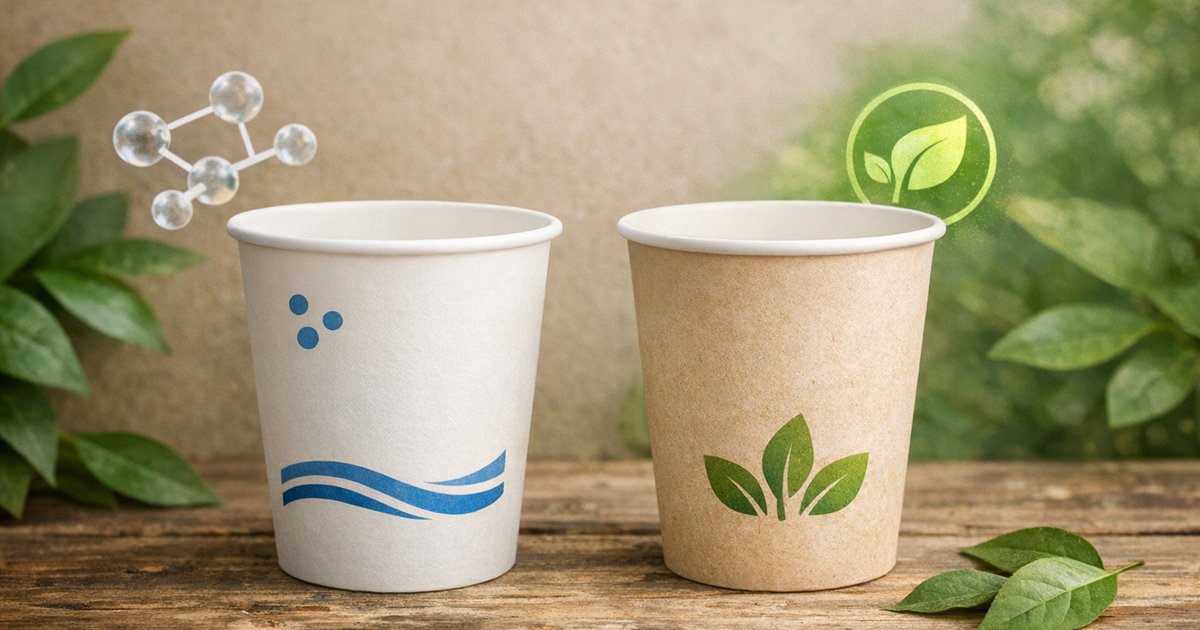
Short answer: Choosing between PLA vs PE cup lining is a trade‑off: PLA (polylactic acid) gives industrial compostability and avoids plastic fragments when collected into commercial organics, while PE (polyethylene) is lower cost, widely available and reliable for everyday performance but is not compostable and can form microplastics if it fragments. Which is better depends on your local composting infrastructure, budgets and waste collection plans.
Quick snapshot — PLA vs PE cup lining
- PLA lining: plant‑based, industrially compostable (AS 4736 / EN 13432), won’t leave microplastic residues when processed correctly, higher unit cost.
- PE lining: petroleum‑derived, durable and low cost, not compostable and hard to recycle when bonded to paper; may fragment into microplastics in the environment.
- Practical result: PLA only delivers environmental benefit where commercial composting and correct collection are in place; otherwise PE frequently remains the pragmatic choice.
What we mean by PLA and PE
PE (polyethylene) is the thin plastic barrier inside most paper cups. It’s inexpensive, robust and widely used across Australia.
PLA (polylactic acid) is a bioplastic made from fermented plant starch. It is industrially compostable — that is, it breaks down to water, CO2 and biomass in commercial composting systems but will not compost in home compost or typical kerbside recycling.
Key environmental differences
End‑of‑life: composting, recycling and landfill
PLA requires industrial composting to achieve biodegradation. Look for AS 4736 (Australia) or EN 13432 (EU) certification and clear end‑of‑life instructions. If PLA ends up in landfill it will not provide the composting benefit and may produce methane if the landfill gas is not captured. PE is not compostable; PE‑lined paper cups are technically recyclable only where facilities can separate the plastic from the paper — most mixed cups in Australia currently go to general waste.
Microplastics
PE is a fossil polymer and can fragment into microplastics as it weathers. Correct industrial composting of certified PLA results in biodegradation and does not leave microplastic residues.
Production emissions and resource use
PLA uses agricultural feedstocks, which require land, water and farming inputs, plus energy for fermentation and processing. PE contains embedded fossil carbon from petroleum. Lifecycle impacts vary by feedstock, energy mix and especially how the cup is disposed of — end‑of‑life treatment is often the major driver of the final footprint.
Food safety and print quality
Both PLA and PE linings can meet food‑safety standards and accept full‑colour CMYK printing for branded artwork. Match your lid choice (see below) if you want a fully compostable set.
Practical considerations for Australian businesses
Does your area accept compostable packaging?
PLA only reduces plastic pollution when commercial composting and correct collection are available. Many Australian councils and private organics contractors now accept certified compostable packaging, but availability varies by council and region — check with your local council or waste contractor before ordering PLA cups.
For current prices, see the printed coffee cups page.
Performance, lids and lead times
- Performance: both linings work well for everyday hot drinks; 16oz is available in single‑wall only.
- Lids: PS, fibre and CPLA lid options are available. Choose CPLA lids to match PLA cups if you want a fully compostable set for industrial facilities (CPLA also requires industrial composting).
- Turnaround: Standard production 10 business days + 2–3 days metro freight. Rush production 5–7 business days.
- Free support: we provide free artwork templates (AI & PSD).
Which lining should your café, event or brand choose?
There’s no one‑size‑fits‑all answer. Use these scenarios:
- Cafés in areas with industrial composting: PLA lined cups with CPLA lids are a sensible choice — they reduce plastic residues when collected into organics.
- Small cafés without composting access: PE lined cups are often more pragmatic; focus on waste reduction (discounts for keep cups), clear signage and staff training.
- Events & festivals: If you can organise dedicated compost collection, PLA is preferable. If not, plan separation and disposal infrastructure if using PE.
Operational checks and supplier questions
- Label bins & cups: Clear labelling reduces contamination of recycling and compost streams.
- Ask for certification: Request AS 4736 or EN 13432 certificates and written end‑of‑life instructions for compostable products.
- Include all costs: Factor in lids, collection fees, signage and staff training when comparing PLA vs PE cup lining costs.
How we support your choice
At CustomCoffeeCups.com.au we supply both PE and PLA lined cups with full‑colour printing, free artwork templates and a design layout service. Key details:
- Minimum order: 500 cups
- Cup types: Single‑wall (PE), Double‑wall (PE), Double‑wall Compostable (PLA/CPLA)
- Sizes: 8oz, 12oz, 16oz (16oz single‑wall only)
- Turnaround: Standard 10 business days + 2–3 days metro freight; Rush 5–7 business days
- Free templates
Want to feel the difference? Order a sample pack or view our custom printed coffee cups to compare lining feel and print quality. For a deeper buyer’s overview, read our complete buyer’s guide.
Recommended next steps
- Confirm local industrial composting availability with your council or organics contractor.
- Calculate total cost including lids, collection and signage.
- Choose matching lids (CPLA for PLA cups) to keep a compostable stream intact.
- Label cups and bins clearly and train staff on correct sorting.
Need personalised advice for your location and volumes? Order a sample pack or contact us for a fast quote — minimum order 500 cups.
More on sustainable cups
- Compostable coffee cups explained
- Can compostable cups go in the green bin?
- Compostable vs standard paper cups
- Sustainable coffee cup packaging
- The carbon footprint of a paper cup
- Compostable custom coffee cups (product & pricing)
- Eco-friendly takeaway cups (product & pricing)