Author: admin

  • How Hot Can a Paper Coffee Cup Handle? Temperature Limits

    How Hot Can a Paper Coffee Cup Handle? Temperature Limits

    How Hot Can a Paper Coffee Cup Handle? Temperature Limits

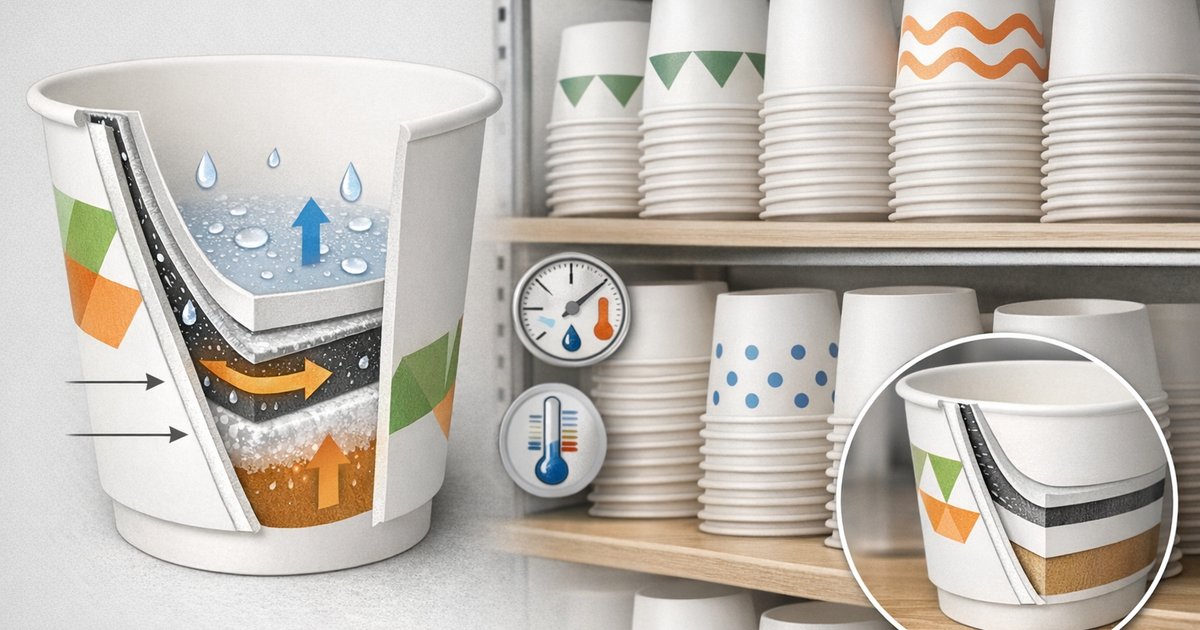
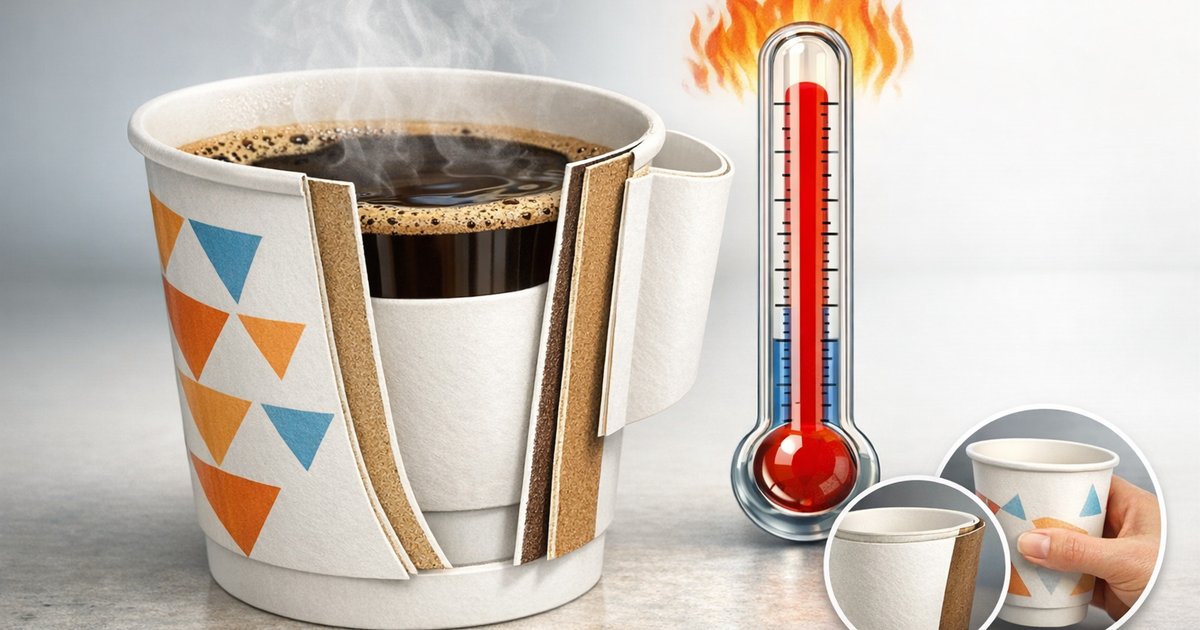
    Short answer: The paper coffee cup temperature limit depends on the internal lining: PE‑lined cups are stable at boiling (~100°C), while compostable PLA/CPLA linings typically begin to soften at about 60–70°C. Double‑wall construction improves insulation and hand comfort but does not change the lining’s heat tolerance.

    How linings determine the paper coffee cup temperature limit

    The lining — not the paperboard — sets how hot a cup can safely handle. Use the lining type to pick the right cup for your service:

    • PE (polyethylene) — industry standard. PE‑lined single‑wall and double‑wall cups tolerate boiling water (~100°C) and are recommended when pouring straight from kettles, urns or commercial machines.
    • PLA / CPLA (compostable) — better for compostability and sustainability messaging, but these linings soften or lose stiffness at roughly 60–70°C. Avoid pouring straight off the boil to prevent deformation.

    Quick comparison: lining temperature & best use

    Lining Approx. heat tolerance Best for
    PE Up to ~100°C (boiling) High‑temperature service, urns, high‑volume catering
    PLA / CPLA Softens around 60–70°C Lower‑temperature takeaway, sustainability‑focused venues (allow short cool‑down)

    Practical implications for Australian cafés and events

    • High‑temperature service: for urns, large events or pouring from kettles choose PE‑lined cups to avoid warping.
    • Sustainability focus: compostable PLA/CPLA cups are fine for typical takeaway serving temperatures — just allow a brief cool‑down when pouring very hot liquids.
    • Comfort & insulation: double‑wall cups improve hand comfort and heat retention but do not increase the lining’s heat tolerance.

    Brew temperature vs serving temperature

    Match cup choice to how you serve drinks:

    • Brew/extraction: espresso and commercial machines typically extract at about 90–96°C; kettles reach ~100°C.
    • Typical serving: cafés often hand over drinks around 70–80°C — safe for PE cups and close to the softening point of PLA linings.

    Simple tips to avoid problems with hot liquids

    • When using PLA/CPLA cups, ask baristas to wait 30–60 seconds after brewing before filling to reduce softening risk.
    • For events with urns, use PE‑lined cups and the correct lids to reduce spills and heat loss.
    • Choose double‑wall for takeaway, outdoor service or when customers hold drinks for longer.
    • Test with a sample pack before committing — cup feel and insulation are best assessed in person.

    Food safety, printing and quality

    All our cups use food‑grade linings and are printed in full‑colour CMYK. Normal hot‑drink use will not affect external print, though repeated exposure to steam and very hot liquids can increase exterior wear over time. We provide free artwork templates (AI & PSD) and a design layout service to help get your branding right before production.

    Ordering details and lead times

    Minimum order: 500 cups.

    Sizes available: 8oz, 12oz, 16oz. Lids: PS, fibre and CPLA.

    Lead times: Standard production 10 business days plus 2–3 business days metro freight. Rush option 5–7 business days.

    Frequently asked questions

    Can I pour boiling water into compostable cups?

    Technically yes, but PLA/CPLA linings can soften around 60–70°C. For consistent service, avoid filling PLA cups directly from boiling equipment or let the liquid cool slightly before pouring.

    Does double‑wall allow hotter drinks?

    No. Double‑wall construction improves insulation and hand comfort but does not change the lining’s heat tolerance — the paper coffee cup temperature limit is still set by the lining material.

    Which cup should my café choose?

    If you often pour near‑boiling liquids or run high‑volume catering, choose PE‑lined cups. If sustainability is a priority and you serve at typical café temperatures, compostable PLA/CPLA cups are a good option if you manage fill temperatures.

    Summary

    The key takeaway: the paper coffee cup temperature limit is determined by the lining. PE‑lined cups tolerate about 100°C, while PLA/CPLA compostable linings typically soften at about 60–70°C. Double‑wall cups help with comfort and heat retention but do not raise the lining’s heat tolerance. Match cup type to your service temperature and sustainability goals to avoid deformation in service.

    Want to compare options in person? Order a sample pack or view our full range of custom printed coffee cups (PE vs compostable, sizes, lids). For a deeper look at materials, printing and ordering, see our complete buyer’s guide.

    Ready to order? Minimum order 500 cups; free templates are included to help get your branding café‑ready. Start with a sample pack or begin a full order at custom printed coffee cups.
  • Custom Coffee Cups for Hotels & Accommodation

    Custom Coffee Cups for Hotels & Accommodation

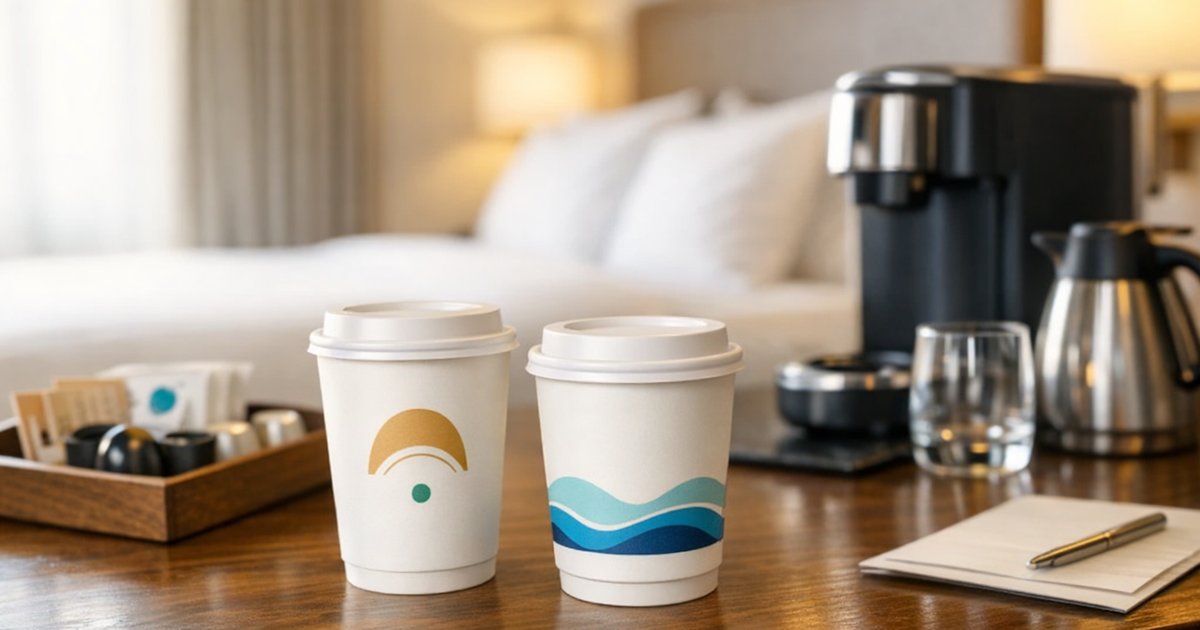
    Custom coffee cups for hotels boost guest experience, reinforce branding and make takeaway service feel premium — ideal for in‑room stations, buffet breakfasts, meetings and lobby coffee. Order a sample pack to check materials and print, or request a quote for your property.

    Why choose custom coffee cups for hotels?

    Branded cups are an inexpensive way to lift perceived quality and keep your brand visible across the guest journey. Custom coffee cups for hotels improve the experience, simplify service and support sustainability goals when you select compostable options.

    Key benefits

    • Premium presentation: Thoughtful branding across check‑in, in‑room stations and meeting rooms feels more considered.
    • Operational speed: Pre‑printed cups reduce manual labelling and speed up busy service periods.
    • Marketing reach: Distinctive cups create shareable moments for guests and social media exposure.
    • Sustainability choices: Compostable PLA/CPLA options for eco‑minded properties.
    • Consistency: Use the same visual identity across outlets, welcome packs and events.

    Who benefits — accommodation types & use cases

    Custom printed coffee cups are suitable for every Australian accommodation type:

    • Boutique hotels: Small batches and bespoke designs for curated presentation.
    • Resorts: Poolside, café and guest outlets to maintain brand visibility across large properties.
    • Motels & roadside stays: Cost‑effective single‑wall for takeaway at reception.
    • Serviced apartments & Airbnb hosts: Professional welcome packs and in‑kitchen presentation.
    • Conferences & events: Branded cups for meeting breaks, sponsored catering and expo stands.

    Cup types, sizes and practical notes

    We supply three main cup types suitable for hotel use:

    • Single‑wall (PE): Economical, lightweight and ideal for high‑volume takeaway.
    • Double‑wall (PE): Better insulation and a premium hand feel for front‑of‑house service.
    • Compostable (PLA/CPLA) double‑wall: Lower plastic content for properties prioritising sustainability.

    Common sizes used in hotels:

    • 8oz — in‑room or smaller serves
    • 12oz — standard café serve
    • 16oz — large takeaway serve (available as 16oz single‑wall only)

    Minimums

    Minimum order: 500 cups.

    Freight charged at cost — contact us for an exact freight estimate to your property.

    Production, artwork and turnaround

    Ordering is simple for hotel teams — we print full‑colour CMYK.

    • Free artwork templates (AI & PSD) and dielines
    • Sample pack so you can check material, print and lid fit before ordering

    Lead times (Australia):

    • Standard: 10 business days production + 2–3 business days metropolitan freight
    • Rush: 5–7 business days production

    Compostable cups — benefits and trade‑offs

    Compostable double‑wall cups (PLA/CPLA) help properties demonstrate sustainability, but there are trade‑offs to consider:

    • Perception: Positive guest response and alignment with sustainability policies.
    • Cost: Higher unit price than PE‑lined cups.
    • End‑of‑life: Require appropriate industrial composting facilities — check local council and waste contractor capabilities in Australia.
    • Lids: Choose CPLA lids where full compostable compatibility is required.

    Pairing cups with in‑room coffee and catering

    Branded cups combined with quality coffee pods, sachets or single‑serve beans create a consistent in‑room experience and generate upsell opportunities.

    • Match cup size to serve: 8oz for short coffees, 12oz for standard brews.
    • Include simple brewing instructions on tray cards or sleeves.
    • Add a QR code on cups or sleeves linking to room service, loyalty offers or local café partnerships.

    Design tips for hotels

    • Stay on‑brand: use logo and primary colours with high contrast for legibility.
    • Keep copy large and simple — small text is hard to read on curved stock.
    • Consider a bold wrap for visual impact or a simple logo with recycling/compost instructions on the back.
    • Always order a sample pack to test how your design prints on the chosen stock.

    Ordering across multiple properties or events

    We can run multiple designs in one production order, subject to artwork and quantities. Consolidating orders and standardising artwork across properties saves time and cost while keeping to the 500 cup minimum per SKU.

    Where to use branded cups onsite

    • In‑room coffee stations and welcome packs
    • Buffet breakfast takeaway
    • Lobby coffee service and grab‑and‑go points
    • Conference packs, meeting breaks and corporate events
    • Poolside or beach bar service at resorts

    Next steps — samples and quotes

    If you manage one property or a group, start by ordering a sample pack. Our team will advise on the best cup type (single‑wall, double‑wall or compostable), lids, turnaround and pricing for your needs.

    Minimum order is 500 cups. For full specifications and to start a quote, visit our custom printed coffee cups product page. To order a sample pack, go to our sample pack page. For a broader overview of options and best practice, see our complete buyer’s guide.

    Ready to lift the guest experience with custom coffee cups for hotels? Order your sample pack or request a quote today — our design team offers free templates to get you started.

  • Branded Cups for Real Estate Open Homes

    Branded Cups for Real Estate Open Homes

    Branded Cups for Real Estate Open Homes

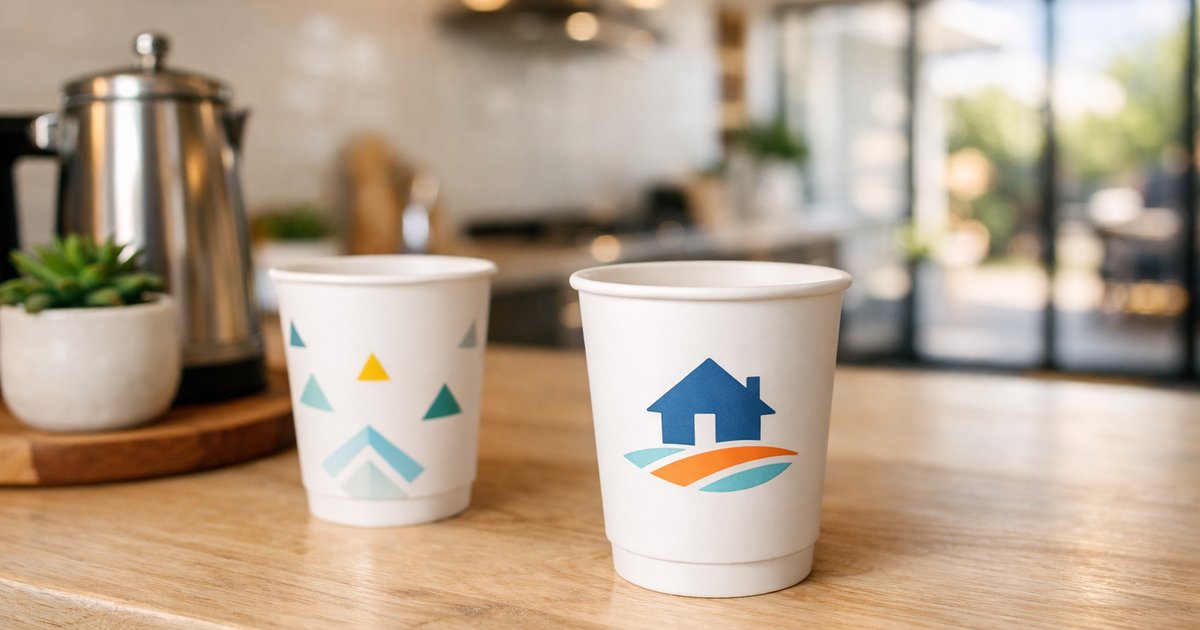
    Branded cups for open homes are an affordable, high‑impact way for real estate agents to welcome visitors, reinforce your brand and leave a useful reminder after an inspection. Our minimum order is 500. We also provide free AI & PSD templates.

    Why use branded cups at open homes?

    Giving visitors a branded cup does more than offer coffee — it creates a welcoming atmosphere, encourages people to stay longer and keeps your contact details physically with prospects. For Australian agents, tactile items like branded coffee cups often outperform flyers for recall and perceived service quality.

    • Makes open homes feel professional and hospitable.
    • Keeps your agent name and phone number with prospects after they leave.
    • Delivers repeated brand exposure as people move through the property.
    • Starts conversations about local knowledge and listings.
    • Cost‑effective per contact compared with many direct‑mail or print campaigns.

    For current prices, see the printed coffee cups page.

    Lids: PS, fibre or CPLA options. Freight is charged at cost (typically $30–$150 depending on quantity and destination).

    Production & lead times: Standard production is 10 business days + 2–3 days metro freight. Rush production available 5–7 business days.

    Which cup works best for open homes?

    For most open homes we recommend double‑wall cups — they look premium, don’t need a sleeve and sit neatly on benches. If sustainability is important to your brand, choose the compostable PLA/CPLA option (at a higher unit cost).

    Quick selection guide

    • Best overall: Double‑wall (PE) — professional look, comfortable to hold.
    • Most budget‑friendly: Single‑wall (PE) 8oz.
    • Eco option: Compostable (PLA/CPLA) — better sustainability credentials, higher price.

    Design tips for maximum impact

    Keep designs simple and legible from a short distance. Bold type, high contrast and a clear call‑to‑action work best when people are moving around a property.

    • Agent name: Prominent so visitors remember who they spoke with.
    • Agency logo: Consistent with your other marketing for brand recognition.
    • Phone number: A direct mobile number for quick follow‑up.
    • Optional: Tagline, suburb or website to emphasise local expertise.

    We print full‑colour CMYK if you want photos or gradients, but simple two‑colour or single‑colour layouts often read better in busy open‑home environments. Download our free templates (AI & PSD) or upload your logo and we’ll prepare a print‑ready mock‑up.

    Where else to use branded cups

    Branded cups aren’t just for open homes — they work well across your agency and local marketing:

    • Client meetings and private inspections
    • Agency reception and staff meetings
    • Local community events, launches and sponsorships
    • Leave‑behind packs or welcome kits for vendors and buyers

    Ordering — how it works

    Ordering from CustomCoffeeCups.com.au is straightforward. Typical steps:

    1. Choose cup type and size (8oz, 12oz, 16oz).
    2. Order a sample pack to check materials, lids and print quality (recommended).
    3. Upload your logo and brief — we provide free templates.
    4. Approve the print‑ready mock‑up and confirm your order (minimum 500 cups).
    5. Standard turnaround: 10 business days production + 2–3 days freight; Rush: 5–7 business days.

    For full product options and to request a quote, visit our custom printed coffee cups page.

    Frequently asked questions

    How many cups should I order?

    Minimum orders are 500 cups. Many agencies order 1,000+ to cover multiple open homes, events and office use without frequent reorders.

    Do you offer samples?

    Yes — order a sample pack to check cup feel, printing and lid options before placing a full order.

    How do branded cups fit into a wider marketing plan?

    Branded cups are an effective tactile marketing tool that complements property signboards, digital ads and direct contact. For a full overview of how custom printed coffee cups can support your campaigns, see our complete buyer’s guide.

    Final considerations & call to action

    Branded cups for open homes are a practical, memorable and relationship‑focused marketing tool for Australian real estate agents. They combine hospitality and brand presence in a cost‑effective format — and with design help, it’s easy to get started.

    Ready to try branded cups at your next open home? Order a sample pack or view our custom printed coffee cups for full options and to request a quote. If you’d like help planning an open‑home campaign, contact us and we’ll prepare a recommended cup type and design based on your goals.

  • How to Design Artwork for Custom Coffee Cups (Templates Included)

    How to Design Artwork for Custom Coffee Cups (Templates Included)

    How to design artwork for custom coffee cups (templates included)

    Short answer: To design artwork for custom coffee cups, download our free AI/PSD templates, place your graphics inside the template’s wrap‑around print area, include bleed and safe zones, design in CMYK, use raster images at a minimum of 300dpi, and export print‑ready files (AI with Preserve Editing, layered PSD, press PDF or high‑res PNG/JPG). Request a free digital proof or order a sample pack to check colours and stock.

    Quick checklist — design artwork for custom coffee cups

    • Download the correct template for your cup size and type: AI & PSD templates.
    • Work in CMYK and keep photos/textures at 300dpi or higher at final size.
    • Respect the template’s wrap‑around print area, bleed and safe zone.
    • Use vector artwork for logos and text; embed or outline fonts.
    • Save source files (AI with Preserve Editing, layered PSD) and export a high‑res PDF for print.

    Where to get the templates

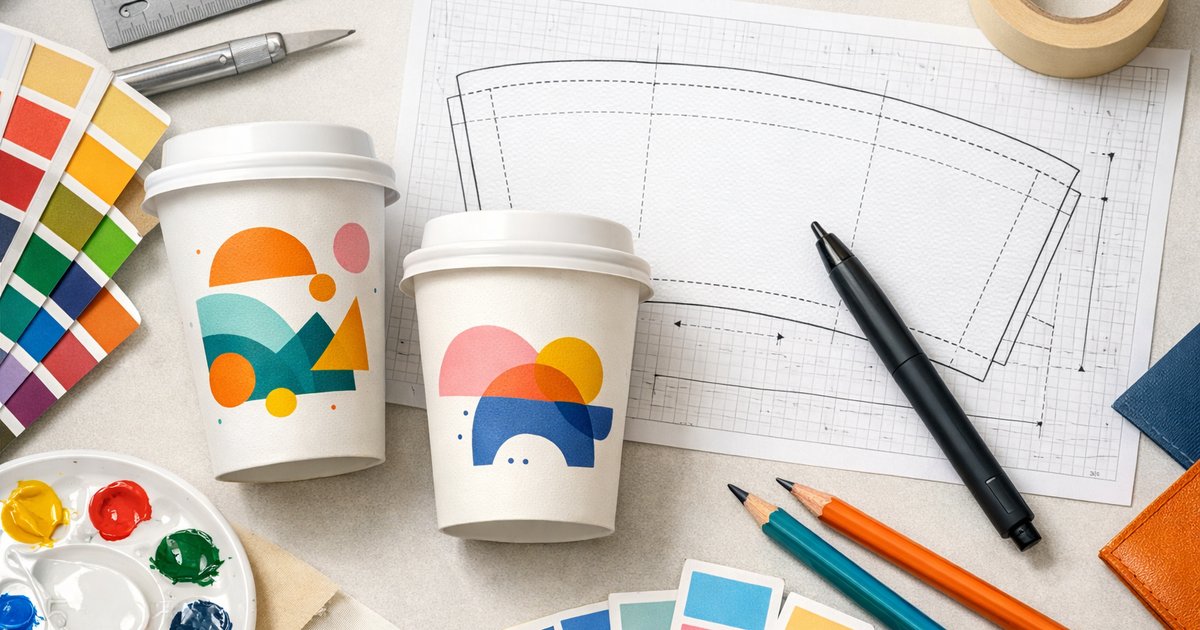
    Download our free artwork templates for 8oz, 12oz and 16oz cups (AI & PSD): download templates. Templates include dielines and guides for single‑wall, double‑wall and compostable cup styles — choose the template that matches the cup type you plan to order.

    How the template is organised

    Each template shows three key zones. Know these before you design so your artwork prints as expected:

    Wrap‑around print area

    The full width and height that prints around the cup. For continuous designs, extend your main graphics across this area so patterns join neatly at the seam.

    Bleed zones

    Extend backgrounds and imagery into the bleed area to avoid white edges after trimming. Templates include the exact bleed guides — don’t crop to the trim line.

    Safe zone

    Keep logos, essential text and critical elements inside the safe zone (inset from the trim/cut line). Anything outside may be trimmed, distorted around the seam or hidden by the cup rim.

    Colour, brand colours and CMYK

    We print using CMYK process printing — prepare and export files in CMYK to get the most accurate results. Convert RGB to CMYK early and proof colours on screen and in printed samples. Note: very bright RGB colours may not reproduce exactly with CMYK; if you need precise brand matches, tell us early so we can discuss options.

    Resolution and artwork quality

    Raster images (photos, textures) must be at least 300dpi at final print size. Vector elements (logos, icons, type) scale cleanly — provide EPS/AI/SVG where possible. Avoid scaling up low‑resolution images.

    Accepted file formats and saving tips

    • AI (Adobe Illustrator) — Preferred for vector files. Save with Preserve Illustrator Editing Capabilities and include linked images.
    • PSD (Photoshop) — Keep layers; rasterise text only after layout is approved.
    • PDF — Export as high‑resolution / press quality with fonts embedded.
    • PNG/JPG — Acceptable if high‑res (300dpi at final size). PNG supports transparency; JPG suits photographic designs.

    Name files clearly (e.g. ClientName_12oz_doublewall_AI_v1.ai) and include version numbers. If you supply fonts, either embed them or convert text to outlines — but also keep an editable source file in case we need to make small adjustments.

    Export checklist before upload

    • Artwork placed on the correct template for cup size and type.
    • Backgrounds and images extended into the bleed.
    • Main content inside the safe zone; nothing critical near the seam or lip.
    • All images 300dpi or above at final size.
    • All colours converted to CMYK.
    • Fonts embedded or outlined (or include font files in a ZIP).
    • File saved in recommended format (AI with Preserve Editing, layered PSD, press PDF or high‑res PNG/JPG).

    Common design pitfalls and how to avoid them

    • Small text on curved areas — increase size and weight and keep it inside the safe zone.
    • Using web‑resolution logos — request vector files (EPS/AI/SVG) or recreate as vectors.
    • Designs too close to the seam or rim — follow the template safe zone strictly.
    • Designing in RGB — always convert and proof in CMYK before submitting files.

    Need help? Design layout service

    If you only have a logo or a simple brief, use our design layout service — our team will place your artwork into the correct template and supply print‑ready files. Start an order or ask about design help on the product page: custom printed coffee cups. Upload your assets with the order and we’ll prepare a layout for your approval.

    Production details — what to plan for

    Keep these production details in mind when you design and order — they affect timing, cost and template choice.

    Minimum order 500 cups
    Cup types Single‑wall (PE), Double‑wall (PE) and Compostable (PLA/CPLA)
    Sizes 8oz, 12oz, 16oz (16oz is single‑wall only)
    Standard turnaround 10 business days production + 2–3 days metro freight
    Rush option 5–7 business days
    Complimentary services free templates available

    Proofing and samples

    We provide a digital print proof for approval before production. To check colours, stock and finish in real life you can order a printed sample or request our sample pack: order a sample pack. For full ordering details and material guidance, see our buyer’s guide: Custom printed coffee cups — Australia guide.

    Final tips for better results

    1. Design with the cup shape in mind — vertical elements curve around the cup; test on the template before finalising.
    2. Keep essential information inside a flat panel area if you need it to be clearly legible.
    3. Test colours in CMYK and allow for slight variation depending on stock and printing process.
    4. Use our free templates if you’re unsure — they save time and avoid common mistakes.

    Ready to design artwork for custom coffee cups? Download the free templates (template download), place an order and request a design layout on the product page: custom printed coffee cups. Prefer to check finishes first? Order a sample pack: sample pack.

    Need help with your files? Our pre‑press team will check supplied artwork and contact you if any changes are needed before printing — upload your files when you place your order or contact us via the product page.

  • Glossary: Coffee Cup Terminology Explained (PE, PLA, GSM, Oz & More)

    Glossary: Coffee Cup Terminology Explained (PE, PLA, GSM, Oz & More)

    Glossary: Coffee Cup Terminology Explained (PE, PLA, GSM, Oz & More)

    Answer: Coffee cup terminology refers to the materials, printing and sizing terms you’ll see when ordering custom printed coffee cups — for example PE, PLA, CPLA, GSM, CMYK, bleed, proof, oz sizes, MOQ and lid types. Use this coffee cup terminology glossary to brief designers, compare suppliers and avoid costly mistakes when ordering custom printed coffee cups in Australia.

    Why this coffee cup terminology glossary matters

    Ordering custom printed cups involves technical choices that affect price, performance and end‑of‑life disposal. This guide is written for café owners, event organisers and marketing managers in Australia so you can choose the right cup, artwork and disposal option. For a deeper buyer’s guide, see our complete buyer’s guide.

    Quick facts at a glance

    • Minimum order (MOQ): 500 cups.
    • Standard production: 10 business days + 2–3 days metropolitan freight (charged at cost).
    • Rush production: 5–7 business days.
    • Free artwork templates (AI & PSD) are available.

    Oz to millilitres (quick reference)

    Ounces (oz) Millilitres (ml)
    8oz 237ml
    12oz 355ml
    16oz 473ml

    Common sizes we supply: 8oz, 12oz and 16oz. Note: 16oz is single‑wall only.

    For current prices, see the printed coffee cups page.

    A–Z glossary: coffee cup terminology

    Bleed

    Artwork that extends beyond the final trim line so colour or images reach the cup edge without white borders. Typical bleed is 3–5mm beyond the trim line.

    CMYK

    Full‑colour printing using Cyan, Magenta, Yellow and Key (Black). Convert RGB files to CMYK for print‑ready colours; proofs show how colours will reproduce.

    Compostable

    Materials certified to break down in industrial composting facilities (e.g. FOGO). Compostable cups and lids (often PLA/CPLA or moulded fibre) require industrial composting to degrade properly and will not break down quickly in standard landfill or most home compost bins.

    CPLA

    Crystallised PLA — a plant‑based polymer used for compostable lids and some insulated options. CPLA offers improved heat resistance and rigidity over standard PLA.

    Double‑wall

    Two paper layers with an insulating air gap. Keeps drinks hotter for longer and reduces the need for a separate sleeve.

    FOGO

    Food Organics & Garden Organics collection. If you plan to use compostable cups or lids, check your local council’s FOGO service to confirm they accept those materials.

    GSM

    Grams per square metre — a measure of paper weight/thickness. Higher GSM indicates a thicker, stiffer cup board and generally greater durability.

    Kraft

    Natural brown paperboard with a rustic look. Kraft boards can be printed but colours will appear more muted than on white board.

    Lid types (PS, CPLA, Fibre)

    • PS (polystyrene) — clear, low‑cost lids; not compostable.
    • CPLA — compostable, heat‑resistant lids suitable for hot drinks.
    • Fibre — moulded fibre lids; often compostable in industrial facilities.

    MOQ (Minimum Order Quantity)

    The smallest order size a supplier accepts. Our standard MOQ is 500 cups. MOQs affect unit price and lead times.

    Offset printing

    A traditional printing method using plates — ideal for large runs and consistent colour. Offset is more cost‑effective at higher quantities than some digital methods.

    Oz (ounces)

    Cup capacity. Common sizes: 8oz (237ml), 12oz (355ml) and 16oz (473ml). Always confirm lid compatibility for the size you select.

    PE (Polyethylene)

    Thin plastic lining on paper cups that provides liquid resistance. PE‑lined cups are common in single‑wall and double‑wall constructions.

    PLA (Polylactic Acid)

    A plant‑based bioplastic used as a lining or to make compostable products. PLA is commercially compostable in industrial facilities but not in home compost or landfill.

    Proof

    A digital or printed sample of your artwork layout provided before production. Always request a proof to confirm colours, placement and spelling. We provide free proofs and artwork templates.

    RGB

    Red, Green, Blue — a colour model for screens. Files in RGB should be converted to CMYK for accurate print colours.

    Safe zone

    The inner area of your artwork where important text and logos should sit to avoid being trimmed or lost near the seam.

    Seam

    The vertical join where the cup board overlaps. Avoid placing important artwork or thin text across the seam as it can be distorted or hidden.

    Single‑wall

    A single layer of board with a PE lining. Lighter and less insulating than double‑wall but more economical and suitable for most short‑service drinks.

    Sleeve

    A separate insulating sleeve (board or corrugated) that fits over single‑wall cups to protect hands from heat. Consider a sleeve if you choose single‑wall cups and need extra insulation.

    Template

    A print‑ready artwork file (AI, PSD) showing exact dimensions, bleed, safe zone and seam. We supply artwork templates and design layout services — upload your logo and we’ll produce a print‑ready layout for approval.

    Trim line

    The final edge where the cup is cut. Artwork should extend to the bleed beyond the trim line and keep critical elements inside the safe zone.

    Wrap‑around

    A design that fully encircles the cup from seam to seam. Make sure patterns accommodate the seam and safe zone for a seamless look.

    Practical buying tips

    • Request a physical proof or our sample pack before full production to check stock, colours and print placement (order a sample pack).
    • Choose single‑wall, double‑wall or compostable based on drink temperature, brand values and cost.
    • Plan orders around the 500 cup MOQ to balance inventory and unit cost.
    • Confirm lid compatibility (PS, CPLA or fibre) with the cup size you select.
    • Check local FOGO/composting services if you plan to use compostable options to ensure correct end‑of‑life processing.

    Specifications & turnaround (summary)

    • Standard turnaround: 10 business days production + 2–3 days metro freight.
    • Rush production: 5–7 business days.

    More resources

    For a complete buyer’s guide to choosing cups, materials and print finishes see our complete buyer’s guide. To view product options, pricing and lead times visit our custom printed coffee cups page. Prefer to feel the stock first? Order a sample pack.

    Need personalised help?

    If you’d like a quick quote or design help, we offer free artwork templates and a design layout service — upload your logo and we’ll create a print‑ready layout for approval. Order minimums and lead times apply.

    Ready to order or try a sample? Browse our range on the custom printed coffee cups page or request a sample pack to check materials and print before you commit.

    Related guides

  • How to Store Paper Coffee Cups (Shelf Life & Conditions)

    How to Store Paper Coffee Cups (Shelf Life & Conditions)

    How to Store Paper Coffee Cups (Shelf Life & Conditions)

    Short answer: When storing paper coffee cups, keep them dry, cool and out of direct sunlight — ideally 15–25°C, low humidity, and stored off the ground on shelves or pallets. Under these conditions most cups will retain quality for 12+ months. If you want to check print, feel and lid compatibility first, order a sample pack.

    Quick facts

    • Ideal temperature: 15–25°C
    • Humidity: low / dry — avoid damp rooms
    • Shelf life: 12+ months when stored correctly
    • Minimum order: 500 cups
    • Standard production: 10 business days + 2–3 days metro freight; rush: 5–7 business days

    Why correct storage matters

    Correct storing paper coffee cups protects print quality, structural integrity and hygiene. Cups exposed to humidity, heat or strong odours can soften, warp, stick together or pick up smells — causing waste, customer complaints and damage to your brand presentation.

    Ideal storage conditions

    Follow these environmental controls to maximise shelf life and avoid problems in Australian climates (hot summers and humid coastal areas):

    Condition Recommendation Why it matters
    Temperature 15–25°C Prevents adhesives/linings softening and reduces condensation risk.
    Humidity Low / dry — avoid damp areas High humidity softens paper, weakens cup walls and can cause sticking.
    Light Away from direct sunlight Prevents fading of printed designs and heat stress.
    Placement Off the ground — on shelves or pallets Reduces risk of water damage, dirt and pests.
    Odours Keep away from chemicals, cleaners and strong-smelling foods Paper can absorb smells which affect beverage aroma.

    Packaging and stacking

    Keep cups in their original cartons until use — the packaging protects against dust, light and mechanical damage and makes FIFO (first in, first out) rotation simple. Stack cartons on shelving or pallets, avoid over-stacking, and keep pallet shrink-wrap intact until required.

    Shelf life: how long will they last?

    When storing paper coffee cups correctly (dry, 15–25°C, out of sunlight), most cups maintain quality for 12+ months. Print colours remain stable and the paper lining holds integrity. If cups are stored in high humidity, direct sun or near heat sources, visual and structural degradation can appear within weeks.

    Printed cups vs compostable cups

    Printed designs can fade if left in sunlight or heat. Compostable (PLA/CPLA) cups behave similarly in normal storage, but are slightly more sensitive to prolonged high temperatures and very high humidity — avoid storing them in hot rooms or next to ovens. Store compostable and coated (PE-lined) cups in the same recommended environment where possible.

    Practical storage workflow for businesses

    1. Accept deliveries onto pallets or shelving in a dry storage area — keep cartons off concrete floors to avoid moisture transfer.
    2. Label boxes with delivery date and implement FIFO rotation so older stock is used first.
    3. Keep high-turnover sizes accessible; store slow-moving stock higher or further back.
    4. Maintain simple inventory records to avoid over-ordering. Small cafés may prefer smaller, more frequent orders or staggered deliveries to fit limited storage.

    Minimum orders, lead times and planning

    Our minimum order is 500 cups. Example lead times and options:

    • Standard production: 10 business days + 2–3 days metro freight
    • Rush fulfilment: 5–7 business days

    If storage space is limited, plan orders around usage rates or ask about staggered deliveries when you place your order.

    Avoid these common storage mistakes

    • Storing in humid or damp rooms: Cups absorb moisture and can stick together.
    • Leaving boxes in sunlight: Causes print fade and heat stress to linings and adhesives.
    • Storing near strong odours: Paper can pick up smells from chemicals, food or waste areas.
    • Piling boxes on the floor: Risk of water damage and pests — always use pallets or shelving.
    • Mixing new and old stock without rotation: Leads to waste and inconsistent product quality.

    Fire safety and compliance

    Paper cups are combustible. Store sensibly by:

    • Keeping quantities organised and avoiding obstruction of exits.
    • Following local fire codes for storage of paper goods.
    • Avoiding storage near heat sources (ovens, hot-water systems) and electrical panels.

    Quick troubleshooting

    If you receive cups that look damp, warped, discoloured or smell unusual:

    • Isolate the affected stock and do not use it for food service.
    • Check storage conditions (humidity, leaks, recent temperature spikes).
    • Contact your supplier with photos and batch information — many issues are remedied if caused in transit or at source.

    Inventory tips for cafés, events and marketing teams

    • Small cafés: order smaller quantities more often or request staggered deliveries to reduce storage pressure.
    • Event planners: schedule deliveries close to event dates and store in a cool, dry staging area.
    • Marketing teams with printed stock: keep plain cups for daily use and reserve limited-run printed cups for campaigns to avoid premature fading.

    Ordering, samples and artwork

    We offer full-colour CMYK printing, artwork templates (AI & PSD), a design layout service and sample packs so you can check print, feel and lid compatibility before committing to a bulk order. Order a sample pack or view our custom printed coffee cups product page to explore options. For planning tips and more on materials, read our complete buyer’s guide.

    Freight is charged at cost and depends on quantity and destination. Standard production and rush lead times are listed above.

    Storing paper coffee cups: quick checklist

    • Store at 15–25°C, low humidity
    • Keep boxes off the ground on shelves or pallets
    • Avoid direct sunlight and strong odours
    • Use FIFO rotation and label delivery dates
    • Keep original packaging until use
    • Follow fire safety rules for paper goods

    Samples, help and next steps

    Unsure about quantities or how to store cups at a particular site? We can help estimate usage and advise on ordering frequency. Order a sample pack to check print, feel and lids. To place an order or explore cup options, visit our custom printed coffee cups page or read our complete buyer’s guide for more planning tips.

    Need personalised advice? Contact us and we’ll help you balance cost-effective ordering with practical storage for your business.

    Related guides

  • Can You Microwave Paper Coffee Cups?

    Can You Microwave Paper Coffee Cups?

    Can you microwave paper coffee cups?

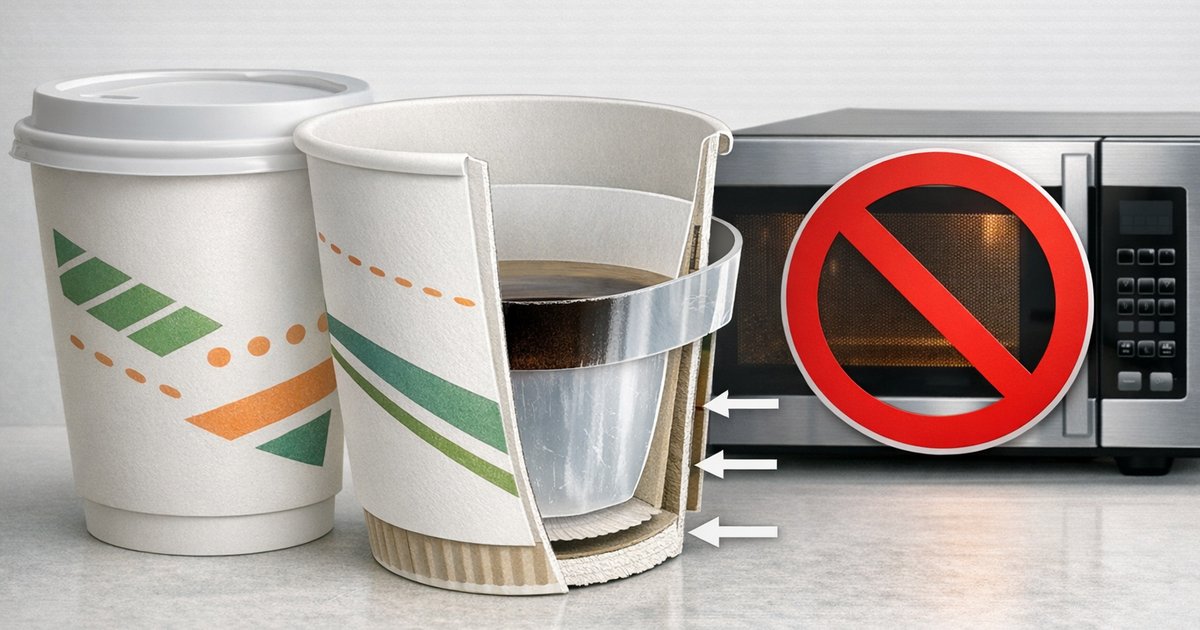
    Short answer: No — it’s not recommended to microwave paper cups. Microwave heating can soften linings (especially PLA/CPLA), weaken the side‑seam glue and increase the chance of leaks, deformation or chemical migration. For safe reheating, transfer the drink to a microwave‑safe ceramic or glass mug, or use an insulated flask.

    Why people ask “can you microwave paper cups”

    Many customers and café operators in Australia ask “can you microwave paper cups” when they want to reheat takeaway coffee. Paper looks microwave‑friendly, but takeaway cups are composite items (paperboard + lining + adhesive) and behave differently from ceramic or glass in a microwave.

    What paper coffee cups are made of — and why it matters

    A standard paper coffee cup has three key parts. Each affects microwave performance:

    • Paperboard shell — the structural and printable surface.
    • Inner lining — usually polyethylene (PE) for moisture protection, or PLA/CPLA for compostable options. Linings determine heat tolerance and chemical behaviour.
    • Side‑seam adhesive — glue that seals the cup; heat can soften it and cause leaks.

    Common cup types and microwave suitability

    • Single‑wall (PE lining) — made to carry very hot drinks safely, but not designed for microwave reheating.
    • Double‑wall (air gap, typically PE lining) — better for drinking comfort, but still not microwave‑safe.
    • Compostable (PLA/CPLA lining) — not microwave‑safe: PLA softens at relatively low temperatures (around 60°C) and can deform or leak when heated rapidly.
    • Lids — can be made from polystyrene (PS), fibre or CPLA; many lids are not microwave‑safe and a closed lid can trap steam and cause pressure build‑up.

    Why microwaving paper cups is risky

    Putting a paper takeaway cup in a microwave carries several practical risks:

    1. Chemical migration: Linings and coatings are formulated for hot liquids but prolonged or uneven microwave heating may increase migration of substances into the drink.
    2. Seam and glue failure: Heat can soften the side‑seam adhesive causing leaks, a collapsed cup or scalding spills.
    3. PLA instability: Compostable PLA/CPLA linings soften at relatively low temperatures and can lose structural integrity when reheated in a microwave.
    4. Lid/steam hazards: Microwaving a sealed cup can trap steam and build pressure — never microwave a closed cup.

    Does this mean paper cups can’t hold very hot coffee?

    No. Properly manufactured single‑wall and double‑wall cups are engineered to hold very hot drinks for serving and short transit. The specific risk is from direct microwave reheating, which applies different stresses (rapid internal heating, uneven temperatures) that the materials weren’t designed for.

    Safe alternatives to microwaving a paper cup

    Instead of microwaving the takeaway cup, use one of these safer options:

    • Pour the drink into a microwave‑safe ceramic or glass mug to reheat.
    • Use an insulated vacuum flask or thermal travel mug to keep drinks hot for hours.
    • In‑store or at events, offer a hot‑water top‑up station or a staff‑managed microwave‑safe container for reheats.
    • If reheating is unavoidable, transfer the liquid to a certified microwave‑safe container and leave the lid off so steam can escape.

    Practical tips for cafés and Australian businesses

    • Print a short notice on cups or lids: “Not microwave‑safe — transfer to a microwave‑safe mug to reheat.”
    • Offer ceramic cups for in‑store service and an insulated reusable cup scheme to avoid reheating requests and reduce waste.
    • Train staff to explain safe reheating options and the reason behind them (linings, glue, PLA instability).
    • Never microwave a sealed cup or a cup with a non‑microwave lid — always remove the lid first and use a microwave‑safe container.

    Minimums and lead times (our standard options)

    We supply single‑wall, double‑wall and compostable custom printed coffee cups across Australia. Key ordering details are below — contact us for a formal quote or to discuss branding and delivery.

    • Minimum order: 500 cups.
    • Standard production lead time: 10 business days + metropolitan freight (typically 2–3 days)
    • Rush option: 5–7 business days

    Order a sample pack to compare single‑wall, double‑wall and compostable cups in person. Ready to quote or order? Visit our custom printed coffee cups product page.

    What about “microwave‑safe” claims?

    Some specialised cup products may be marketed as microwave‑resistant or microwave‑safe. Always check the manufacturer’s guidance and labelling for a specific cup. As a rule of thumb, treat standard PE‑lined and PLA‑lined paper cups as not microwave‑safe unless the maker explicitly states otherwise and provides test evidence.

    Summary — can you microwave paper cups?

    Short answer: No — it’s not recommended to microwave paper cups. Microwaving can increase the risk of chemical migration from linings, weaken seam glue and cause PLA linings to soften and fail. For safe reheating, transfer liquids to a microwave‑safe mug or use an insulated container.

    Need help choosing the right cup for your business?

    Compare materials and feel the difference by ordering a sample pack, or read our complete Australia buyer’s guide for more on materials, printing and sustainability. For product specs and pricing, visit our custom printed coffee cups page.

    Related guides

  • How Many Coffee Cups Fit in a Box? Storage & Shipping Explained

    How Many Coffee Cups Fit in a Box? Storage & Shipping Explained

    How Many Coffee Cups Fit in a Box? Storage & Shipping Explained

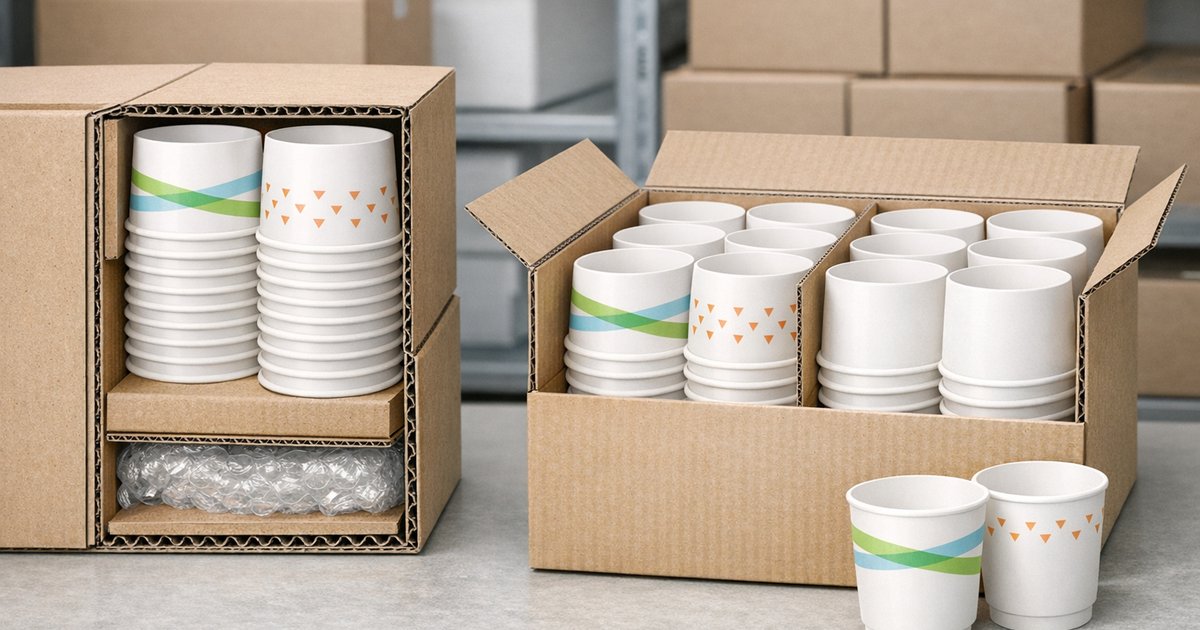
    Short answer: If you need a quick planning figure for shipping or storage, most cartons hold between 500 and 1,000 cups. In practical terms, how many coffee cups fit in a box usually depends on cup size and carton configuration — our minimum order is 500 cups (typically one carton for 8oz or 12oz). Use the guidance below to estimate cartons, pallet quantities and freight.

    How cups are packed for shipping

    Suppliers save space by nesting paper and compostable cups. Key packing notes:

    • Nested sleeves of cups — typically ~50 per sleeve for 8oz and 12oz; 16oz sleeves vary from 25–50 depending on taper.
    • Sleeves are packed upright or on their side into cartons sized to hold roughly 500–1,000 cups, depending on cup type and carton layout.

    Typical sleeve and carton counts

    Cup size Cups per sleeve (approx.) Common carton counts
    8oz (single-wall / double-wall) ~50 500 per carton (10 sleeves × 50); 1,000 possible with high-density cartons
    12oz (single-wall / double-wall) ~50 500 per carton common; 1,000 possible depending on carton size
    16oz (single-wall only) ~25–50 (varies) 500 or fewer per carton; 1,000 less common due to larger volume

    Approximate carton dimensions and weights

    Dimensions and weights vary by cup type and sleeve count. Use these planning figures as a guide and always confirm exact sizes with your supplier:

    • 500-cup carton (typical 8oz/12oz)
      • Approx dimensions: 450–550mm (L) × 300–400mm (W) × 250–380mm (H)
      • Gross weight (carton + cups): 4–9 kg — single-wall at the low end; double-wall or compostable at the high end.
    • 1,000-cup carton
      • Approx dimensions: 550–700mm (L) × 350–450mm (W) × 350–450mm (H)
      • Gross weight: 8–18 kg depending on cup type.

    Note: Exact carton sizes and weights should be confirmed with your supplier before ordering.

    How many boxes on a pallet?

    Palletisation can significantly affect freight pricing. Typical Australian guidance:

    • Standard Australian pallet (1165 × 1165 mm) usually holds 8–20 cartons depending on each carton footprint and stacking height limits.
    • Cartons ~550 × 350 mm often allow 10–12 cartons per layer with multiple layers stacked to a safe height.
    • Pallet freight is generally cheaper per carton than parcel courier rates because carriers charge by weight/volume and palletised loads are easier to handle.

    Storage requirements and shelf life

    Store cartons in dry, temperature-stable conditions to protect adhesives, coatings and print:

    • Keep cartons dry and off the floor on pallets or shelving.
    • Avoid direct sunlight and high humidity — moisture can weaken cup walls and inner coatings.
    • Recommended environment: 10–30°C and humidity under 60% where possible.

    Shelf life (practical guidance):

    • PE-lined paper cups: Stable for many years if stored dry; adhesives and print are best used within 1–2 years.
    • PLA/CPLA compostable cups: Slightly shorter practical shelf life — we recommend using within 12 months and storing in cool, dry conditions.

    How freight costs relate to number of cartons

    Freight pricing is driven by weight, volume and shipment type (parcel vs pallet). Practical points:

    • Small orders (1–2 cartons): Usually sent by courier; per-carton cost can be relatively high.
    • Pallet orders (multiple cartons): Carrier pricing is more efficient — per-carton freight falls as carton count increases.
    • Freight estimates: Typical ranges for metro deliveries can be around $30–$150 per carton at cost depending on destination and quantity (regional/interstate higher).
    • Plan for receiving: pallet deliveries may require a forklift or manual handling arrangements.

    Practical planning examples

    1. Our minimum order is 500 cups — this will usually be one carton for 8oz or 12oz.
    2. For a busy café using ~200 cups/day, a 500-cup carton covers ~2–3 days. Ordering multiple cartons or a pallet reduces freight and handling frequency.
    3. For events, 1,000 cups (two 500 cartons or one 1,000 carton) is a common single delivery — check storage space and stack safely.

    For current prices, see the printed coffee cups page.

    Lead times: standard 10 business days production plus 2–3 days metro freight; rush 5–7 business days.

    Tips to reduce storage & freight costs

    • Order pallet quantities to lower per-cup freight and handling costs.
    • Consolidate sizes where possible — fewer SKUs makes stacking and storage easier.
    • Request carton dimensions and weights from the supplier before ordering to plan racking and aisle space.
    • Store lids separately if they bulk up carton volume — this can reduce freight charges.

    Planning checklist for businesses

    • Calculate weekly/monthly cup usage and multiply by desired stockholding weeks.
    • Decide on cup type early — compostable cups may require faster turnover.
    • Confirm carton counts and pallet stacking with your supplier before placing your order.
    • Arrange receiving space and handling for pallet deliveries.

    Where to start

    Still unsure how many coffee cups fit in a box for your venue? Order a sample pack to check size and fit, or view our product and pricing on the custom printed coffee cups page. For broader planning and print options, read our Custom Printed Coffee Cups Australia Guide.

    Final note: The simple answer to “how many coffee cups fit in a box” is usually 500–1,000 cups per carton. Adjust for 16oz variability, confirm carton sizes with your supplier, and optimise freight by ordering pallet quantities. If you’d like personalised help calculating space, pallet requirements or freight for an upcoming order, upload your estimated daily usage or event numbers and we’ll help plan quantities and delivery.

    Related guides

  • First Impressions Count: Why Your Takeaway Cup Quality Matters

    First Impressions Count: Why Your Takeaway Cup Quality Matters

    Takeaway cup quality matters: customers judge your coffee and your brand by the cup they take away. A sturdier, well‑printed takeaway cup quality instantly raises perceived value, encourages social sharing and improves brand recall. Below you’ll find tactile and visual tips, lead times, plus how to order a sample pack before you commit.

    Why takeaway cup quality matters

    Packaging is a silent salesperson. Good takeaway cup quality turns a simple transaction into a memorable brand touchpoint that can increase repeat visits, justify modest price rises on premium drinks and give you free advertising every time a customer walks out the door.

    • Perception: weight, texture and print quality set expectations before the first sip.
    • Visibility: every takeaway becomes mobile advertising for your café.
    • Retention: polished presentation builds loyalty and repeat custom.

    How perception works

    Customers read tactile and visual cues subconsciously. A double‑wall cup, crisp full‑colour print or compostable stock signals care and quality. A thin, generic cup can unintentionally communicate cost‑cutting and lower perceived product value.

    Tactile choices: single‑wall, double‑wall and compostable cups

    Choosing construction is an efficient way to control how your product feels and performs in takeaway service.

    • Double‑wall cups feel warmer and more substantial without a sleeve — great for premium menu items and an elevated takeaway experience.
    • Single‑wall cups are lighter and lower cost; pair with a sleeve for very hot drinks or for high‑turnover lines to protect margins.
    • Compostable (PLA/CPLA) cups offer a premium look and an eco message that resonates with sustainability‑minded customers.

    Tip: offer double‑wall for signature or high‑margin drinks and single‑wall for everyday options to balance customer experience and cost.

    Visual impact: full‑colour printing and consistent design

    Full‑colour CMYK printing helps your cups match your fit‑out, menu design and social visuals. Consistent logo placement, palette and typography turn every takeaway into a recognisable piece of branded collateral.

    Design best practice

    • Keep logo placement and colours consistent with in‑store branding.
    • Use bold, simple artwork for busy outlets; reserve detailed or limited‑edition prints for flagship stores or campaigns.
    • Seasonal or limited runs encourage social shares and create urgency.

    The handover moment

    The instant you hand a customer their drink is a micro‑brand moment. Crisp print, well‑fitting lids and tidy presentation improve perceived value, encourage repeat business and increase the chance of customers photographing and sharing your cup on social media.

    Practical branding strategies

    • Mix cup types across your menu: double‑wall for premium drinks, single‑wall for basics.
    • Use compostable cups where sustainability messaging matters or for special events.
    • Run a small branded test in one store, measure engagement, then roll out what works.
    • Order a sample pack to compare materials and print fidelity before committing.

    Options and lead times (Australia)

    • Minimum order: 500 cups
    • Printing: Full‑colour CMYK
    • Design support: Free templates (AI/PSD) — upload your logo and we’ll prepare print‑ready artwork
    • Turnaround: Standard production 10 business days + 2–3 days metro freight
    • Rush option: 5–7 business days
    • Freight: charged at cost depending on destination

    How to measure impact

    Track a few simple KPIs to judge your takeaway cup quality investment:

    • Change in premium drink sales and average transaction value
    • Repeat visit rate
    • Social mentions and customer photos featuring your cups
    • Direct customer feedback on presentation

    How to order (simple steps)

    1. Order a sample pack to feel single‑wall, double‑wall and compostable options.
    2. Choose cup type, size and artwork. Use our free templates or request a design layout.
    3. Approve the print proof and place your order (minimum 500 cups).
    4. Production: standard 10 business days + metro freight; choose rush for faster turnaround.

    Final considerations

    Match takeaway cup quality to your margins and customer mix. If sustainability is core to your brand, compostable cups reinforce the message. If margins are tight, high‑quality print on single‑wall stock offers a professional look at a lower price point. Wherever you land, testing with a sample pack lets you compare real materials before ordering a full run.

    Ready to improve first impressions? Order a sample pack to compare materials and print, or get a quote for custom printed coffee cups. For planning help, see our complete buyer’s guide to custom printed coffee cups in Australia.

    Related guides

  • Seasonal Cup Campaigns: How to Keep Your Branding Fresh

    Seasonal Cup Campaigns: How to Keep Your Branding Fresh

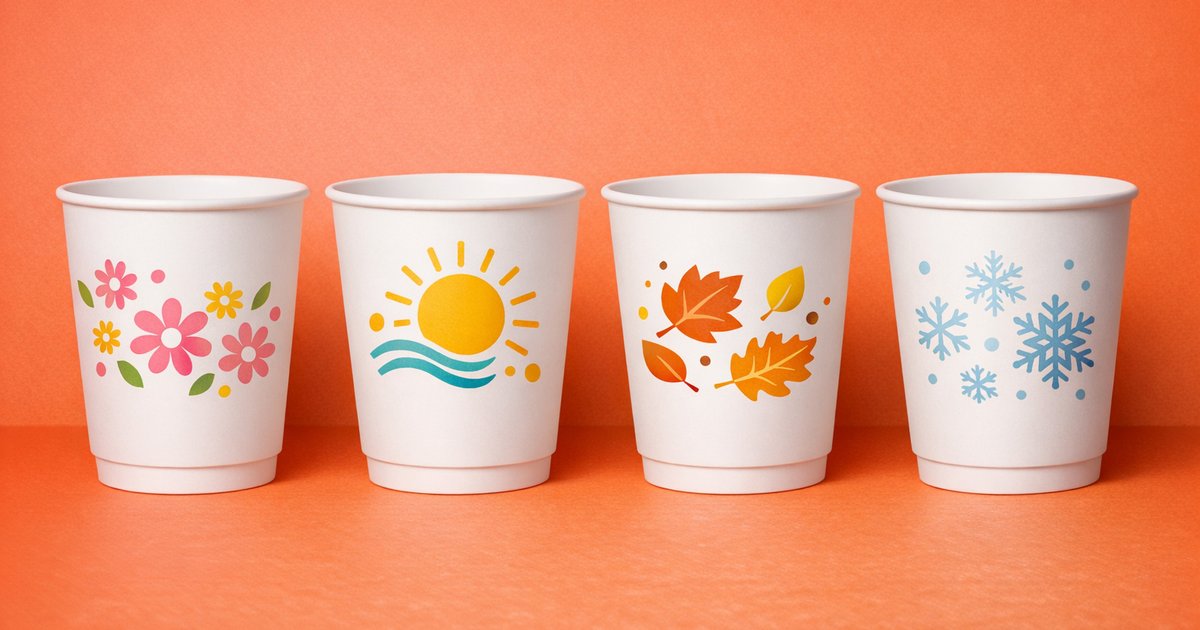
    Seasonal coffee cup designs are a low-cost, high-impact way to refresh your brand and drive customer engagement. With a 500 cup minimum, free templates, and standard production of 10 business days (+ 2–3 days metro freight), most Australian cafés can run 2–3 seasonal cup campaigns a year to boost sales, social buzz and repeat visits. Ready to try one? Order a sample pack or view our custom printed coffee cups to get started.

    Why seasonal coffee cup designs work

    Themed cups tap into timely emotions and occasions. Limited-edition packaging gets noticed, encourages customers to share photos online and links your café to the moment — all without changing your core menu.

    Key benefits

    • Visibility: Seasonal artwork stands out on social feeds and in-store.
    • Shareability: Festive or collectible cups generate free user content.
    • Repeat visits: Rotating designs and series encourage customers to come back.
    • Promotion alignment: Cups reinforce seasonal offers (hot drinks in winter, iced promotions in summer).

    Australian seasons and events to plan for

    Not every date needs a full redesign. Prioritise high-impact moments and use subtle accents or stickers for smaller activations.

    High-priority events

    • Christmas / Summer holidays: Peak foot traffic and shareability — plan early.
    • Valentine’s Day: Red/pink accents and simple messages perform well.
    • Australia Day: Local icons and warm Australiana tones work well in-store and online.
    • EOFY / Corporate gifting: Minimal, premium designs for trade clients and gift packs.

    Seasonal themes and short activations

    • Autumn / Winter: Warm tones, cosy textures and rich palettes.
    • Spring: Botanical motifs and lighter colours.
    • Short activations: Easter, Halloween or event tie-ins using subtle changes, sleeves or stickers.

    How to plan 2–3 seasonal cup campaigns a year

    Focus on a few well-executed campaigns rather than monthly changes — this balances cost, inventory and marketing impact.

    1. Create an annual calendar: Choose 2–3 major moments and schedule smaller activations around them.
    2. Set deadlines: Allow time for design, approvals, proofs and production (see timeline below).
    3. Use the 500-cup minimum: Small runs let you test concepts and move stock quickly.

    Design principles — keep your brand recognisable

    Seasonal flair should complement, not replace, your core identity. Keep primary brand elements consistent and layer seasonal accents so customers still recognise your cup at a glance.

    • Logo placement: Keep position and scale consistent for instant recognition.
    • Core palette & typography: Use brand colours and fonts for identity elements; add seasonal accents only.
    • One master template: Swap artwork on a single layout to speed approvals and reduce errors.

    Designers and operators prefer clearly branded seasonal coffee cup designs because they’re shareable while protecting long-term brand equity.

    Create collectibility and anticipation

    • Limited runs: Label designs “limited edition” to create urgency.
    • Series releases: Offer a small set of related designs to encourage collecting.
    • Teasers & countdowns: Share sneak peeks 1–2 weeks before launch on social and in-store.
    • Promos: Loyalty stamps or bonuses for collecting designs increase repeat visits.

    Promotion and social strategy

    • High-quality imagery: Use natural light, close-ups and short video — behind-the-scenes shots work well.
    • Hashtags & geotags: Create a unique campaign hashtag and encourage tags to boost reach.
    • Email & SMS: Notify loyalty members and trade clients about launches and limited offers.
    • In-store visibility: Feature seasonal cups on menus, counter displays and window vinyls.

    Production timeline and logistics

    Plan launches around our production windows to avoid rush fees and delays. Book early for peak seasons (Christmas, EOFY).

    Typical timelines

    • Standard production: 10 business days production + 2–3 days metro freight.
    • Rush production: 5–7 business days production.

    Minimum order: 500 cups. We provide free templates (AI & PSD) and offer a sample pack so you can check stock and print quality before committing.

    Printing options and cup types

    • Full-colour CMYK: Vibrant prints across our process.
    • Cup types: Single-wall (PE), Double-wall (PE) and Compostable (CPLA/PLA).
    • Sizes: 8oz, 12oz and 16oz.
    • Artwork support: Free templates.

    For current prices, see the printed coffee cups page.

    Freight is charged at cost — typical metro freight varies by quantity and destination.

    Practical tips for small Australian operators

    • Start small: Use 500-cup runs to test designs and customer response.
    • Mix cup types: Offer compostable options for eco-conscious customers alongside economy single-wall runs.
    • Book early: Reserve production slots ahead of peak seasons like Christmas and EOFY.
    • Request a sample: Order a sample pack to check print quality and materials.

    Examples of effective executions

    • Christmas: Keep brand colours, add gold accents or subtle motifs for shareability.
    • Spring: Botanical illustrations and softer greens with consistent logo placement.
    • EOFY: Minimal, premium designs for corporate gifting and trade orders.

    Key trade-offs to consider

    • Inventory complexity: More SKUs — focus on a few predictable seasonal runs.
    • Upfront cost: Even with a 500 MOQ there’s investment — use promos to move stock quickly.
    • Design approvals: Allow time for proofs to avoid rush fees.

    Next steps — make seasonal campaigns practical

    Seasonal coffee cup designs are an easy, measurable way to refresh your branding and create momentum. Plan 2–3 focused runs per year, use the 500-cup minimum to test ideas, and take advantage of our free templates to validate your concept.

    Ready to start? Order a sample pack or explore our full range of custom printed coffee cups. For a step-by-step overview and buying tips, see our complete buyer’s guide.

    Need help with artwork or a mock-up? Upload your logo and our design team will prepare a print-ready layout. Standard production is 10 business days (+ freight); choose rush for 5–7 business days. Minimum order: 500 cups.