Author: admin

  • QR Codes on Coffee Cups: Do They Actually Work?

    QR Codes on Coffee Cups: Do They Actually Work?

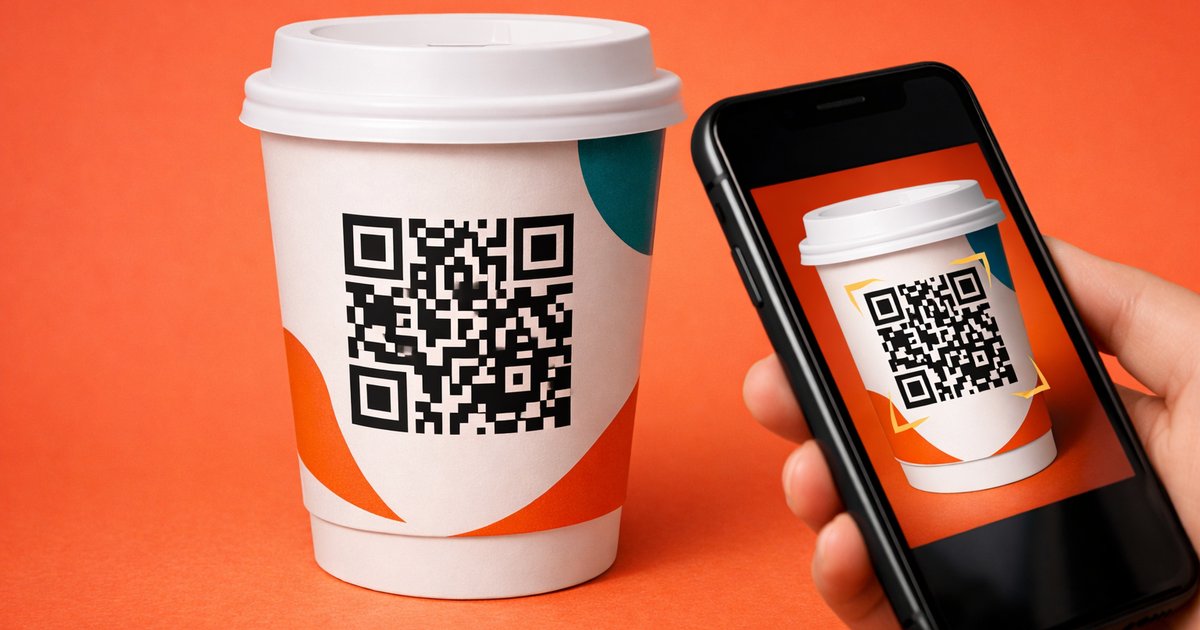
    Yes — QR codes on coffee cups can work, but only when they’re visible, scannable and offer immediate value. This guide explains practical design, printing and tracking steps so your QR codes deliver measurable results.

    Quick summary

    • Print recommendations: minimum 20 mm × 20 mm, preferred 30–40 mm, 2–3 mm quiet zone, high contrast and flat placement.
    • Track with UTM parameters or unique promo codes and test using a sample pack before a full run.

    Do QR codes on coffee cups get scanned?

    Short answer: sometimes. In most café settings you’ll see low single-digit scan rates unless the code is obvious, the reward is immediate and staff encourage customers to scan. Use a fast, mobile-optimised landing page and a clear value-led CTA to increase engagement.

    Why QR codes succeed or fail

    Common reasons they fail

    • Poor size, placement or printing over seams/curved panels — the code becomes unreadable.
    • Low contrast or decorative backgrounds that break the QR pattern.
    • Sending customers to a generic homepage with no instant reward.
    • Slow or non-mobile-friendly landing pages that cause abandonment.
    • No obvious CTA telling customers what they’ll get.

    How to make them work

    • Design for scannability: prefer 30–40 mm when space allows; minimum 20 mm × 20 mm. Leave a 2–3 mm quiet zone around the code.
    • High contrast: dark code on a light, plain background (black on white ideal).
    • Smart placement: print on a flat panel away from seams and the rim so customers can easily point their phones.
    • Clear CTA: short value-led text — e.g. “Scan for 10% off” or “Join our coffee club — free muffin”.
    • Fast landing page: mobile-first, loads quickly and is trackable with UTM parameters or a unique promo code.
    • Staff prompts: baristas saying “scan this for today’s deal” will materially lift scans.

    Practical printing tips

    Size, quiet zone and placement

    Minimum recommended size: 20 mm × 20 mm. Preferred: 30–40 mm when space allows — larger codes are easier to scan when a cup is moving or held at arm’s length. Always leave a clear quiet zone (2–3 mm) around the code. Test a printed sample in real café lighting and while the cup is held — curvature and motion affect scannability.

    Contrast and artwork

    Keep the QR on a plain, high-contrast area and avoid placing it over images or busy patterns. Our full-colour CMYK print reproduces high-resolution QR codes, but the artwork must respect contrast and quiet-zone rules to remain scannable. We supply artwork templates (AI & PSD) and a design layout service to help position the code correctly.

    Instruction and value

    Tell customers exactly what they’ll get: “Scan to claim 10% off”, “Join and get a free muffin”, or “Scan for today’s secret deal”. Immediate, tangible rewards increase scan rates more than vague incentives.

    What to link QR codes to (and what to avoid)

    Avoid sending people to a generic homepage. Better destinations are focused, immediate and mobile-friendly:

    • Discount or coupon landing page (auto-apply voucher or unique promo code)
    • Loyalty sign-up with instant points or a welcome reward
    • Short survey with a small incentive (keeps interaction quick)
    • Menu, allergen or ingredient information for transparency
    • Social follow offer with a quick reward (e.g. show follow to redeem)

    For reliable attribution tie scans to unique promo codes or landing pages and capture opt-in for email/SMS where appropriate.

    Tracking scans and measuring ROI

    Add UTM parameters so QR visits appear separately in Google Analytics (example: ?utm_source=cup&utm_medium=qr&utm_campaign=easterpromo). For short campaigns use a unique URL or promo code printed on the cup so redemptions can be directly matched to that cup run. Consider a short redirect (e.g. yourbrand.co/cup) that forwards to the full campaign URL so you can change the destination later without reprinting.

    Measure conversions (coupon redemptions, sign-ups) and calculate cost-per-acquisition vs the cup spend to decide if the campaign is delivering value.

    Alternatives and useful fallbacks

    Not everyone will scan — include simple fallbacks to capture additional responses:

    • Short URL under the QR code (easy to type and track via redirects)
    • Social handle or @tag for direct follows
    • SMS keyword where appropriate (example: “Text COFFEE to 0450 000 000”)

    Testing and rollout — a practical approach

    Start small. Order a sample pack with your QR design and test under real conditions: different lighting, while customers hold the cup and at typical serving distances. Track scans and conversions for at least a week, tweak the CTA or landing page, then roll out the larger order.

    Order a sample pack to test scan rates and placement before committing to a full run.

    Printing with CustomCoffeeCups.com.au — what you need to know

    We print QR codes as part of our full-colour CMYK process, supply artwork templates and offer a design layout service. Sample packs are available so you can test scans before production. If you want help setting up UTMs or unique landing URLs we can advise on best practice and proof the artwork to maximise scannability.

    Item Details
    Minimum order 500 cups
    Standard turnaround 10 business days production + 2–3 days metro freight
    Rush option 5–7 business days
    Free services Free templates

    Quick pre-print checklist

    1. Printed size at least 20 mm × 20 mm (30–40 mm preferred).
    2. High contrast and 2–3 mm quiet zone around the code.
    3. Place on a flat face away from seams and the rim.
    4. Link to a mobile-optimised, trackable landing page with UTM parameters or a unique code.
    5. Add a clear, value-led CTA (discount, points, freebie).
    6. Order a sample pack and test scannability under real conditions.

    QR codes on coffee cups are best used to drive incremental engagement — they aren’t a mass-traffic channel by themselves. Expect low single-digit scan rates unless you combine a visible, correctly sized code with a strong offer, clear CTA and staff encouragement.

    Ready to try QR codes on your cups? We’ll help with artwork, templates and proofs to maximise scannability. View our custom printed coffee cups or order a sample pack to test scans and placement. For more planning tips, see our complete buyer’s guide to custom printed coffee cups in Australia.

    Want help designing your QR code? Contact us for a layout and proof — we’ll position and test your QR before production.
  • Branded Cups vs Generic Cups: What Customers Actually Think

    Branded Cups vs Generic Cups: What Customers Actually Think

    Branded Cups vs Generic Cups: What Customers Actually Think

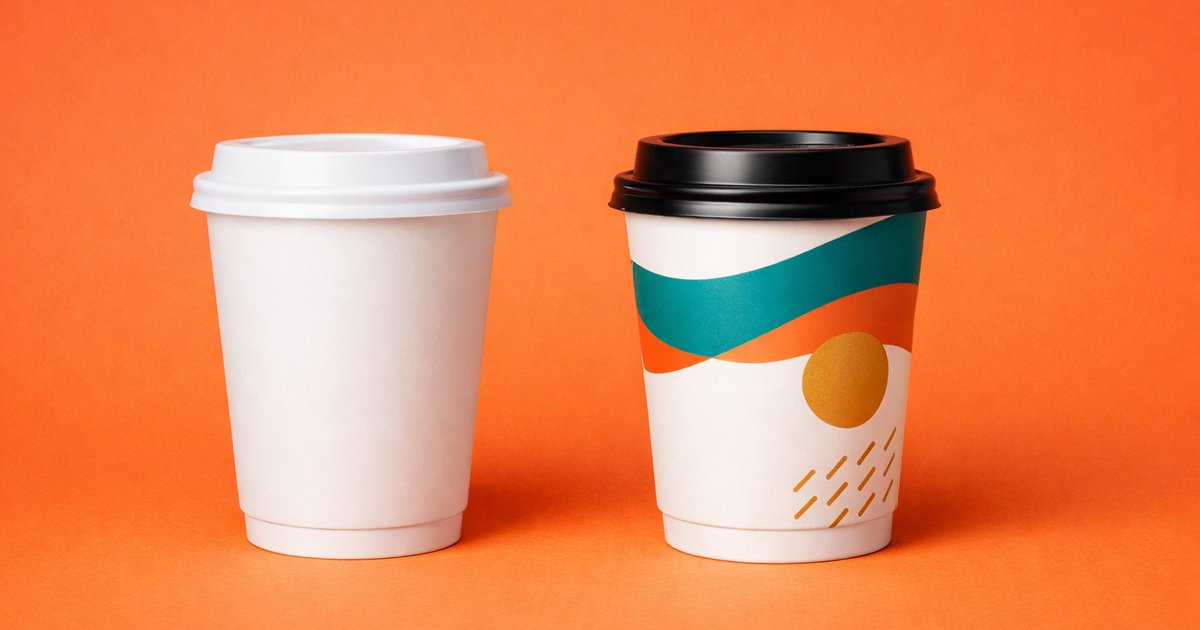
    Short answer: Branded vs generic coffee cups usually matters — customers generally prefer branded cups because they signal professionalism, care and higher perceived quality. For many Australian cafes and event hosts the marketing value outweighs the extra cost. Minimum order: 500 cups.

    Why the branded vs generic coffee cups debate matters

    Your cup is a visible marketing touchpoint. The right cup can lift perceived value, encourage social shares and help you justify premium pricing. The wrong cup can undermine your positioning in seconds — especially for new venues, speciality roasters and hospitality businesses that compete on experience.

    First impressions: your cup is part of front‑of‑house

    People form impressions almost instantly. A considered, branded cup communicates consistency and attention to detail; a plain white generic cup can suggest low investment. That affects whether customers come back, post a photo or accept a higher price.

    Key first‑impression drivers

    • Design consistency — cups that match in‑store colours, menus and uniforms reinforce identity.
    • Professionalism — branded presentation suggests better service and product care.
    • Trust & price perception — strong presentation makes it easier to charge and receive premium prices.

    Perceived coffee quality: packaging psychology in action

    Presentation shapes expectation. The same latte can taste better simply because a customer expects higher quality when it’s served in a premium, branded cup.

    Why this happens

    • Expectation effect — attractive packaging raises perceived quality.
    • Attention to detail — customers infer that a business investing in packaging also invests in coffee and service.
    • Price anchoring — premium presentation supports higher price points and reduces complaints about price.

    Social proof and the Instagram test

    Visibility on social media is free advertising. Ask: would a customer photograph and tag this cup? Branded cups that photograph well increase organic reach and put your brand in customers’ feeds.

    Pass the Instagram test

    1. Use a simple, recognisable logo and a limited colour palette that reads at a glance.
    2. Leave negative space so latte art is visible and the cup reads in photos.
    3. Choose materials and finishes that photograph well — matte, textured or compostable finishes can appear premium on camera.

    Real‑world trade‑offs: minimums and sustainability

    For current prices, see the printed coffee cups page.

    Other costs & key logistics (Australia):

    • Minimum order: 500 cups.
    • Standard production: 10 business days + 2–3 business days metro freight.
    • Rush option: 5–7 business days.
    • Freight charged at cost; we’ll quote based on destination and quantity.
    • We print full‑colour CMYK, provide artwork templates (AI & PSD) and offer a design layout service.
    • Sample pack available — try materials, print quality and finishes before you commit.

    When a generic cup makes sense

    Generic cups aren’t always the wrong choice. They can be practical where branding isn’t worth the run‑cost.

    • Short‑term pop‑ups or events where leftover stock won’t be used.
    • Startups testing a location or concept before committing to branded packaging.
    • Extremely tight budgets — or when you only need small quantities and can’t meet the 500 minimum.

    Cost‑saving alternatives include single‑colour printing, branded sleeves or stickers — these add personality without the full print run cost.

    How to make branded cups work for your business

    Follow these practical steps to get the best ROI from branded cups:

    • Align cup design with in‑store branding, menus and staff uniforms.
    • Choose material by priority: single‑wall for economy, double‑wall for a premium feel, compostable for eco positioning.
    • Order a sample pack to check print quality, texture and how it photographs in your venue.
    • Plan stock vs sales — remember the 500 minimum and lead times so you avoid excess storage or mid‑campaign design changes.
    • Encourage social sharing: invite customers to tag you and feature user photos to amplify reach.

    Quick case study snapshots

    • Global brands — consistent identity builds trust and recognition.
    • Minimalist craft brands — simple cups support premium positioning and storytelling.
    • Australian independents — many local roasters use distinctive cups to communicate specialty and provenance.

    Deciding: branded vs generic coffee cups — a simple checklist

    • If you want stronger first impressions, more social shares and to support higher pricing — choose branded cups.
    • If you’re short‑term, testing or on a very tight budget — generic cups, sleeves or stickers may be better.
    • Not sure? Order a sample pack and run the Instagram test in‑venue before committing to a 500 cup minimum.

    For full product details and up‑to‑date pricing, see our custom printed coffee cups page. For a broader guide read our Custom Printed Coffee Cups Australia Guide.

    Ready to upgrade your presentation? View our range of custom printed coffee cups or request a sample pack to check finishes. We provide free templates, a design layout service and transparent lead times so you can plan with confidence.

  • The Carbon Footprint of a Paper Coffee Cup (And How to Reduce It)

    The Carbon Footprint of a Paper Coffee Cup (And How to Reduce It)

    Short answer: The carbon footprint of a paper coffee cup typically sits around 30–80 g CO2e per cup for a standard PE‑lined single‑use cup. Most emissions come from fibre production, the plastic lining and transport; the final climate outcome depends on end‑of‑life handling (landfill, recycling or industrial composting). To inspect materials and print quality, order a sample pack or view our custom printed coffee cups. For a full buying overview, read our custom printed coffee cups guide.

    What contributes to the carbon footprint of a paper coffee cup?

    The carbon footprint of a paper coffee cup is the sum of greenhouse gases released across its life cycle. Key contributors are:

    • Fibre production: Harvesting, pulping, bleaching and drying paper fibres. Virgin pulp normally has higher emissions than recycled content or certified fibre (eg FSC).
    • Plastic lining: Most single‑use cups use a polyethylene (PE) lining; producing and applying that lining adds fossil‑fuel emissions.
    • Printing & converting: Full‑colour CMYK printing and cup manufacture consume energy and consumables — accurate artwork avoids reprints (we offer free templates and a design layout service).
    • Transport: Shipping raw materials and finished cups — local manufacture and consolidated orders reduce per‑cup transport emissions.
    • End‑of‑life: Landfill, incineration, recycling or industrial composting change the net impact depending on local infrastructure and recovery rates.

    Estimated emissions by life stage (typical ranges)

    Life stage Approx. share of CO2e
    Pulp production & paper manufacture 40–60%
    Lining (PE) & lamination 15–30%
    Manufacture & printing 5–15%
    Transport & distribution 10–25% (highly variable with distance and shipping mode)
    End‑of‑life Variable — landfill can produce methane; composting helps only with the right facilities

    How the carbon footprint of a paper coffee cup compares with reusables

    Whether a reusable cup has a lower footprint depends on how many times it’s used and how it’s cleaned. Typical break‑even use counts are:

    • Ceramic mugs: Often ~100–300 uses (efficient dishwasher use reduces the break‑even point; hand‑washing increases it).
    • Reusable polypropylene or stainless cups: Often ~50–200 uses depending on washing method and lifespan.
    • Disposable paper cups: Lower manufacture emissions per item, but single‑use means higher per‑use footprint unless reusables are used many times.

    For takeaway customers, single‑use cups remain practical. The best ways to reduce the carbon footprint of a paper coffee cup are to encourage reuse, choose responsibly sourced board, offer compostable options only where industrial composting exists, and optimise procurement.

    Disposal: landfill, recycling and composting in Australia

    • Landfill: PE‑lined cups break down slowly and anaerobic conditions can generate methane if organics degrade.
    • Recycling: PE‑lined cups require specialised cup recycling streams (availability varies across Australian states and councils), so recycling rates are low in many regions.
    • Composting: Compostable cups (PLA/CPLA) can be better at end‑of‑life — but only if they reach industrial composting facilities with the right temperatures and retention times; home composting and most kerbside green bins are often unsuitable.

    Practical ways Australian businesses can reduce the footprint

    Reducing your paper cup carbon footprint is practical and often cost‑effective. Actions for cafés, caterers and event organisers include:

    • Encourage and incentivise reusables: Offer a discount for BYO cups or run an on‑site reusable cup program and track uptake.
    • Choose compostable only where infrastructure exists: Offer PLA/CPLA cups if your council or local processor accepts them — otherwise they may contaminate recycling.
    • Buy responsibly sourced board: Specify FSC or post‑consumer recycled content to lower forest‑related emissions.
    • Consolidate orders: Avoid frequent small orders — our minimum order is 500 cups, and ordering to this or larger multiples reduces per‑cup transport and packaging impacts.
    • Work with a local supplier: We manufacture in Australia. Standard production is 10 business days plus 2–3 days metro freight; rush is 5–7 business days.
    • Right‑size cups: Offer 8oz, 12oz and 16oz options to avoid over‑serving.
    • Use clear disposal signage: Simple labels and bins increase correct disposal rates and lower contamination.

    Operational tips to cut per‑cup emissions

    • Consolidate and time reorders to reduce transport intensity.
    • Use lids only when necessary — lid options include PS, fibre and CPLA.
    • Use our free artwork templates to avoid reprints caused by artwork errors.
    • Monitor uptake of reusable incentives so you can optimise the program and measure impact.

    Product choices and trade‑offs

    Choose based on operational needs, end‑of‑life and budget.

    • Single‑wall (PE) — lightweight and cost‑effective.
    • Double‑wall (PE) — better heat retention and hand comfort.
    • Compostable (PLA/CPLA) — better end‑of‑life where industrial composting exists.

    Full‑colour CMYK printing is available. We provide AI & PSD artwork templates and a design layout service — upload your logo and we’ll prepare print files for approval. Want to inspect materials and print quality before ordering? Request a sample pack. Ready to order for your café or event? View our custom printed coffee cups and contact our team to discuss compostable or double‑wall options.

    Balanced conclusion

    The carbon footprint of a paper coffee cup is modest per item but accumulates quickly at scale. Reusables usually win after many uses, yet single‑use cups remain important for takeaway, events and hygiene. A pragmatic approach for Australian businesses is a mixed strategy: encourage reuse, offer compostable cups only where local industrial composting exists, buy responsibly sourced fibre and order efficiently to reduce transport emissions.

    Quick checklist for businesses

    1. Check local access to industrial composting and specialised cup recycling in your council area.
    2. Choose cup type accordingly: compostable only where appropriate; otherwise use responsibly sourced PE‑lined or recycled board.
    3. Consolidate orders to reduce freight intensity; remember the minimum order is 500 cups.
    4. Promote reuse incentives and install clear disposal signage to cut contamination.
    5. Use supplier support — free artwork templates and request a sample pack before you order.

    Production & ordering notes: Minimum order 500 cups. Standard production 10 business days plus 2–3 days metro freight. Rush option: 5–7 business days. Free templates available.

    More on sustainable cups

    Related guides

  • Can Compostable Cups Go in My Council Green Bin?

    Can Compostable Cups Go in My Council Green Bin?

    Short answer: For most councils in Australia, compostable cups in the green bin are not yet accepted. Only councils or commercial organics processors that explicitly accept certified industrially compostable packaging (for example AS 4736) will take compostable cups — so don’t put compostable cups in your household green bin unless your council or processor says it’s allowed.

    Key takeaways:

    • Check your council or commercial organics processor before putting compostable cups in the green bin.
    • Businesses must get written acceptance from their collector or industrial composter before switching to compostable cups.
    • We offer AS 4736 certified compostable cups — order a sample pack or start a quote on our custom printed coffee cups page.

    For a full overview of cup types and guidance for cafés, see our complete buyer’s guide.

    Why most councils won’t accept compostable cups in the green bin

    Councils and processing facilities commonly exclude compostable packaging from FOGO/green‑bin collections for three practical reasons:

    • Processing mismatch: Many compostable cups (PLA/CPLA linings) require industrial in‑vessel, high‑temperature composting to break down. Open windrow systems or low‑temperature organics facilities often can’t achieve those conditions.
    • Contamination risk: Sorting systems and staff can’t always distinguish certified compostable cups from traditional plastic‑lined cups, so incorrectly placed items risk contaminating the whole organics batch.
    • Residues and mixed materials: Drink residues, laminated layers or mixed components reduce compost quality and increase processing work.

    Is acceptance growing?

    Yes — acceptance of compostable cups in the green bin is growing in targeted trials and where commercial composters upgrade to in‑vessel systems and improved sorting. Rollout is uneven across states and councils, so you must confirm your local situation before assuming acceptance.

    Practical steps to confirm acceptance

    1. Check your local council’s FOGO/green bin guidance online or call them directly.
    2. Look for wording that explicitly accepts AS 4736 / industrially compostable packaging, or names a commercial processor as accepting compostable packaging.
    3. If you’re a business, get written confirmation from your commercial organics collector or industrial composter before you switch to compostable cups.

    What “accepted” usually requires

    Where compostable cups are accepted, councils or processors will typically require:

    • AS 4736 / industrially compostable certification shown on the product and in supplier documentation.
    • Cups to be mostly empty (no liquid) and placed in the specified organics stream or a dedicated compostable packaging collection.
    • Clear separation and signage to avoid contamination with regular recycling or general waste.

    Household and business alternatives

    Households

    • Use a reusable mug — the best environmental option.
    • Check for local drop‑off points, community compost schemes or café takeback programs that accept certified compostable items.
    • If no alternatives exist, place the cup in general waste — landfill conditions are poor for composting and can generate methane, although compostable cups may break down faster than petrochemical‑lined cups under some landfill conditions.

    Businesses, cafés and event organisers

    Business disposal rules differ from household guidance. To manage compostable cups responsibly:

    1. Choose cups clearly labelled AS 4736 / industrially compostable and keep supplier certification on file.
    2. Arrange a commercial organics collection or a contract with an industrial composter that explicitly accepts compostable packaging — get acceptance in writing.
    3. Train staff and use clear signage to avoid contamination between general waste, recycling and organics streams.
    4. Use takeback schemes or event‑specific collections where local FOGO won’t accept packaging.

    Do compostable cups break down in landfill?

    Compostable cups generally degrade faster than petroleum‑lined cups under the right conditions, but landfill is cool and anaerobic so breakdown is slow and can produce methane. Industrial composting or authorised organics processing is the preferred disposal route for certified compostable cups.

    Outlook for compostable cups in green bins across Australia

    The outlook is positive but gradual. Wider acceptance depends on clearer labelling and certification, investment in in‑vessel composting, improved sorting technology and consistent waste‑acceptance policies across councils and processors. Until acceptance is widespread, always check with your local council or commercial processor before placing compostable cups in the green bin.

    How businesses can prepare now

    • Source AS 4736 certified cups and keep supplier documentation on file.
    • Set up a signed contract with a commercial composting service or join local trials.
    • Train staff, provide clear customer disposal signage and run small pilot collections to check contamination levels.
    • Keep receipts and records from compost processors to demonstrate responsible waste management for councils, events and clients.

    Our compostable cup options — minimums and practical details

    We supply custom printed cups to Australian businesses. Key facts before you order:

    • Minimum order: 500 cups
    • Cup types: Single‑wall (PE), Double‑wall (PE), Compostable (PLA/CPLA)
    • Sizes: 8oz, 12oz, 16oz
    • Printing: Full‑colour CMYK printing; free artwork templates (AI & PSD)
    • Lead times: Standard 10 business days production + 2–3 business days metro freight; Rush 5–7 business days.
    • Sample pack: Order a sample pack — includes material details and certification information.

    For current prices, see the printed coffee cups page.

    Freight: Typically $30–$150 at cost depending on quantity and destination.

    Quick checklist before you switch to compostable cups

    • Confirm whether your council green bin accepts compostable cups (check the council FOGO page).
    • If you’re a business, secure a commercial composting contract that accepts certified items and get it in writing.
    • Choose AS 4736 certified cups and keep supplier documentation.
    • Provide staff training and clear customer signage to avoid contamination.
    • Keep records and receipts from your compost processor as proof of responsible disposal.

    Want to try cups and materials before you commit? Order a sample pack — it includes material samples, certification details and lid options. Ready to order custom printed cups for your business? Start a quote on our custom printed coffee cups page and upload your artwork.

    Need help deciding? Contact us for local council advice on whether you can put compostable cups in your green bin, or help organising commercial composting collection for cafés and events.

    More on sustainable cups

    Related guides

  • How to Make Your Coffee Cup Packaging More Sustainable

    How to Make Your Coffee Cup Packaging More Sustainable

    Short answer: For most Australian cafés and events, a reusable cup programme delivers the biggest waste reduction. Where reusables aren’t feasible, switching to certified compostable cups combined with a commercial composting contract is the next-best option. Complement these with cup recycling collections, BYO incentives, fibre lids and reduced cup sizes for the best results.

    Why sustainable coffee cup packaging matters in Australia

    Customers, councils and corporate clients increasingly expect businesses to reduce single-use waste. Sustainable coffee cup packaging can lower landfill, improve brand reputation and reduce Scope 3 impacts when implemented correctly. The right approach depends on your operations, customer behaviour and local organics/recycling infrastructure.

    Quick ranked choices (from highest to lower impact)

    1. Reusable cup programmes (most impactful)

    Why: Reusables eliminate most single‑use waste and cut lifecycle emissions once the cup is reused enough times.

    • How: Sell branded reusables, offer a deposit or discount for BYO, partner with a sharing service, or install on‑site washing for events/large sites.
    • Costs: Reusable cups typically cost $3–$15 each depending on material and branding. There are also washing hardware, labour or third‑party fees to budget for.
    • Trade-offs: Requires staff procedures, hygiene controls and customer uptake. Best for medium/large cafés, campuses, events and chains.

    2. Certified compostable cups + commercial composting contract (high impact, practical)

    Why: Certified compostable cups can be diverted from landfill into industrial composting, closing the loop when collection exists.

    • How: Choose cups certified to recognised standards (e.g. AS 4736 / EN 13432 where relevant), arrange a commercial organics collection or local composter, and add clear signage and staff training to avoid contamination.
    • Costs: Compostable cups cost more than standard PE‑lined cups.
    • Trade-offs: Contaminated loads can be rejected by composters. Separation at source and education are essential to keep performance high.

    We supply compostable cups with full‑colour CMYK printing, free artwork templates (AI & PSD) and a design layout service to make the switch straightforward.

    3. Specialist cup recycling programmes

    Why: Where industrial composting isn’t available, cup recycling schemes can divert cups from landfill and convert them into new products.

    • How: Provide a dedicated collection bin, partner with a recycler, and communicate clearly which items are accepted to avoid contamination.
    • Costs & trade-offs: Service or membership fees, space for collection and some admin time. Effectiveness depends on clean separation and customer education.

    4. Encourage BYO (bring your own) with discounts

    • How: Offer a small discount (for example, 10–50¢), loyalty points or a permanent BYO price. Promote in‑store and online.
    • Trade-offs: Minor revenue impact which is often offset by reduced cup spend and improved sustainability credentials.

    5. Swap plastic lids for fibre or compostable lids

    • How: Order matching fibre or CPLA lids and confirm fit across your cup sizes.

    6. Reduce cup size options (quick wins)

    • How: Make 8oz/12oz defaults, treat 16oz as a premium option or apply a small upcharge to discourage unnecessarily large servings.
    • Trade-offs: Some customers prefer larger sizes; communicate the sustainability reason for the change to maintain goodwill.

    Practical implementation checklist

    1. Audit current cup use: weekly volumes, size mix, lid types and current waste destination (landfill, organics, recycling).
    2. Choose 1–2 priorities to pilot for 4–8 weeks (e.g. reusable discount pilot or compostable cups + composting contract).
    3. Train staff, add clear signage and set contamination rules for collections.
    4. Track simple KPIs: cups used, BYO uptake, compost/recycling tonnes collected, contamination rate and customer feedback.
    5. Scale what works and share results publicly to build customer goodwill.

    For current prices, see the printed coffee cups page.

    Minimum order: 500 cups. Standard production: 10 business days + 2–3 days metro freight. Rush: 5–7 business days.

    Other details: We offer a sample pack, free artwork templates and a design layout service — order a sample pack to compare materials and lid fit in person.

    Which option should you pick?

    If you can manage logistics and washing, a reusable cup programme gives the largest long‑term impact. If reusables aren’t practical, certified compostable cups paired with a commercial composting contract are a straightforward operational win. Use cup recycling schemes, BYO incentives, fibre lids and size reductions as complementary measures. Our compostable range and design layout service make switching straightforward.

    Next steps & CTAs

    Order a sample pack to compare single‑wall, double‑wall and compostable cups in person. When you’re ready to brand your cups, view our custom printed coffee cups page and consult the complete buyer’s guide for planning tips and timelines.

    Need help choosing? Contact us with your weekly cup volumes, preferred sizes and whether you’re considering composting or reuse — we’ll recommend the most cost‑effective mix and mock up designs using our layout service.

    More on sustainable cups

    Related guides

  • Single-Use Cup Regulations in Australia: State-by-State Guide (2026)

    Single-Use Cup Regulations in Australia: State-by-State Guide (2026)

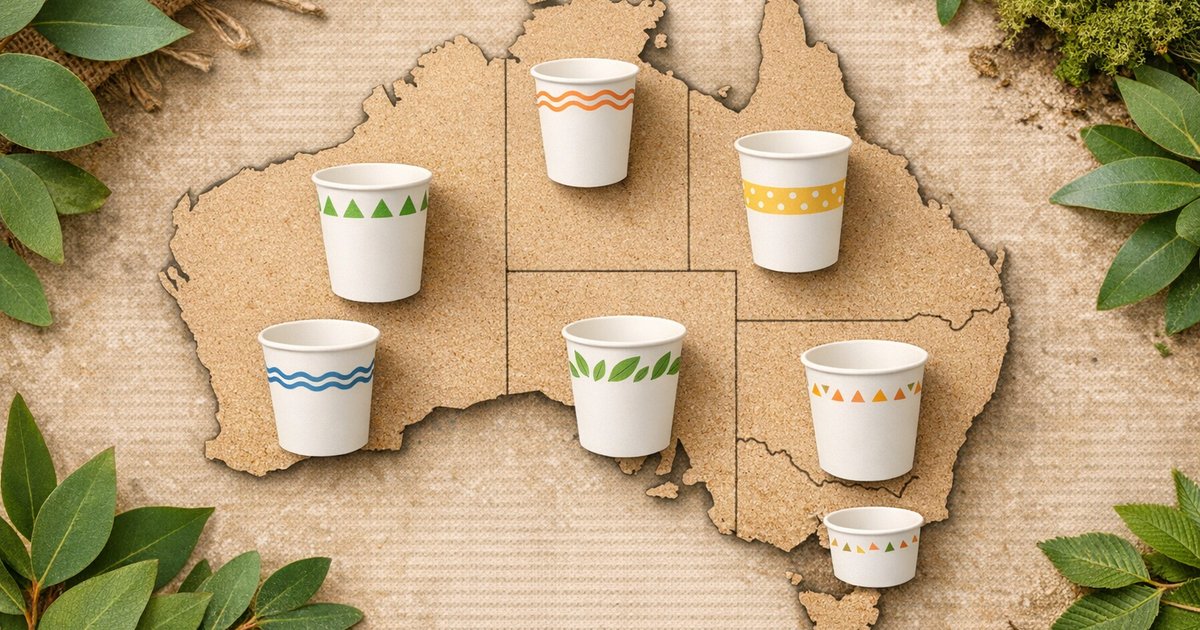
    Short answer (updated July 2026): There is no single national ban on disposable cups — state and territory rules differ. Western Australia and South Australia now require whole-cup AS-certified compostable products where bans apply, and WA also bans all disposable plastic lids. Before you order, check the single-use cup regulations in Australia that apply to each state or territory and request supplier AS certificates and product data sheets.

    This guide is general information for businesses ordering cups, not legal advice. Regulations change — always confirm requirements with your state or territory regulator before placing large orders.

    Quick reference (at a glance)

    State / Territory Plastic-lined cups Cup lids Key date
    WA Banned unless whole-cup AS-certified compostable Banned (all disposable plastic lids, including compostable plastic) 1 Mar 2024
    SA Banned unless whole product AS-certified compostable (hot & cold) Banned unless AS-certified compostable 1 Sep 2024
    VIC Permitted (EPS / foamed plastic banned) Permitted EPS ban 1 Feb 2023
    NSW Permitted (reforms signalled) Permitted Reforms signalled to 2028
    QLD Permitted Permitted —
    TAS Permitted (staged phase-out signalled; local rules may apply) Permitted Consultation ongoing
    ACT Permitted Permitted —
    NT Permitted (Darwin council ban on council land) Permitted Darwin by-law since 2019

    How to read this guide

    This page summarises the single-use cup regulations in Australia state-by-state, explains what compliant cups look like (AS certification and labelling) and gives practical ordering tips for Australian businesses. For product details, pricing and to place an order visit our printed coffee cups product page. To check materials in person, order a sample pack. For a full overview of options and printing, see our pillar guide: Custom-printed coffee cups — Australia guide.

    Western Australia — the strictest rules

    WA Stage 2 of the Plan for Plastics has applied since 1 March 2024. Key points:

    • Disposable plastic cups and plastic-lined paper cups are banned for hot beverages unless the whole cup is certified to AS 4736 (industrial composting) or AS 5810 (home composting).
    • All disposable plastic lids are banned in WA — this includes compostable plastic lids (CPLA). Use fibre/unlined paperboard lids or encourage reusable lids instead.

    Practical tip: If you trade in WA, only order whole-cup AS-certified compostable cups and pair them with fibre lids. Always request the AS certificate and the product data sheet before purchase and keep copies on file.

    South Australia — hot and cold cups covered

    From 1 September 2024 SA banned single-use plastic beverage cups and lids. Important points for suppliers and businesses:

    • PE-lined cups (and similar polymer-lined cups) are banned unless the whole product holds AS 4736 or AS 5810 certification.
    • Temporary recognition of overseas standards ended 28 February 2026 — AS certification is required now.
    • Since 1 March 2026 compostable products must clearly state whether they are home or industrially compostable on packaging and documentation.

    Victoria

    Victoria banned expanded polystyrene (EPS) and other foamed plastics from 1 February 2023. Standard PE-lined paper cups remain permitted in most uses, but EPS alternatives are required and compostable claims must be accurate and labelled correctly.

    New South Wales

    NSW currently permits plastic-lined paper cups. The NSW Plastics Plan 2.0 signals trials and reforms through to 2028, including reusable cup trials and potential recyclability or product requirements — monitor official NSW sources if you trade there.

    Queensland

    Queensland has no statewide ban on disposable coffee cups as of July 2026. Local councils, events and venues may set stricter rules — always check council policies and event terms for markets or festivals.

    Tasmania

    Tasmania is proceeding with a staged approach to single-use plastics; consultations are ongoing. The City of Hobart has a by-law limiting single-use takeaway packaging, so Hobart traders should verify local rules before ordering.

    Australian Capital Territory

    The ACT has staged bans on some single-use plastics but does not currently prohibit plastic-lined paper cups territory-wide. Check ACT government guidance for updates.

    Northern Territory

    The NT’s Circular Economy Strategy indicates potential future action. Note: the City of Darwin has prohibited disposable coffee cups and lids on council land and at council-run events since 1 January 2019 — check local council controls.

    What compliant cups look like

    • AS certification: look for AS 4736:2006 (industrial composting) or AS 5810:2010 (home composting) on labels and supplier docs — WA and SA require AS certification where bans apply.
    • Clear labelling: compostable products should state explicitly whether they are home or industrially compostable where required (from March 2026 in some jurisdictions).
    • Lids: WA bans disposable plastic lids (including some compostable plastics). Fibre/unlined paperboard lids are the safest option for WA; elsewhere, follow local rules and event requirements.
    • Documentation: request the AS certificate, product data sheet and a sample before bulk ordering — suppliers should be able to supply these on request.

    Practical ordering advice for businesses

    Follow this checklist before placing an order:

    • If you sell in WA or SA: only order whole-cup AS-certified compostable cups (AS 4736 or AS 5810). For WA, pair with fibre lids and keep the AS certificate and product data sheet on file.
    • If you sell interstate: PE-lined cups remain legal in most states today, but policy is trending toward compostable and reusable solutions — consider compostable options for large runs (eg. 5,000+ cups) to reduce the risk of future obsolescence.
    • Events and councils: always check event rules and council policies before trading — local bans can be stricter than state rules.
    • Supply checks: request samples, ask for AS certificates, confirm labelling, and check lid compatibility (fibre lid availability for WA).

    Ordering from CustomCoffeeCups — lead times (500-cup minimum)

    We keep lead times transparent so you can order with confidence:

    • Minimum order: 500 cups.
    • Rush production: 5–7 business day turnaround.
    • Standard production: 10 business days production + 2–3 business days freight.
    • Design support & samples: free print templates are available — request a sample before bulk ordering.

    Want to inspect materials or test print alignment? Order a sample pack or view our printed coffee cups product page to get a quote. If you need a quick compliance check for a particular state, request AS certification and the product data sheet from the supplier before ordering.

    Further reading & related resources

    Sources & official guidance

    Last updated: July 2026. Always confirm current legal requirements with the relevant state or territory regulator before ordering large quantities.

    Related guides

  • PLA vs PE Cup Lining: Environmental Impact Compared

    PLA vs PE Cup Lining: Environmental Impact Compared

    PLA vs PE cup lining: environmental impact and practical advice for cafés

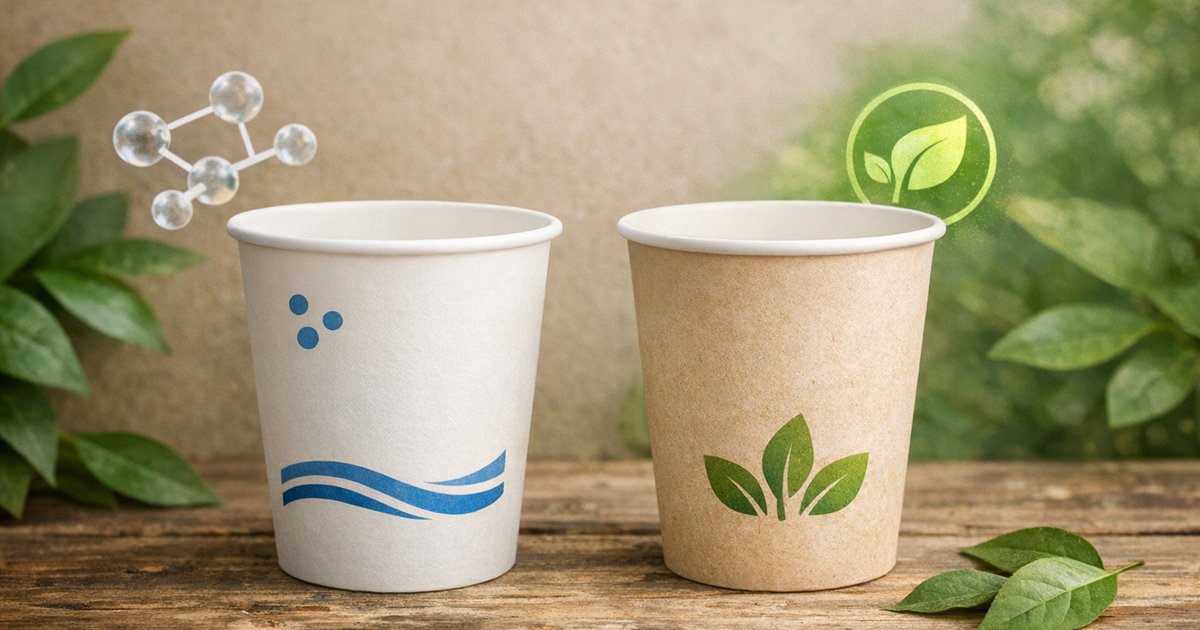
    Short answer: Choosing between PLA vs PE cup lining is a trade‑off: PLA (polylactic acid) gives industrial compostability and avoids plastic fragments when collected into commercial organics, while PE (polyethylene) is lower cost, widely available and reliable for everyday performance but is not compostable and can form microplastics if it fragments. Which is better depends on your local composting infrastructure, budgets and waste collection plans.

    Quick snapshot — PLA vs PE cup lining

    • PLA lining: plant‑based, industrially compostable (AS 4736 / EN 13432), won’t leave microplastic residues when processed correctly, higher unit cost.
    • PE lining: petroleum‑derived, durable and low cost, not compostable and hard to recycle when bonded to paper; may fragment into microplastics in the environment.
    • Practical result: PLA only delivers environmental benefit where commercial composting and correct collection are in place; otherwise PE frequently remains the pragmatic choice.

    What we mean by PLA and PE

    PE (polyethylene) is the thin plastic barrier inside most paper cups. It’s inexpensive, robust and widely used across Australia.

    PLA (polylactic acid) is a bioplastic made from fermented plant starch. It is industrially compostable — that is, it breaks down to water, CO2 and biomass in commercial composting systems but will not compost in home compost or typical kerbside recycling.

    Key environmental differences

    End‑of‑life: composting, recycling and landfill

    PLA requires industrial composting to achieve biodegradation. Look for AS 4736 (Australia) or EN 13432 (EU) certification and clear end‑of‑life instructions. If PLA ends up in landfill it will not provide the composting benefit and may produce methane if the landfill gas is not captured. PE is not compostable; PE‑lined paper cups are technically recyclable only where facilities can separate the plastic from the paper — most mixed cups in Australia currently go to general waste.

    Microplastics

    PE is a fossil polymer and can fragment into microplastics as it weathers. Correct industrial composting of certified PLA results in biodegradation and does not leave microplastic residues.

    Production emissions and resource use

    PLA uses agricultural feedstocks, which require land, water and farming inputs, plus energy for fermentation and processing. PE contains embedded fossil carbon from petroleum. Lifecycle impacts vary by feedstock, energy mix and especially how the cup is disposed of — end‑of‑life treatment is often the major driver of the final footprint.

    Food safety and print quality

    Both PLA and PE linings can meet food‑safety standards and accept full‑colour CMYK printing for branded artwork. Match your lid choice (see below) if you want a fully compostable set.

    Practical considerations for Australian businesses

    Does your area accept compostable packaging?

    PLA only reduces plastic pollution when commercial composting and correct collection are available. Many Australian councils and private organics contractors now accept certified compostable packaging, but availability varies by council and region — check with your local council or waste contractor before ordering PLA cups.

    For current prices, see the printed coffee cups page.

    Performance, lids and lead times

    • Performance: both linings work well for everyday hot drinks; 16oz is available in single‑wall only.
    • Lids: PS, fibre and CPLA lid options are available. Choose CPLA lids to match PLA cups if you want a fully compostable set for industrial facilities (CPLA also requires industrial composting).
    • Turnaround: Standard production 10 business days + 2–3 days metro freight. Rush production 5–7 business days.
    • Free support: we provide free artwork templates (AI & PSD).

    Which lining should your café, event or brand choose?

    There’s no one‑size‑fits‑all answer. Use these scenarios:

    • Cafés in areas with industrial composting: PLA lined cups with CPLA lids are a sensible choice — they reduce plastic residues when collected into organics.
    • Small cafés without composting access: PE lined cups are often more pragmatic; focus on waste reduction (discounts for keep cups), clear signage and staff training.
    • Events & festivals: If you can organise dedicated compost collection, PLA is preferable. If not, plan separation and disposal infrastructure if using PE.

    Operational checks and supplier questions

    • Label bins & cups: Clear labelling reduces contamination of recycling and compost streams.
    • Ask for certification: Request AS 4736 or EN 13432 certificates and written end‑of‑life instructions for compostable products.
    • Include all costs: Factor in lids, collection fees, signage and staff training when comparing PLA vs PE cup lining costs.

    How we support your choice

    At CustomCoffeeCups.com.au we supply both PE and PLA lined cups with full‑colour printing, free artwork templates and a design layout service. Key details:

    • Minimum order: 500 cups
    • Cup types: Single‑wall (PE), Double‑wall (PE), Double‑wall Compostable (PLA/CPLA)
    • Sizes: 8oz, 12oz, 16oz (16oz single‑wall only)
    • Turnaround: Standard 10 business days + 2–3 days metro freight; Rush 5–7 business days
    • Free templates

    Want to feel the difference? Order a sample pack or view our custom printed coffee cups to compare lining feel and print quality. For a deeper buyer’s overview, read our complete buyer’s guide.

    Recommended next steps

    1. Confirm local industrial composting availability with your council or organics contractor.
    2. Calculate total cost including lids, collection and signage.
    3. Choose matching lids (CPLA for PLA cups) to keep a compostable stream intact.
    4. Label cups and bins clearly and train staff on correct sorting.

    Need personalised advice for your location and volumes? Order a sample pack or contact us for a fast quote — minimum order 500 cups.

    More on sustainable cups

    Related guides

  • Compostable Coffee Cups: What Does ‘Compostable’ Actually Mean?

    Compostable Coffee Cups: What Does ‘Compostable’ Actually Mean?

    Compostable Coffee Cups: What Does ‘Compostable’ Actually Mean?

    Quick answer: Compostable coffee cups are paperboard cups lined with a plant-based polymer (usually PLA) that are designed to break down in commercial/industrial composting facilities certified to AS 4736. They will not reliably compost in a backyard bin or landfill — to deliver environmental benefits they must be collected and processed by a certified industrial organics facility.

    What “compostable” means in Australia

    In Australia, “compostable” has a technical definition: the product must biologically break down to carbon dioxide, water, inorganic compounds and biomass within a specified timeframe under controlled industrial composting conditions. For linings and plastics the key standard is AS 4736 (industrial/commercial compostability). AS 5810 covers home compostability — very few beverage cups meet that standard.

    Compostable vs biodegradable vs recyclable

    • Compostable — breaks down to safe residues in an industrial composting facility within a specified time; look for AS 4736 (commercial) or AS 5810 (home) certification.
    • Biodegradable — a vague marketing term: it means a material can be broken down by microbes but gives no guarantee about timescale, conditions or residues.
    • Recyclable — can be reprocessed into new products. Many paper cups with linings (PLA or PE) are not accepted in kerbside recycling; mixing compostable items with recycling can contaminate streams.

    Why industrial composting matters

    Industrial composting facilities maintain sustained high temperatures (typically >60°C), aeration and controlled conditions that reliably break down certified compostable materials and sanitise organic waste. PLA-lined cups will not reliably degrade in a backyard compost heap or landfill, where heat and oxygen are limited and decomposition is incomplete.

    Materials used in compostable cups

    Our compostable cups use a paperboard body with a PLA (polylactic acid) lining — a plant-starch-derived polymer — instead of petroleum-based polyethylene (PE). For a fully compostable cup-and-lid solution we offer compostable CPLA lids; note that you must always check with your organics facility that CPLA is accepted.

    Australian certifications to check

    Certification What it means
    AS 4736 Requirements for plastics (including linings) designed to be composted in industrial facilities (commercial compostability).
    AS 5810 Requirements for compostable products suitable for home composting (rare for coffee cups).

    Disposal realities in Australia

    Compostable cups only deliver environmental benefit when they enter the correct organics stream and are processed by a commercial composting facility that accepts certified compostable packaging. Infrastructure is improving around Australia, but availability varies by council and region — always check with your local council or private waste contractor before placing compostable items in the green bin.

    Common disposal mistakes

    • Putting compostable cups in kerbside recycling — this can contaminate recycling streams.
    • Assuming “biodegradable” equals home compostable — it doesn’t.
    • Throwing certified compostable cups into general waste/landfill — they won’t break down as intended in anaerobic conditions.

    Choosing compostable coffee cups for your business

    Before switching, confirm your local organics service or private composter accepts AS 4736-certified packaging. If you want a fully compostable cup-and-lid option, choose CPLA lids and verify your processor accepts them. Label bins, provide point-of-sale signage and train staff — clear communication reduces contamination and improves diversion rates.

    Key product and ordering details

    • Minimum order: 500 cups.
    • Free: print templates (AI & PSD) — order a sample pack to test feel, print and local disposal.
    • Standard production: 10 business days plus 2–3 days metro freight.
    • Rush production: 5–7 business days.
    • Lids: compostable CPLA lid option available.

    For current prices, see the printed coffee cups page.

    For the full range, bespoke branding options and up-to-date lead times, see our product page: Custom printed coffee cups.

    Labelling and communicating to customers

    Clearly label disposables with correct end-of-life instructions, for example: “Commercially compostable — AS 4736. Place in designated organics/composting collection.” Use counter signage and staff briefings to reduce contamination and ensure cups reach the right facility.

    Practical trade-offs and honest advice

    • Compostable cups are only environmentally better than oil-based plastics when they are collected and processed correctly.
    • If there is no route to industrial composting in your area, compostable cups may end up as general waste and won’t deliver the intended benefit.
    • Compostable options typically cost more than conventional cups — factor price, minimums and lead times into purchasing decisions.

    How to trial compostable coffee cups

    1. Check with your local council or waste contractor that AS 4736 items are accepted in your organics service.
    2. Order our sample pack to test cup feel, lid fit and to trial disposal locally.
    3. Run a small branded order (minimum 500) and trial in a single outlet or event with clear signage and staff training.
    4. For a wider overview on cup options, printing and ordering logistics, read our buyer’s guide: Custom printed coffee cups — Australia guide.

    Quick disposal checklist (for cafés & events)

    • Confirm accepted materials with your organics provider (AS 4736 / CPLA).
    • Label bins clearly: “Organics / Compostable only” — include examples.
    • Train staff to separate lids and cups if required by your processor.
    • Communicate to customers at point of sale to reduce contamination.

    Summary

    Compostable coffee cups are designed to break down in industrial composting facilities (AS 4736) and should only be used where you have a verified collection and processing route. They are not the same as “biodegradable” and are rarely suitable for home composting unless certified to AS 5810. Check local composting availability, order a sample pack to test locally, and label and train staff so cups reach the correct organics stream.

    If you’d like to try compostable coffee cups at your café or event, order a sample pack or view our custom printed coffee cups to discuss branding, lid options and pricing for 500+ cups.

    More on sustainable cups

    Related guides

  • Are Paper Coffee Cups Recyclable in Australia?

    Are Paper Coffee Cups Recyclable in Australia?

    Are paper coffee cups recyclable in Australia?

    Short answer: Most paper takeaway cups with a thin PE lining are not accepted in Australian kerbside recycling and typically end up in landfill. A minority are recyclable at specialised facilities or via dedicated cup‑recycling schemes — so the practical steps are: check your local council, consider certified commercial‑compostable cups only where industrial composting exists, promote reusable cups, or join a cup‑recycling program.

    Quick facts for busy café owners

    • Minimum order: 500 cups.
    • Lids: PS, fibre or CPLA.
    • Lead times: Standard production 10 business days + 2–3 days metro freight; Rush 5–7 business days.
    • Free artwork templates (AI & PSD) available.

    Why the confusion about “are paper coffee cups recyclable australia”?

    The recycling outcome depends on two things: how the cup is made and the local recycling infrastructure. Most paper cups are paperboard lined with a thin polyethylene (PE) layer to make them liquid‑tight. That lining interferes with standard paper pulping at many Material Recovery Facilities (MRFs), so councils commonly exclude cups from yellow‑lid kerbside collections.

    How kerbside recycling works — and why linings matter

    Councils and MRFs sort materials (paper, cardboard, glass, rigid plastics). When PE‑lined cups enter the pulping process the lining can contaminate fibre streams or damage equipment. Some specialised mills can separate and recycle the paper and lining, but most Australian MRFs are not set up for that — so cups from yellow‑lid bins are usually rejected.

    Technical recyclability vs local acceptance

    Be clear on the difference: a cup may be technically recyclable at a particular facility, but unless that facility collects via your council’s kerbside service or through a local drop‑off/collection scheme, your cups won’t be recycled from the yellow‑lid bin.

    Where cups are accepted — local programs and drop‑off points

    Acceptance is improving but patchy across states and LGAs. To check local options:

    • Search your council website for “takeaway cups”, “paper cups” or “foodservice recycling”.
    • Contact your council waste officer or depot for confirmation of accepted items.
    • Look for dedicated schemes (for example, Simply Cups) and registered drop‑off points nearby.

    Specialised cup‑recycling schemes — what to expect

    These schemes collect cups separately and send them to facilities that can separate the lining and recover fibre. They suit medium‑to‑high volumes but often require registration, separated bins and either scheduled drop‑offs or a collection fee. Good for cafés wanting a verifiable recycling pathway.

    Pros and cons

    • Pros: Diverts cups from landfill, provides a verifiable recycling route and supports café sustainability claims.
    • Cons: Limited availability, added logistics and costs, and requires staff training and customer cooperation.

    Practical options for Australian businesses

    Combine approaches based on your location and volumes. Here are realistic steps you can take today.

    1. Check your council first

    • Confirm if PE‑lined cups are accepted in the yellow‑lid bin, in organics, or at local drop‑off sites.
    • If unsure, ask the council waste officer or depot — get the answer in writing where possible.

    2. Consider certified commercial‑compostable cups (only where industrial composting exists)

    Certified compostable cups (PLA/CPLA) break down in industrial composting but not in home compost or landfill. Only switch if your council or a commercial composter accepts them. We supply compostable options — view our printed cups or order a sample pack to check materials.

    3. Promote reusables and on‑site service

    • Offer discounts for customers who bring reusable cups or use a deposit‑return system for events.
    • Encourage on‑site consumption to reduce takeaway waste and washing logistics.
    • Plan for washing, storage and staff processes if you introduce a reusable fleet.

    4. Join a cup‑recycling scheme or set up collection points

    If a local program (for example, Simply Cups) or your council runs cup collections, set up clear signage and a staffed or labelled collection point. These schemes work best when your business has consistent cup volumes and staff can manage separation.

    5. Be accurate in communications

    Avoid blanket claims like “100% recyclable” unless you can explain exactly where and how recycling happens. Use precise statements: for example, “Compostable cups — accepted in our local commercial organics service” or “We participate in [program name] cup recycling”.

    How to decide — a short checklist

    • Check council guidelines (yellow‑lid kerbside, green organics bin or drop‑off scheme).
    • Confirm industrial composting is available before buying compostable cups.
    • Calculate all costs: cups, lids, collection fees, recycling scheme fees and staff time.
    • Trial a mix: reusables for on‑site, compostables where composting exists, and specialised recycling where available.

    Our products and lead times

    At CustomCoffeeCups.com.au we supply single‑wall, double‑wall and compostable cups with custom printing. Key ordering details are below — contact us if you need tailored advice or samples.

    Cup type Sizes Minimum order
    Single‑wall (PE lined) 8oz, 12oz, 16oz 500
    Double‑wall (PE lined) 8oz, 12oz 500
    Double‑wall Compostable (PLA/CPLA) 8oz, 12oz 500

    For current prices, see the printed coffee cups page.

    Lids available (PS, fibre or CPLA). Standard production is 10 business days plus 2–3 days metro freight; rush production is 5–7 business days. Freight is charged at cost.

    Key takeaways

    Asked “are paper coffee cups recyclable australia”? The short practical answer: usually not via the yellow‑lid kerbside bin if the cup is PE‑lined. Real options to genuinely divert waste include specialised cup‑recycling schemes, certified compostable cups where commercial composting exists, and reusable systems.

    Ready to compare materials and samples? View our custom printed coffee cups or order a sample pack to inspect materials and print quality. For detailed buying guidance, see our complete buyer’s guide.

    Further reading and resources

    Final note: The question “are paper coffee cups recyclable australia” has a nuanced answer. Check your council, confirm commercial composting availability before switching to compostable cups, consider reusables, or join a specialised recycling program. Contact us for tailored advice — we can help you choose the right cup, provide a sample pack and prepare artwork for printing.

    Related guides

  • University & School Branded Coffee Cups

    University & School Branded Coffee Cups

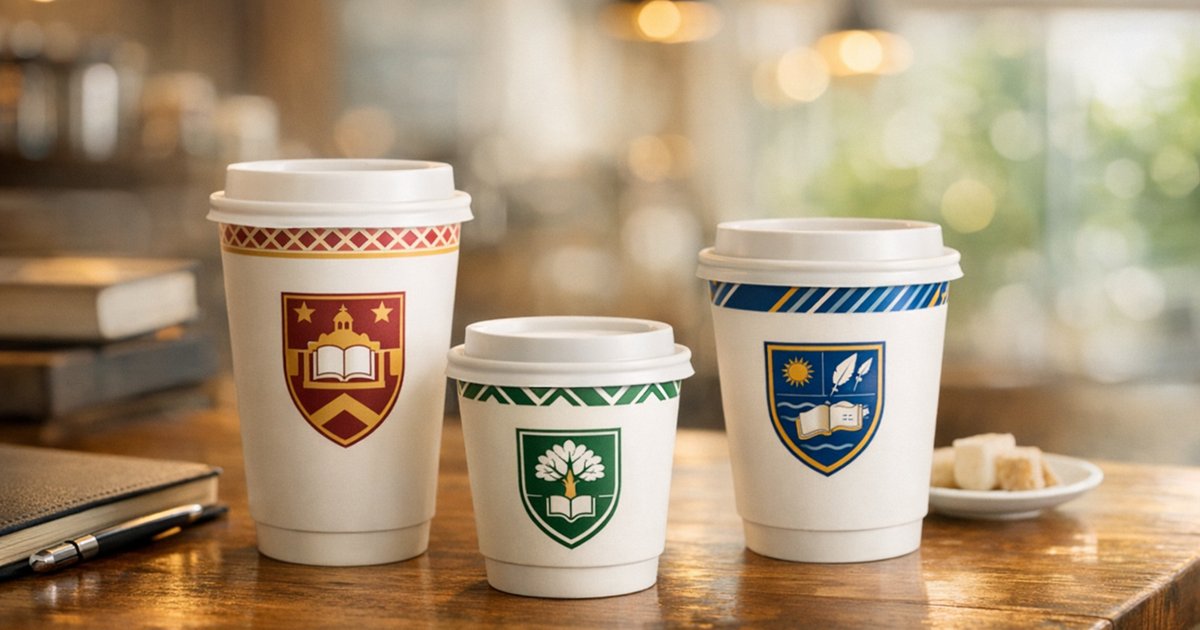
    University branded coffee cups are a cost‑effective, high‑impact way to build campus pride, promote events and support sustainability across cafés, orientation week, graduations and alumni activity. Put your crest, faculty colours or event messaging in students’ hands with full‑colour custom printed coffee cups — available in single‑wall, double‑wall and compostable options. Order a sample pack or request a quote on our custom printed coffee cups product page to check materials and print quality.

    Why choose university branded coffee cups?

    Custom university branded coffee cups give everyday visibility across campus while solving practical café and events needs. They work well for universities, TAFEs, student unions and alumni programs because they:

    • Boost brand presence: Crests and faculty marks are visible across cafés, events and staff areas.
    • Create low‑cost souvenirs: Orientation, open days and graduations become shareable keepsakes and photo props.
    • Simplify operations: Consistent cup stock reduces handling complexity in cafés and catering.
    • Support sustainability goals: Choose compostable cups where industrial composting is available.

    Where they work best on campus

    Student union & campus cafés

    High‑volume service usually favours 8oz or 12oz single‑wall cups printed in full‑colour CMYK to match your crest and brand palette.

    Orientation, open days & events

    Event runs commonly meet our minimum order of 500 — print event names, dates or hashtags for recognition and social sharing.

    Graduation & alumni functions

    Choose double‑wall or compostable double‑wall cups for a more premium feel. Metallic inks aren’t available, but considered typography, crest placement and colour use create a dignified result.

    Staff rooms & faculty identity

    Print multiple faculty or department variations to reinforce identity while keeping production and reordering simple.

    Materials, sizes and sustainability options

    We offer three cup types suited to Australian campuses:

    • Single‑wall (PE) — Lightweight and cost effective for high‑volume cafés.
    • Double‑wall (PE) — Better insulation and a more premium hand feel.
    • Compostable (PLA/CPLA) — For campuses with industrial composting; double‑wall compostable available.

    Available sizes: 8oz, 12oz and 16oz (16oz available as single‑wall only).

    Minimums and lead times

    Fast facts for orders:

    • Minimum order: 500 cups
    • Standard production: 10 business days + 2–3 days metro freight
    • Rush production: 5–7 business days
    • Freight: charged at cost (typically $30–$150 depending on destination/quantity)

    For current prices, see the printed coffee cups page.

    Design guidance & practical tips

    Design for a curved surface and quick readability. Practical approaches that work well for university branded coffee cups:

    • Classic crest + name: Crest on one side, university name or tagline opposite.
    • Faculty colour block: Band or full‑wrap in faculty colours for department recognition.
    • Event artwork: Short, clear messaging (e.g. “Orientation Week 2026”).
    • Minimal logo: Single‑colour logo for a clean, cost‑effective look.
    • QR & CTA: Add a short URL or QR code linking to event pages — ensure the QR is large enough to scan on a curved surface.

    We provide free artwork templates (AI & PSD) and a design layout service — upload your logo and our team will prepare print‑ready files with correct bleed and safe zones.

    Sustainability: trade‑offs and recommendations

    Compostable cups are best when you can guarantee an industrial composting stream. Key points for Australian campuses:

    • Compostable cups cost more but reduce landfill when correctly collected and processed.
    • If compostable cups go to landfill, they won’t deliver environmental benefits — collection and contract arrangements matter.
    • Double‑wall compostable cups give better insulation at a higher price.

    Recommendation: use compostable cups for controlled events or where campus waste contracts include industrial composting. For large cafés without composting access, single‑ or double‑wall PE is the practical, lower‑cost option.

    Ordering process — checklist & how to order

    • Minimum order: 500 cups. Want to test materials first? Order a sample pack.
    • Choose cup type: single‑wall, double‑wall or compostable; choose size: 8oz, 12oz or 16oz.
    • Decide on lids and any special finishing.
    • Pick production speed: standard (10 business days + freight) or rush (5–7 business days).
    • Upload logo/artwork or ask us to prepare files with our design layout service and templates.
    • Request a quote or place an order via our custom printed coffee cups product page.

    Typical campus use cases

    • Orientation Week: 500–2,000 cups with “Welcome to Campus 2026” and student union crest.
    • Student union café: ongoing 5,000+ runs of single‑wall cups with full university branding.
    • Graduation: 500–1,000 double‑wall or compostable cups with graduation year and crest.
    • Alumni events: double‑wall cups with logo and event hashtag for photo sharing.

    Next steps — samples, quotes and more advice

    Ready to try materials? Order a sample pack to check stock, print and lid options. To request a quote or place an order, visit our custom printed coffee cups product page — tell us cup type, size and quantity. For a full overview of options and buying advice, read our Custom Printed Coffee Cups — Australia guide.

    Ready to create university branded coffee cups that look great and support your events? Visit our custom printed coffee cups page to request a quote or place an order, or get a sample pack to check materials and print quality. We offer design layout and templates and can deliver within standard 10 business days plus metro freight (rush available).