Short answer: paper cups sold for food service in Australia must be made from food-grade materials, and they are used billions of times a year without incident. But research does show that the thin plastic lining inside a hot cup sheds microscopic particles into the drink. Here is what the studies actually measured, what regulators do and do not control, and what you can reasonably do about it.
We sell printed paper cups for a living, so it would be easy to skip this topic. We would rather set out the evidence plainly, because it is the question customers ask most often once they understand that a “paper” cup is not only paper.
Why a paper cup contains plastic at all
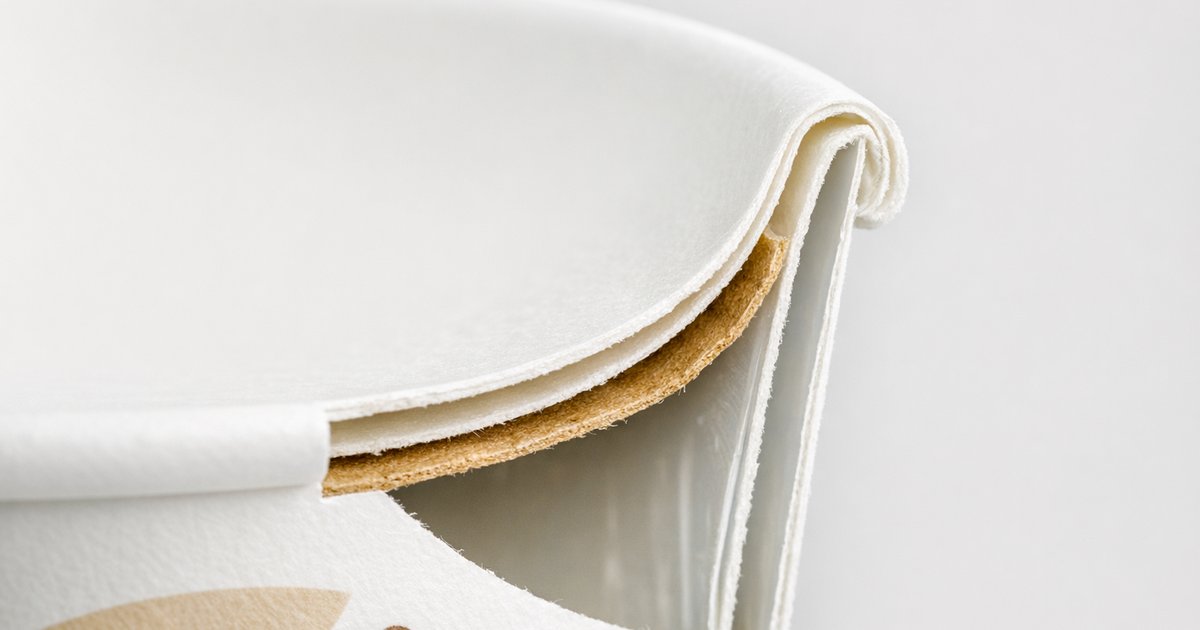
Paper on its own turns to pulp when it meets hot liquid. Every takeaway cup therefore carries a thin waterproof film on the inside face. That film is normally one of two things:
- PE (polyethylene), a fossil-based plastic. This is the standard lining worldwide and the one used in most cups.
- PLA (polylactic acid), a plant-based polymer used in compostable cups.
The lining is what makes the cup work. It is also the part the research focuses on. For the full construction, see what paper coffee cups are made from.
What the microplastics research found
The most widely cited work comes from researchers at the Indian Institute of Technology, published in the Journal of Hazardous Materials in 2020. They poured hot liquid at roughly 85 to 90 degrees Celsius into disposable paper cups and left it to stand for 15 minutes.
After that time they measured an average of around 25,000 micron-sized plastic particles per 100 millilitres of liquid, along with traces of ions and heavy metals released from the degrading film. Later work has reported far higher counts once nanoplastics, which are too small to see or filter easily, are included.
Follow-up studies have modelled lifetime intake for regular drinkers of hot beverages from lined cups. The direction of the findings is consistent: heat plus contact time equals particle release.
The context that usually gets left out
Those numbers are real, and they are also easy to misread. Three points matter:
- The studies measured exposure, not harm. They counted particles entering a drink. They did not establish that this quantity causes disease in humans. The health effects of ingested micro and nanoplastics are still an open research question.
- Test conditions are deliberately harsh. Liquid held at near-boiling temperature for a full 15 minutes in the cup is a laboratory condition, not how most takeaway coffee is drunk.
- Lined paper is not uniquely bad. Comparable studies have found particle release from plastic bottles, kettles, teabags and reusable plastic cups. This is a property of polymers in contact with hot liquid, not a defect specific to takeaway cups.
What Australian regulators actually require
Food contact materials sold in Australia must be safe for their intended use, and cup stock is manufactured to food-grade specification. Food Standards Australia New Zealand does not currently set a maximum limit for microplastics in food or drink. Regulators internationally have been slow to set one, largely because there is not yet an agreed safe threshold or a standard test method.
Separately, Australia introduced national bans on several long-lived fluorinated chemicals from 1 July 2025. We cover what that means for packaging in PFAS in coffee cups.
What about the printing inks?
Print sits on the outside wall of the cup. It does not touch the drink, and it is not in contact with the food surface at any point in normal use. Cup printing uses inks formulated for food packaging for exactly this reason. We go into detail in food-safe inks on coffee cups.
Practical steps that genuinely reduce exposure
If this matters to you or your customers, these are the levers that actually move:
- Serve promptly. Particle release rises with contact time. A coffee handed over and drunk within a few minutes is a very different exposure to one left standing.
- Use ceramic for sit-in customers. The simplest change available to any cafe, and it cuts cost as well.
- Do not reheat in a cup. Microwaving a lined paper cup is a bad idea for several reasons. See can you microwave paper coffee cups.
- Do not use hot cups for extended holding. Cups are designed for service, not storage.
Switching from PE to a plant-based PLA lining removes fossil-based polyethylene from the cup and has real composting advantages, which we cover in PLA vs PE cup lining. It is worth being straight about the limits of that switch though: PLA is still a polymer film in contact with a hot drink, and the published research on particle release from plant-based linings is much thinner than it is for PE. We would not claim compostable cups solve the microplastics question, because the evidence does not yet support that claim.
So, are they safe?
For their intended use, a hot drink served and consumed promptly, paper cups are made from food-grade materials and are regulated as food contact packaging. The honest qualifier is that the lining does shed microscopic particles under heat, the amounts are not trivial, and the long-term health significance is not yet settled science.
Anyone telling you the question is definitively closed, in either direction, is going beyond the evidence.
Where to go from here
If you want cups without a fossil-based lining, look at our compostable custom coffee cups. For the full range and how ordering works, start with our buyer’s guide to custom printed coffee cups, or get in touch with a question about materials and we will answer it straight.