Short answer: cups are printed flat, before they are formed into cups, using one of three methods. Flexographic printing dominates high-volume production, offset delivers the finest detail, and digital removes setup costs which makes short runs viable. The method affects your minimum quantity, your unit cost and how faithfully fine detail reproduces.
You do not need to specify a printing method when you order, but understanding the differences explains a lot about why cup pricing behaves the way it does.
Everything happens flat
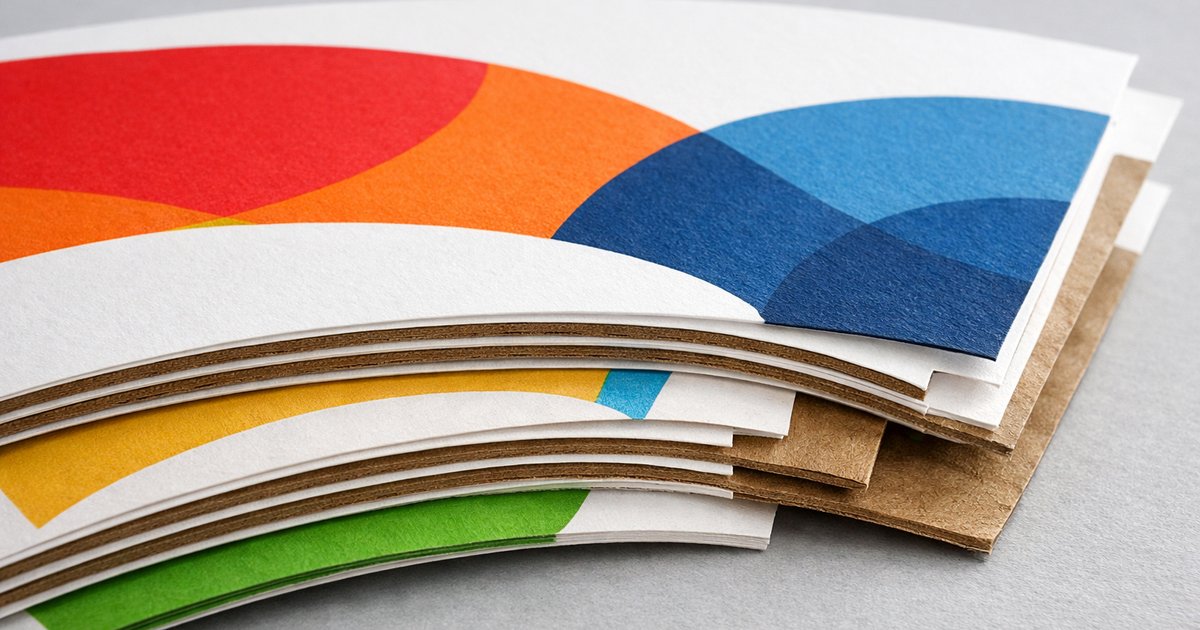
Before comparing methods, the key fact: a cup is printed as a flat fan-shaped blank, then cut, rolled, seamed and base-sealed into a cup. Nothing is printed onto a finished three-dimensional cup in normal production.
This is why artwork has to be supplied on a template with a wrap allowance, and why the seam and rim have constraints. See bleed, safe zone and wrap and how coffee cup printing works.
Flexographic printing
Flexo uses flexible relief plates, one per colour, mounted on rotating cylinders that transfer ink to the board as it runs through at speed.
- Strengths: extremely fast, low cost per unit at volume, excellent on solid colour areas, well suited to the absorbent coated board cups are made from.
- Limitations: a plate is made for every colour, so setup cost is real and is spread across the run. Very fine gradients and small text are harder than on offset.
- Best for: the large majority of commercial cup production, especially bold brand-colour designs at volume.
Offset lithography
Offset transfers ink from a plate to a rubber blanket and then onto the board, relying on the separation of oil-based ink and water.
- Strengths: the finest detail of the three. Superior for photographic images, subtle gradients, fine type and complex artwork.
- Limitations: plate-making and make-ready mean high setup cost, so it needs volume to be economic.
- Best for: premium or photographic designs at substantial quantities. See printing photos on paper cups.
Digital printing
Digital has no plates. Artwork goes from file to press directly, much like a very sophisticated office printer.
- Strengths: no plate cost, so short runs become affordable. Easy to change artwork between jobs, and well suited to variable or multi-design work.
- Limitations: cost per unit falls away more slowly as quantity rises, so at high volume it loses to flexo. Colour gamut can differ from spot-colour approaches.
- Best for: lower quantities, events, trials, and businesses testing a design before committing.
How they compare
| Flexographic | Offset | Digital | |
|---|---|---|---|
| Setup cost | Moderate, plates per colour | High | None |
| Cost per cup at volume | Lowest | Low | Higher |
| Fine detail and gradients | Good | Best | Good |
| Solid colour coverage | Excellent | Excellent | Good |
| Economic minimum quantity | Higher | Highest | Lowest |
Why this explains cup pricing
Every method carries a fixed cost that exists before the first cup is printed: plates, make-ready, colour setup, press time. That fixed cost is divided across the run.
At 500 cups, the setup is spread thinly and the unit cost is relatively high. At 10,000, the same setup is spread across twenty times as many cups and the unit cost drops sharply. This is why our minimum order quantity exists, and why the price per cup improves so much at higher volumes. It is not a volume discount in the retail sense, it is the arithmetic of fixed costs.
What this means for your artwork
Whichever method runs your job, the same practical points apply:
- Supply vector artwork where possible. It reproduces cleanly at any size.
- Avoid very fine reversed-out type. Small white text on a dark background is the first thing to fill in on absorbent stock.
- Expect substrate shift. Cup board is not glossy white paper, so colours read slightly differently. See CMYK vs RGB and making brand colours pop.
- Use the proof. It is the point at which colour and detail questions get resolved.
What we do
Full colour printing across the whole outer wall is included in our pricing at no extra cost, so there is no saving in restricting yourself to one or two colours. See full colour vs single colour printing.
Where to go from here
Ready to design? Start with how to design artwork for custom coffee cups. If you have an unusual design and want to know how it will reproduce, send it over before you finalise it.